No. Basic finance or accounting knowledge is helpful, but the course includes onboarding to key tax concepts and strategy frameworks.

Course Guide
Corporate Tax Strategy Course
Participants act as corporate finance leaders - designing tax strategies, managing global operations, and balancing compliance with efficiency - in our Corporate Tax Strategy Course.
Corporate Tax Strategy Course Overview
The Corporate Tax Strategy Course gives participants hands-on experience managing tax planning as a strategic lever in multinational corporations. They must assess tax jurisdictions, design structures, and respond to regulatory changes - all while ensuring alignment with ethical standards and shareholder expectations.
Created by tax advisors, CFOs, and academic experts, this course challenges participants to integrate tax decisions into business growth, capital allocation, and M&A strategy. Participants learn to minimize effective tax rates, avoid compliance risk, and manage reputational concerns in today’s complex tax landscape.
This course is ideal for advanced finance, accounting, international business, and law courses.
Corporate Tax Strategy Course Concepts
Participants apply critical concepts from tax planning, finance, and international business, including:
- Effective Tax Rate (ETR) Management: Balancing domestic and global obligations
- Jurisdictional Planning: Understanding tax regimes, treaties, and transfer pricing
- Deferred Taxes and Timing Differences
- Intellectual Property (IP) Structuring: Tax-efficient holding companies
- Transfer Pricing: Arm’s-length principles and cost-sharing arrangements
- Tax Incentives and Credits: R&D credits, accelerated depreciation, green tax policies
- GAAR and BEPS Compliance: Navigating anti-avoidance and OECD frameworks
- Reputation and ESG: Aligning tax practices with stakeholder expectations
Gameflow
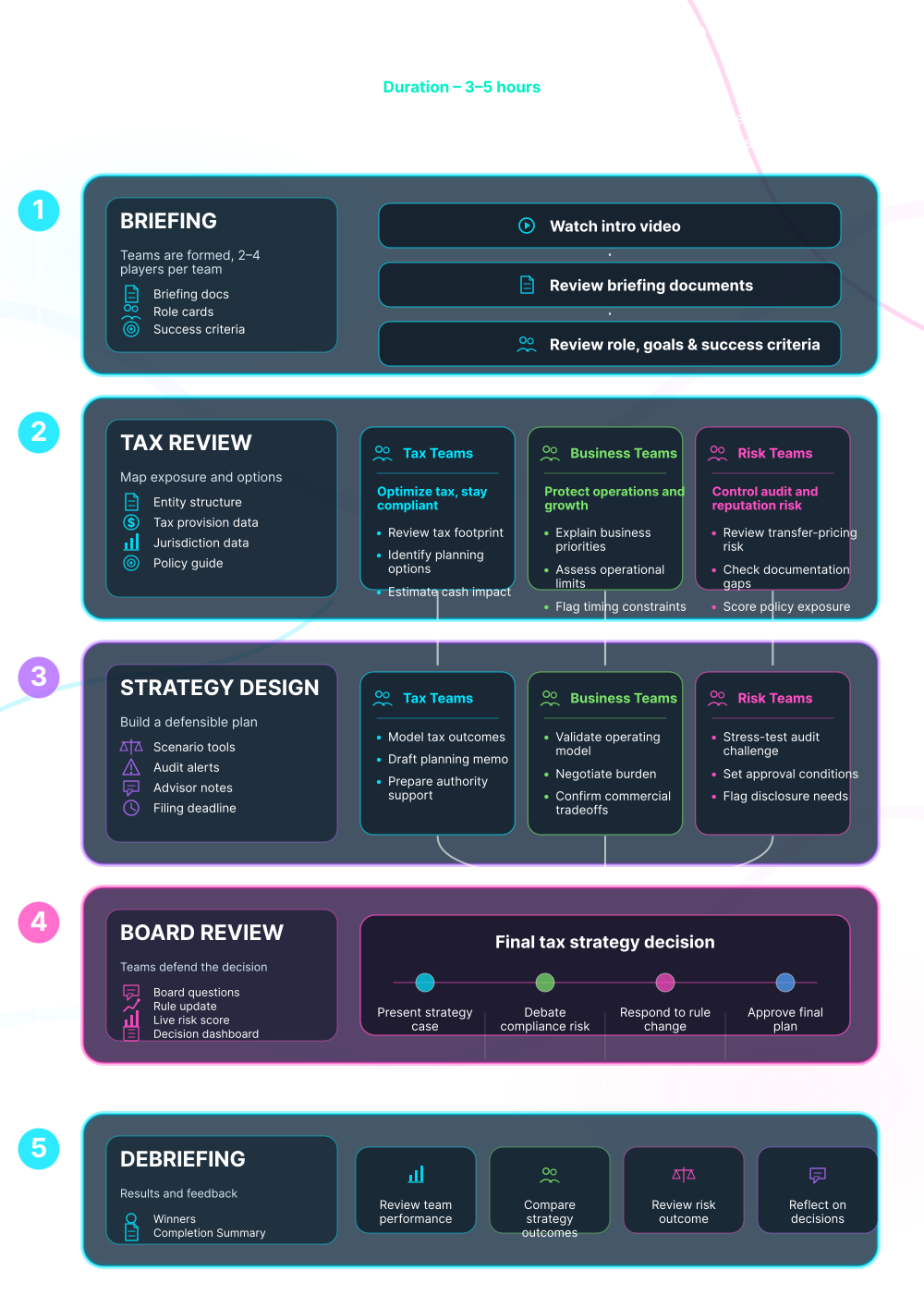
What Participants Do
Participants play the role of corporate tax strategists within a growing multinational company. Over several course rounds, they:
- Analyze current tax exposure across global subsidiaries
- Evaluate tax optimization options (e.g. intercompany loans, IP transfers, holding structures)
- Make strategic choices on transfer pricing, repatriation, and entity location
- Respond to simulated changes in legislation (e.g. global minimum tax, tax treaty revisions)
- Present tax strategy recommendations to the CFO or board
- Manage trade-offs between tax efficiency, compliance risk, and reputation
What Participants Learn
The course teaches participants to think of tax not just as a cost - but as a strategic function. They learn how to:
- Design and evaluate tax planning strategies under real business constraints
- Understand the impact of tax rules on global operations and financial statements
- Communicate complex tax implications to business stakeholders
- Identify red flags in aggressive tax strategies and recommend balanced approaches
- Interpret legislative trends and regulatory risk
- Weigh reputational, ESG, and stakeholder factors in tax decision-making
Why This Corporate Tax Strategy Course Works
Tax is often treated as an afterthought in business education. This course reframes it as a critical, strategic tool for long-term planning.
Participants face the complexity real tax leaders manage - global rules, timing trade-offs, regulatory pressure, and public scrutiny. By connecting tax to value creation, risk management, and governance, the course helps participants develop the financial judgment needed in modern leadership roles.
It’s an essential tool for anyone preparing for careers in finance, accounting, consulting, law, or strategy.