Role-based negotiation
Students experience the different incentives of borrowers and lenders.

Debt Financing Simulation
Students connect debt capacity, capital structure and lender protection through the refinancing of a private equity-backed software company.
Softie, a software company, wants to refinance part of its capital structure that involves debt capacity, pricing, maturity, repayment, seniority, security and covenants. Students take on the roles of either a lender or borrower and use company, financial and market evidence to prepare competing financing positions before finalising the debt package.
Students experience the different incentives of borrowers and lenders.
Terms must be supported by company performance, capital structure and market benchmarks.
Both sides must agree the full package, not a series of disconnected terms.
Duration
Intro is 6 minutes, Analysis and Structuring are 90 minutes each, and Reflection is untimed.
Format
Lender and borrower teams negotiate a complete financing agreement.
Level
Use it in undergraduate, postgraduate and MBA-level finance teaching.
Professor tools
Control the timeline, access teaching resources, manage participants and review decisions.
Prerequisites
Students should ideally understand the fundamental differences between debt and equity financing.
Delivery
Run it in class, remotely, across sessions or within a defined homework period.
Optional assessment
Team decisions, agreement status and comparative outcomes can support academic judgement.
Syllabus fit
Fits well within modules covering corporate finance, capital structure, debt financing, banking and finance, and leveraged finance.
Students bring together pricing, repayment, security, seniority and covenants while balancing the competing priorities of borrowers and lenders. Each term affects the others and must be evaluated as part of one coherent debt financing decision.
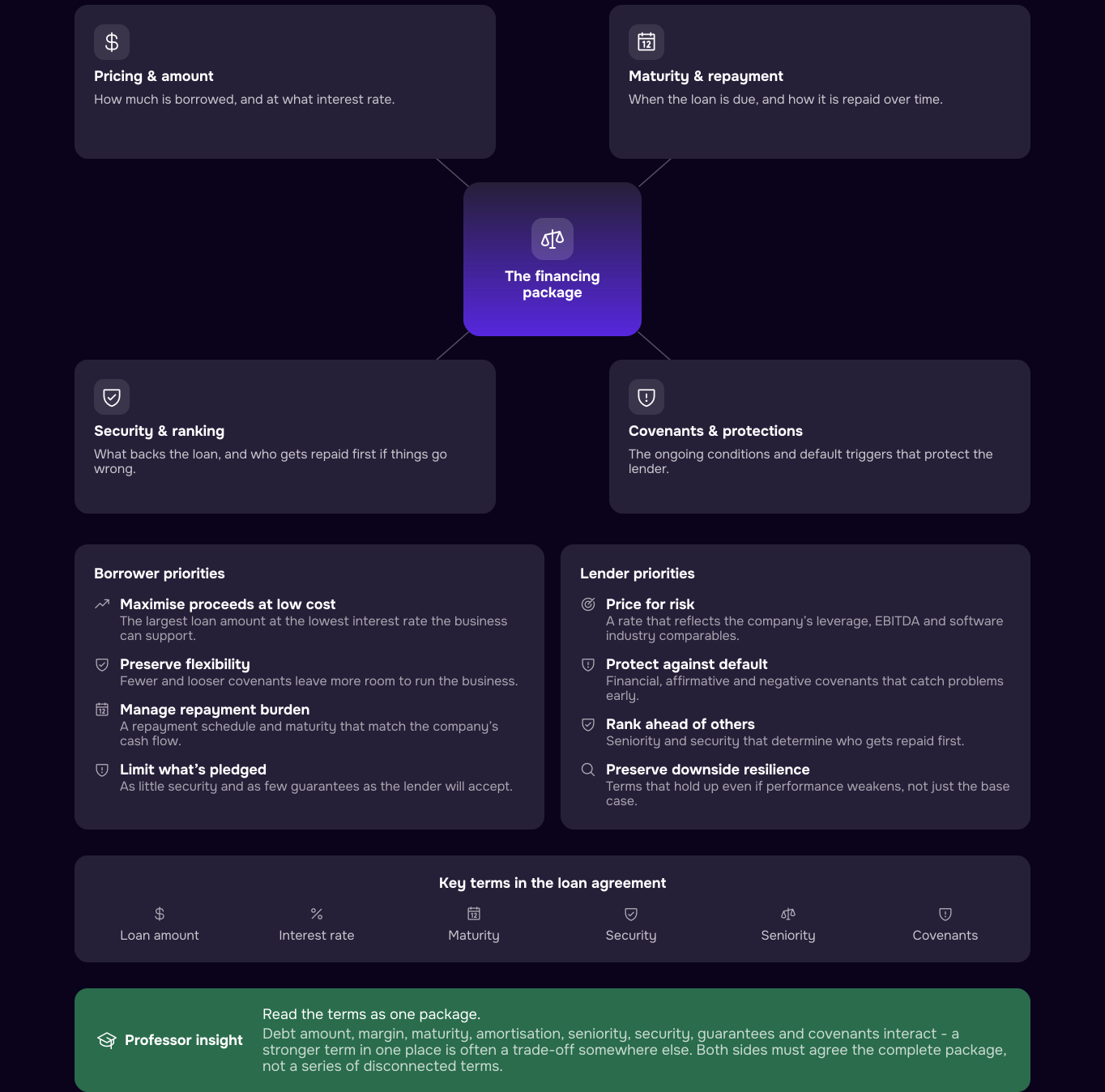

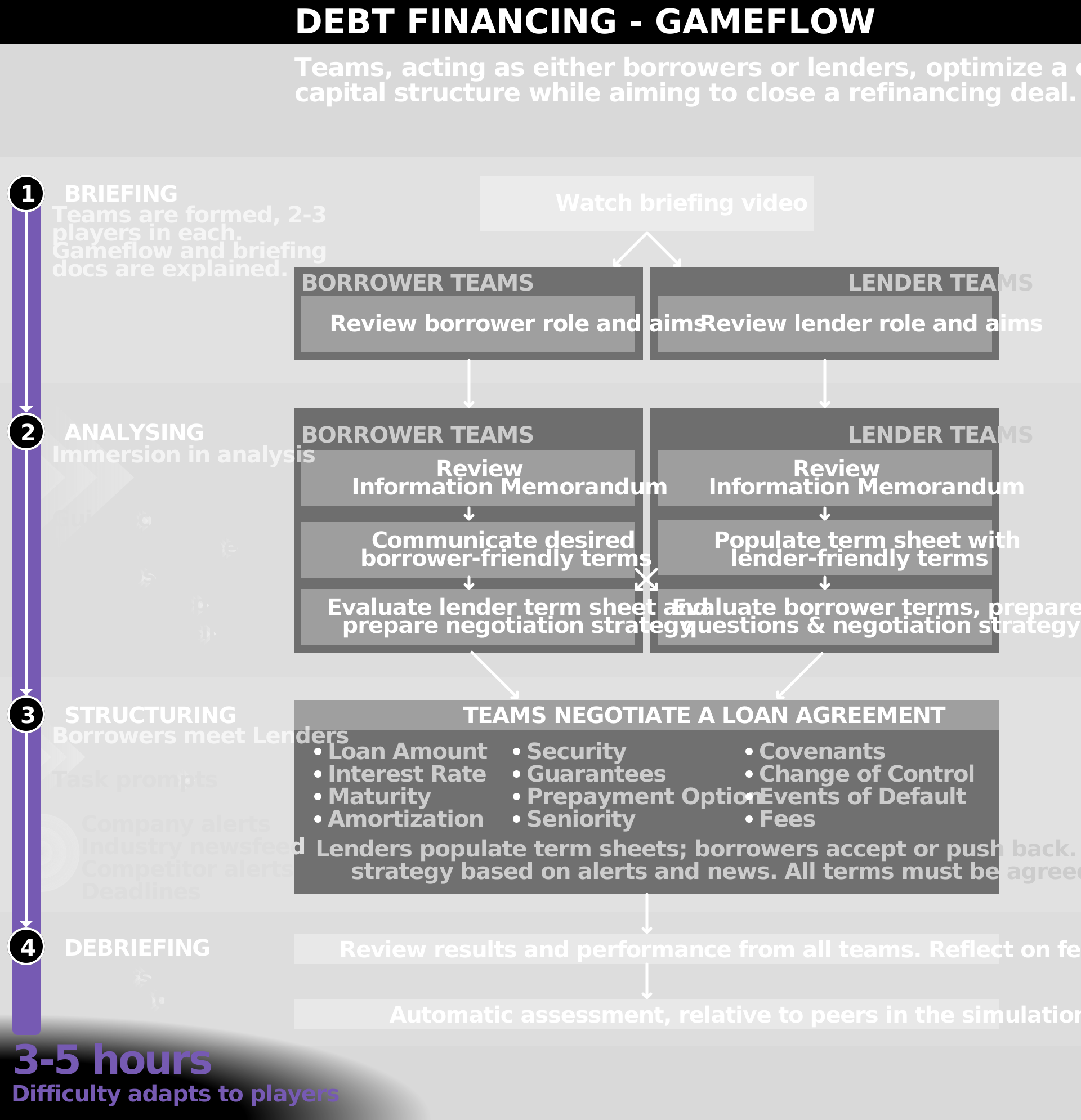
Students connect leverage, pricing, maturity, repayment, seniority, security and covenants within one coherent refinancing package.
Different assumptions about EBITDA, debt capacity and risk produce decisions that you can challenge, compare and discuss.
Final terms and group outcomes provide concrete evidence for feedback, reflection and optional assessment.
Professors manage timing, participants and progress through the Admin Panel, while students use role guidance, case evidence, financing inputs and final outputs in the Student Interface.
The timeline displays the stages and allocated durations. Professors can start automatic progression, adjust the pace, pause the activity or stop access between sessions.
The Admin Guide provides setup and facilitation guidance, the full Teaching Notes and the Gameflow Diagram. Player Management and Live Monitoring are available from the same workspace.
Play starts automatic progression. Pause holds the timer in the current stage. Stop locks student screens.
Students turn the company and market evidence into an initial position, including the issuer, loan amount, interest rate, maturity and amortisation.
Teams bring prepared positions into a shared negotiation and decide whether the complete financing termsheet is acceptable.
At the end of the activity, students review the final term sheets finalised by all the negotiation groups, and can compare these to their own outcome.
Students receive a common case context and tailored role information. The materials combine quantitative evidence, such as financial and operating data, with qualitative stakeholder arguments and policy information. Teams identify the evidence relevant to their role, test its implications and use it to support a credible negotiating position.
Students examine Softie's business, ownership, reported and adjusted EBITDA, acquisition assumptions, asset base, existing debt and legal-entity structure.
Students use software-company performance and leverage data to test whether their proposed debt level and financing terms are commercially defensible.

6 mins
Watch the briefing students see at the start of the simulation. It introduces the case, clarifies the strategic challenge and prepares both roles to analyse evidence and defend a decision.
Assessment is optional. Professors may run the simulation as an ungraded applied activity, use the outcomes for formative feedback or incorporate selected outputs into a wider assessment design. Platform data can support academic judgement, but it should not automatically replace it.
The simulation can run as one intensive activity, across several teaching sessions, as homework within a defined period or through a hybrid combination of classroom and independent work. Coaching is optional.
Step 1
Create lender and borrower teams of 3 to 5 students, then pair one team from each side into an independent negotiation group.
Step 2
Set the approved stage timings to suit an intensive activity or a delivery spread across several sessions.
Step 3
Press Play for automatic progression. Pause provides more working time, Stop suspends access, and Play resumes the activity. Adjust changes the pace or timeline position.
Step 4
Review student inputs, coach selectively without revealing a preferred answer, and use the final group outcomes to structure comparison and reflection.
Everything needed to prepare, run and debrief the Debt Financing Simulation is organised within the resources below.
The simulation is designed to be integrated into existing courses, either as in-classroom or as homework.
Option 1:
3 hours in one session. The simulation can be paused to allow short breaks. The facilitator may provide coaching during the simulation (optional).
Option 2:
Break up the simulation into smaller sessions:
• 4 x 45 min
• 3 x 1 hour
• 2x 1.5 hours
The simulation can be paused at the end of each session and resumed at the next one. The facilitator may provide coaching during the simulation (optional).
Option 3:
Participants can complete the simulation as homework, with a set timeframe such as one day or one week determined by the facilitator.
Option 4:
Hybrid approach, beginning the simulation in a class setting and allowing participants to finish it independently.
These industry professionals were involved in the inception, creation, development, testing and optimisation of the simulation.

Over 15 years of experience across advisory, PE, VC, family offices, and entrepreneurship. Covered M&A transactions from multiple angles and holds a PhD in Corporate Finance.

Investment banking, capital markets, PE, and corporate ratings experience at Morgan Stanley, S&P, and HPS Investment Partners. Holds a PhD in Quantitative Finance.

Worked in the finance department of Precomp Tools. Studied Engineering and holds an MSc in Corporate Finance from Bayes.

Corporate finance experience across M&A, structured finance, credit risk, and leveraged finance at Morgan Stanley, SMBC, and Citi. Holds a BSc in Economics.

Investment banking experience across UBS, Morgan Stanley, and Deutsche Bank. Studied Mathematics at Saratov University.
During the call, we can: