Concepts students apply
LBO modelling, debt capacity, capital structure, covenants and security, EV against equity value, IRR and negotiation.

Leveraged Buyout Simulation
Students apply DCF valuation and financial modelling, then decide how much debt the target can support and negotiate price and terms with the teams opposite them. An understanding of DCF is the only prerequisite.
Leverage is usually taught as a chapter on capital structure and examined through a worked example. Here students set the leverage themselves, then live with the consequence: the debt package determines what can be bid, and the bid determines the return the equity earns.
LBO modelling, debt capacity, capital structure, covenants and security, EV against equity value, IRR and negotiation.
Students meet leveraged finance and buy-side and sell-side work for the first time inside the simulation.
Financial models, debt terms proposed and selected, valuation and bid decisions, and negotiated outcomes.
Duration
Run one intensive session or divide the activity across several teaching sessions.
Format
Teams act as PE firms, lenders or sell-side advisers across the deal stages.
Level
Use the simulation across undergraduate, postgraduate and MBA finance teaching.
Professor tools
Manage participants, control the timeline, monitor decisions and review final results.
Prerequisites
Students should understand the foundations of discounted cash-flow valuation.
Delivery
The web-based simulation supports in-person, virtual and blended delivery.
Optional assessment
Use team models, financing terms, bids and negotiated outcomes as evidence.
Course fit
Use it within LBO, valuation, acquisition-finance or investment-banking teaching.
PE firms, lenders and sell-side advisers move through the LBO process, from initial analysis and the roadshow to financing selection and final bids. This shows how purchase price, cash-flow resilience, debt structure, deleveraging and exit value work together to shape the final equity return.
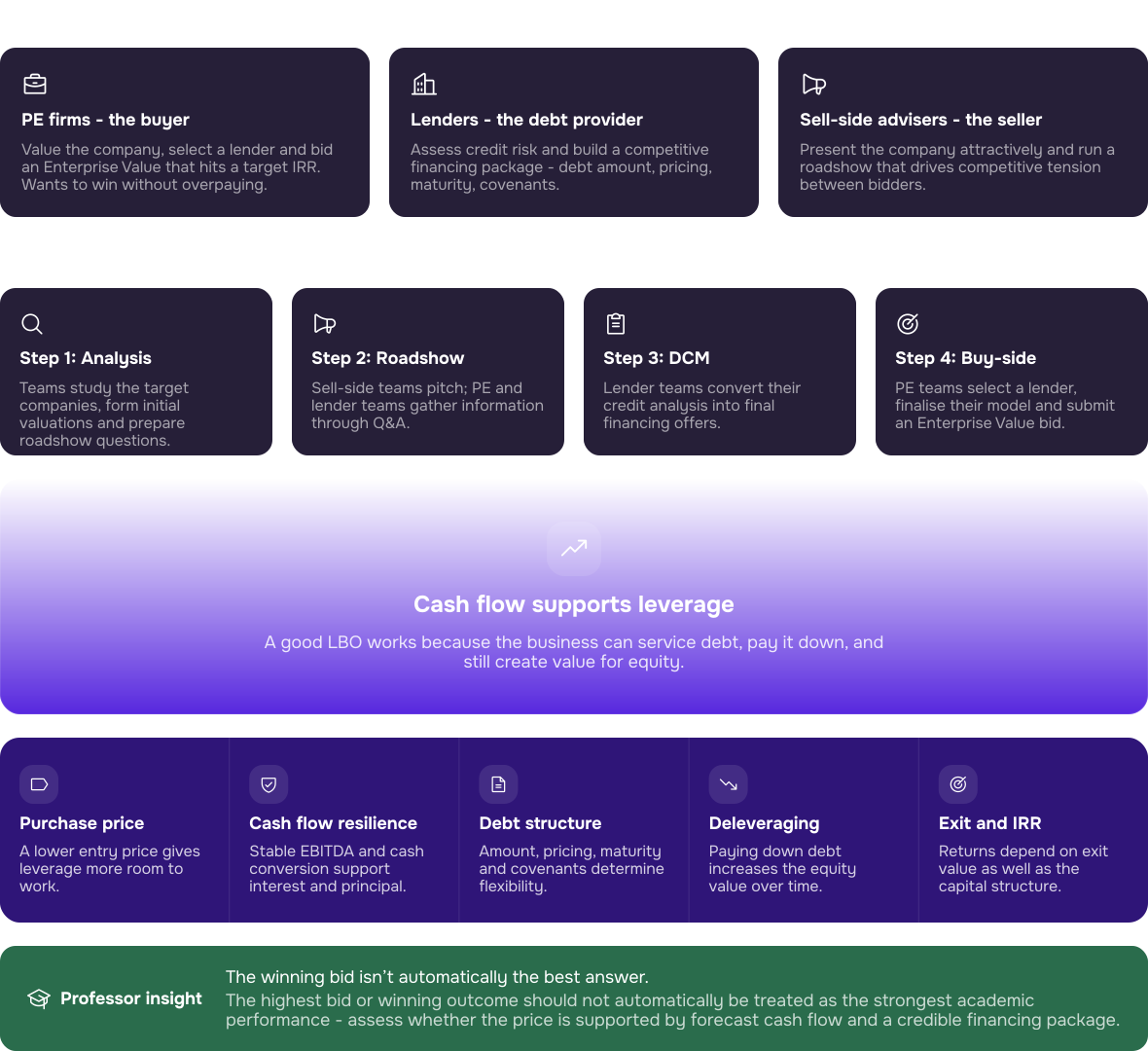


Students apply DCF valuation, debt capacity, capital structure, enterprise and equity value, IRR and negotiation in one connected exercise.
Students set the debt quantum and terms themselves, then see the effect on the price they can offer and the return the equity earns.
Teams in the same role produce directly comparable work, which makes the classroom discussion about why two credible structures produced different returns.
The Admin Panel brings together the simulation timeline, participant management, teaching resources, live decision monitoring and final results. The simulation progresses automatically after it is started, while the professor can adjust timings, pause, stop, broadcast alerts and coach selectively.
Configure the stage timings and use Play, Pause, Stop and Adjust to manage the session.
Open the Setup and Facilitation guide, Teaching Notes and Gameflow Diagram from the Admin Guide.
Use Live Monitoring to review current inputs and identify where neutral clarification may be useful.
Lender teams construct debt packages and PE teams later compare the terms available for each company.
Teams convert their analysis into platform inputs, including final debt packages and Enterprise Value bids.
At Reflection, students review the acquirer, financing team, Enterprise Value, debt, equity contribution and transaction multiples.
Students receive company information, historical financial data, management guidance and modelling resources for three target businesses. The materials combine quantitative evidence with transaction background, market positioning and management expectations.
Some information is role-specific. Sell-side teams use private company information to prepare their pitches and answer requests. Additional material can later be shared with PE and lender teams through the Data Room.
The company memorandum introduces the target, its ownership and financing history, the sale process and the relevant sell-side mandate.
The financial materials provide the evidence required to build forecasts and challenge the company narrative, including revenue, costs, EBITDA, working capital and capital expenditure.

6 mins
Watch this short introduction before the simulation begins. It explains the LBO process, the three transaction perspectives and how each team’s decisions influence the final deal.
Assessment is optional. Professors may run the simulation as an ungraded applied activity or use the available platform data to support academic judgement. Simulation results should not automatically replace academic judgement. Professors should interpret the outputs alongside the submitted models, Approval Memorandums and the decision context of each role.
The simulation can progress automatically once launched, while the professor retains control over timing and access. Coaching is optional. Pause is useful for extra working time or discussion. Stop is useful between sessions, and Play starts or continues the simulation.
Step 1
Create 6+ teams with 3-5 students in each team. Assign Teams 1-3 to the three sell-side mandates and explain the dual PE and Lender responsibilities of Teams 4 onward.
Step 2
Review the stage timings and adjust them to suit one intensive workshop, several teaching sessions or a longer homework-supported schedule.
Step 3
Press Play to begin automatic progression. Use Pause for additional working time or discussion. Use Stop to lock students out of the simulation.
Step 4
Use Live Monitoring to review current inputs and coach selectively without directing teams towards a preferred answer. At Reflection, review the completed transaction outputs before leading the debrief.
Everything needed to prepare, run and debrief the LBO Simulation is organised within the resources below.
The simulation is designed to be integrated into existing courses, either as in-classroom or as homework.
Option 1:
4 hours in one session. The simulation can be paused to allow short breaks. The facilitator may provide coaching during the simulation (optional).
Option 2:
Break up the simulation into smaller sessions:
• 4 x 1 hour
• 2 x 2 hours
The simulation can be paused at the end of each session and resumed at the next one. The facilitator may provide coaching during the simulation (optional).
Option 3:
Participants can complete the simulation as homework, with a set timeframe such as one day or one week determined by the facilitator.
Option 4:
Hybrid approach, beginning the simulation in a class setting and allowing participants to finish it independently.
These industry professionals were involved in the inception, creation, development, testing and optimisation of the simulation.

Over 15 years of experience across advisory, PE, VC, family offices, and entrepreneurship. Covered M&A transactions from multiple angles and holds a PhD in Corporate Finance.

Senior investment banker at Morgan Stanley with experience in M&A and TMT coverage across New York and San Francisco. Studied business at Kellogg.

Investment banking, capital markets, PE, and corporate ratings experience at Morgan Stanley, S&P, and HPS Investment Partners. Holds a PhD in Quantitative Finance.

Worked in the finance department of Precomp Tools. Studied Engineering and holds an MSc in Corporate Finance from Bayes.

Corporate finance experience across M&A, structured finance, credit risk, and leveraged finance at Morgan Stanley, SMBC, and Citi. Holds a BSc in Economics.
During the call, we can: