Priority of claims
Apply the ranking of senior debt, subordinated debt and equity.

Debt Restructuring Simulation
Students enter an out-of-court restructuring of a financially distressed company. Representing different stakeholders, they analyse the capital structure and negotiate a recovery.
Students apply financial distress, priority of claims and recovery analysis to Big Truckers, a company with €500 million of debt and equity claims and €260 million of enterprise value. Representing Lien 1, Lien 2 or Equity, they set haircuts, calculate recoveries and work towards an out-of-court restructuring agreement.
Apply the ranking of senior debt, subordinated debt and equity.
Calculate how proposed losses affect each stakeholder’s recovery.
Compare teams that began with the same claim and objective.
Duration
Run the timed activity in one session or divide it across shorter teaching sessions.
Format
Students analyse one distressed company from three competing stakeholder positions.
Level
Suitable for restructuring, corporate finance, banking, managerial finance or negotiation courses.
Professor tools
Manage participants, control the timeline, monitor decisions and communicate with the class.
Prerequisites
Students should ideally have a basic understanding of debt and equity.
Delivery
The web-based simulation also supports multi-session and homework delivery.
Optional assessment
Use recovery, agreement and comparison data to support feedback or assessment.
Course fit
Suitable for Corporate Restructuring, Corporate Finance, Banking and Finance, Managerial Finance and related modules.
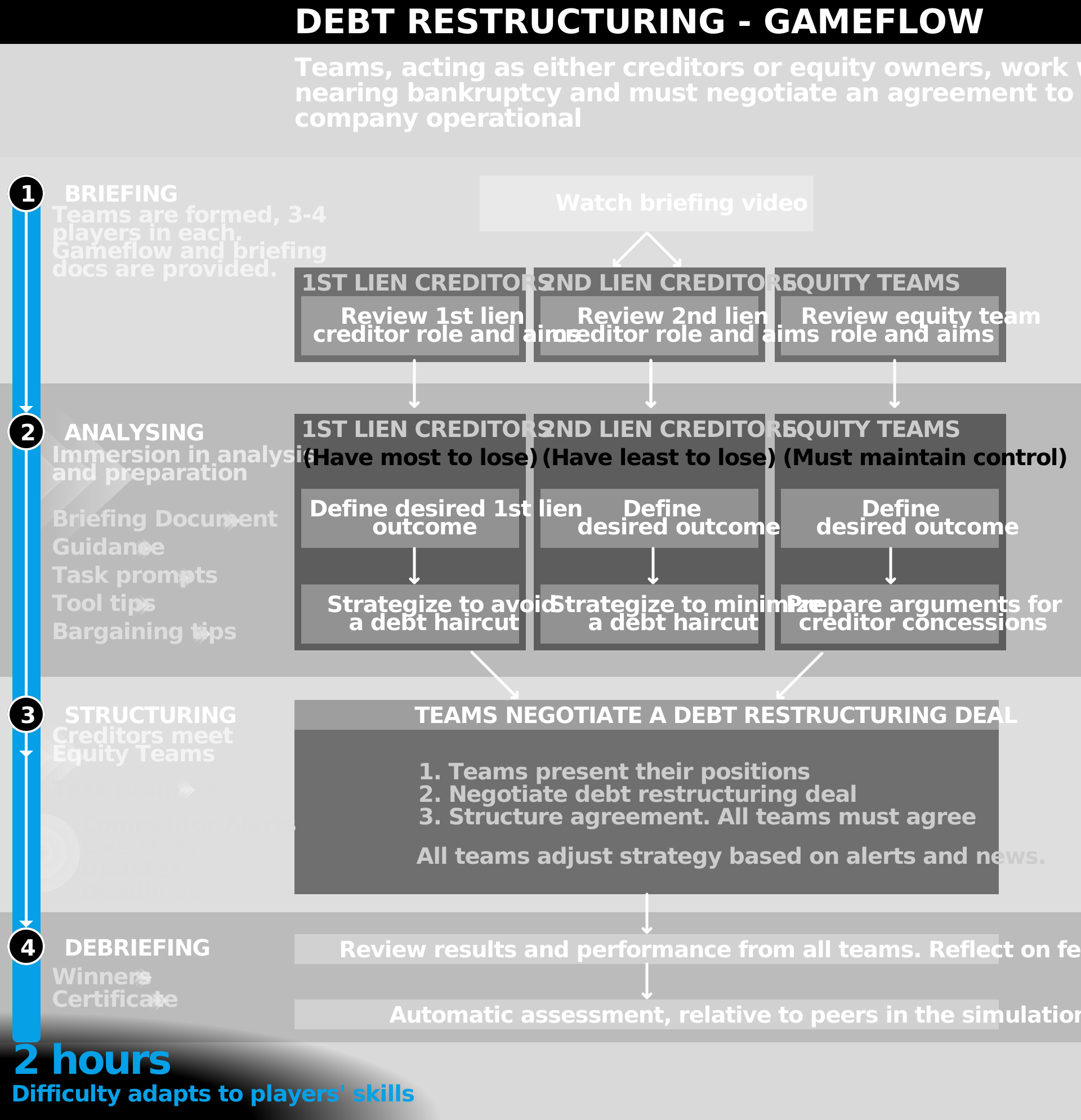
Connects the value gap, competing recovery objectives and the four-step restructuring process from assessment to agreement.
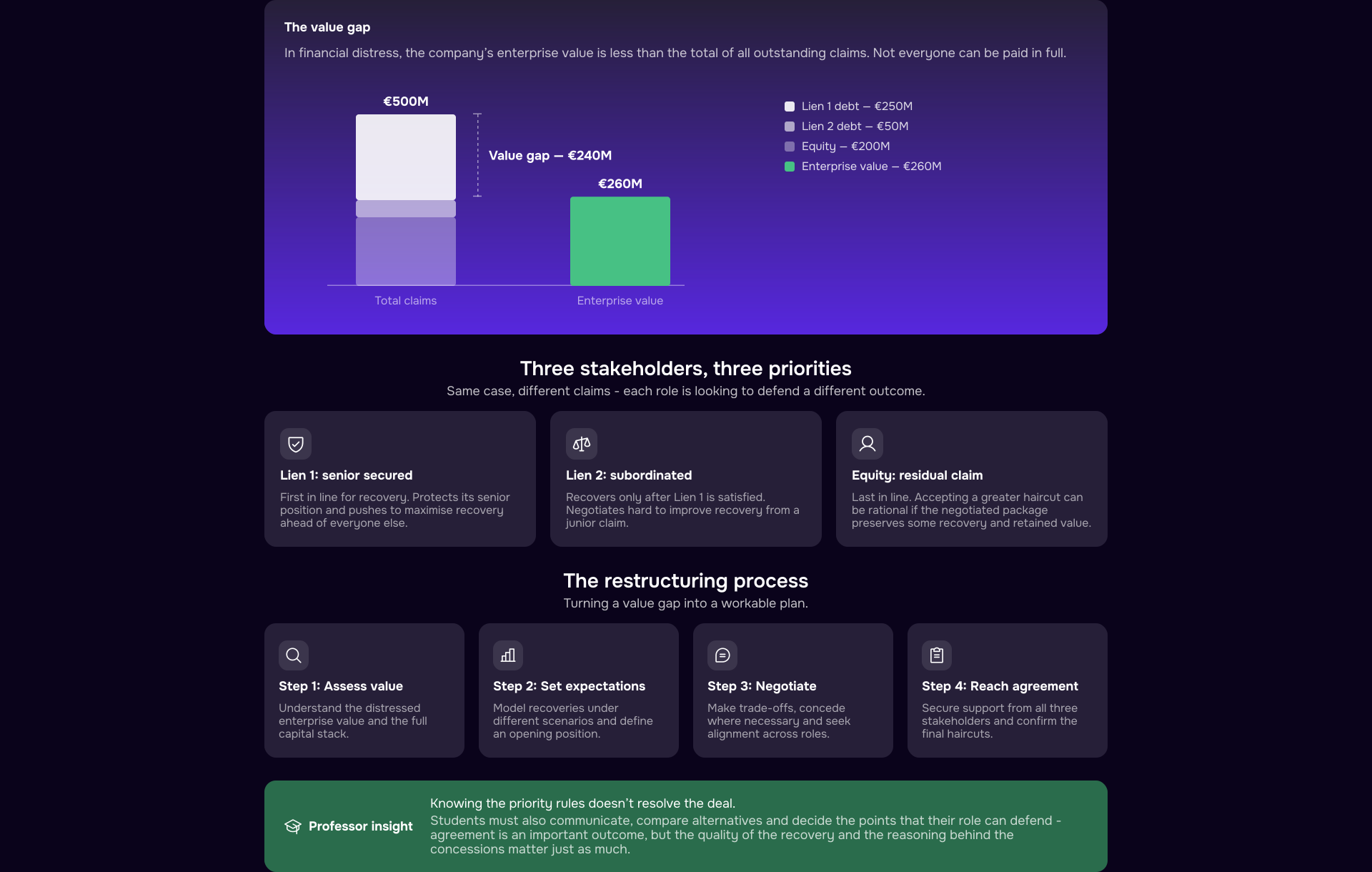

Students see how a fall in enterprise value changes expected recoveries across senior debt, subordinated debt and equity.
Students calculate recovery rates, test different haircuts and see how one stakeholder’s outcome affects the value available to the others.
Professors can compare teams representing the same role and discuss creditor rights, concessions, agreement failure and the bankruptcy alternative.
Students work through a guided, timed interface while professors manage the session from a separate admin dashboard.
Set the time available for each stage, start the simulation and adjust the timeline when teams need more or less time.
Access setup and facilitation guidance, the teaching note and the gameflow diagram from the Admin Guide.
Play starts automatic progression. Pause holds the timer in the current stage. Stop locks student screens.
Each team receives a role-specific mission explaining Big Truckers’ financial distress, the claim it represents and the recovery it must protect. This ensures students begin the activity with clear stakeholder priorities, incentives and success criteria.
Teams enter the haircut they are prepared to accept and immediately see the effect on recovery percentage, recovery value and the current deal position. This allows professors to observe how students connect financial calculations with stakeholder priorities and negotiation strategy.
The final Reflection screen shows each group’s recoveries, agreement status and results across negotiation groups. Professors can compare teams representing the same role and explore why similar starting positions produced different concessions, recoveries and deal outcomes.
Students review the Big Truckers transaction, financial position and restructuring context before preparing their role strategy. The case combines quantitative evidence about value and recoveries with qualitative information about stakeholder objectives, creditor rights, control and bankruptcy risk.
The capital structure visual compares Big Truckers’ original claims with the enterprise value available in distress.
The role briefing identifies the negotiating parties and the recovery objective of the assigned stakeholder. The visible example is the Lien 1 briefing.

10 mins
The Intro stage begins with a ten-minute briefing that explains the case, stakeholder roles, aims, activities and practical success guidance.
Assessment is optional. Professors may run the simulation as an ungraded applied activity or use its team-level results to support academic judgement.
The platform data can inform feedback and assessment, but recovery and agreement outputs should not automatically replace academic judgement about analysis, negotiation or individual contribution.
The simulation can progress automatically after setup, while the professor retains control over timing, communication and selective coaching.
Step 1
Assign students to Lien 1, Lien 2 and Equity teams. The system places one team from each role into an independent negotiation group.
Step 2
Review the four stages and adjust the allocated time to suit the planned teaching format.
Step 3
Press Play to start or resume automatic progression. Use Pause to provide extra time and Stop when the session must be suspended.
Step 4
Review team inputs, intervene where clarification is needed and use the final recovery and agreement tables to compare outcomes.
Everything needed to prepare, run and debrief the Debt Restructuring Simulation is organised within the resources below.
The simulation is designed to be integrated into existing courses, either as in-classroom or as homework.
Option 1:
2-3 hours in one session. The simulation can be paused to allow short breaks. The facilitator may provide coaching during the simulation (optional).
Option 2:
Break up the simulation into smaller sessions:
- 4 x 45 min
- 3 x 1 hour
- 2x 1.5 hours
The simulation can be paused at the end of each session and resumed at the next one. The facilitator may provide coaching during the simulation (optional).
Option 3:
Participants can complete the simulation as homework, with a set timeframe such as one day or one week determined by the facilitator.
Option 4:
Hybrid approach, beginning the simulation in a class setting and allowing participants to finish it independently.
These industry professionals were involved in the inception, creation, development, testing and optimisation of the simulation.

Former Practice Specialist in McKinsey’s Corporate Finance team in Germany and Finance professor at Aberdeen University.

Investment banking, capital markets, PE, and corporate ratings experience at Morgan Stanley, S&P, and HPS Investment Partners. Holds a PhD in Quantitative Finance.

Senior investment banker at Morgan Stanley with experience in M&A and TMT coverage across New York and San Francisco. Studied business at Kellogg.

Corporate finance experience across M&A, structured finance, credit risk, and leveraged finance at Morgan Stanley, SMBC, and Citi. Holds a BSc in Economics.

Investment banking experience across UBS, Morgan Stanley, and Deutsche Bank. Studied Mathematics at Saratov University.
During the call, we can: