Basic familiarity with asset classes and risk-return concepts is helpful. The training includes product overviews and client goal definitions.

Wealth Management Training
Participants step into the role of personal financial advisors - designing investment strategies, balancing client goals, and navigating market changes - in our Wealth Management Training.

Wealth Management Training Overview
The Wealth Management Training places participants in the shoes of client-facing financial advisors tasked with crafting personalized wealth strategies across life stages, risk profiles, and asset classes.
Designed by private bankers, financial planners, and business school instructors, this training recreates real-world advisory relationships. Participants must understand client goals, design investment portfolios, and adapt plans in response to life events, economic changes, and evolving client preferences.
Participants face authentic dilemmas around risk tolerance, ethical conflicts, product recommendations, and intergenerational planning - mirroring what professionals encounter in wealth management, private banking, and advisory services.

Wealth Management Training Concepts
Participants apply a wide range of personal finance and client advisory concepts, including:
- Goal-Based Financial Planning: Retirement, education, liquidity, and legacy planning
- Asset Allocation: Diversification across equity, fixed income, alternatives, and cash
- Risk Profiling: Assessing risk appetite, horizon, and behavioral tendencies
- Investment Vehicles: Mutual funds, ETFs, insurance-linked products, and discretionary mandates
- Behavioral Finance: Managing client biases, fear, and overconfidence
- Tax Efficiency: Portfolio construction with after-tax returns in mind
- Regulatory and Ethical Standards: Suitability, fiduciary responsibility, and disclosure

Gameflow
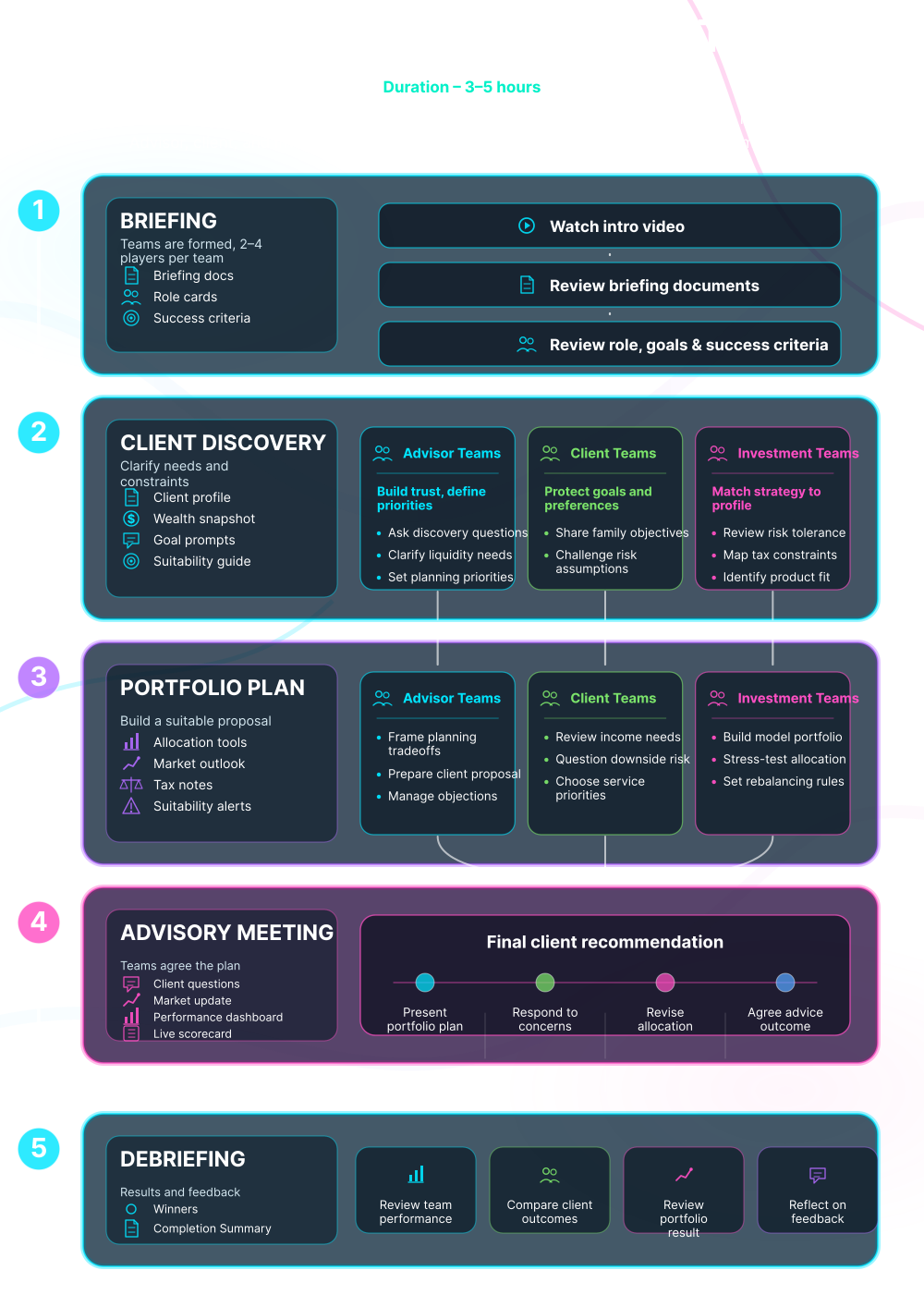

What Participants Do
Participants act as wealth managers serving a roster of diverse clients. Over multiple training rounds, they:
- Conduct fact-finding and assess client goals, income, risk profile, and family needs
- Construct customized investment portfolios based on client preferences
- Recommend suitable products with appropriate justification and disclosure
- Respond to market downturns, regulatory changes, or life events (e.g., marriage, illness, inheritance)
- Handle difficult conversations around performance, fees, or product suitability
- Present portfolio reviews and propose plan adjustments in line with evolving goals

What Participants Learn
This training builds practical advisory, interpersonal, and analytical skills. Participants learn to:
- Align financial strategy with individual goals and risk tolerance
- Apply asset allocation models in a human-centered context
- Anticipate and navigate behavioral responses to volatility
- Communicate investment concepts clearly and empathetically
- Balance ethics, compliance, and commercial objectives
- Reflect on trust-building and long-term relationship management

Why This Wealth Management Training Works
Financial advisory education often focuses on technical concepts - but real success lies in human decisions, trust, and adaptation.
This training emphasizes the soft and strategic side of finance, where listening, judgment, and empathy matter as much as asset selection. By role-playing high-stakes interactions and making portfolio choices under pressure, participants develop a robust understanding of what it takes to become a trusted wealth advisor.
Perfect for courses in private banking, financial planning, or relationship management, this training builds readiness for client-facing finance roles.