Basic spreadsheet fluency is recommended. The training includes guided steps and audit tools for newer users, but is challenging enough for advanced participants too.

Financial Modeling and Valuation Training
Participants build end-to-end financial models from scratch - forecasting performance, valuing businesses, and presenting deal-ready outputs - in our Financial Modeling and Valuation Training.

Financial Modeling and Valuation Training Overview
The Financial Modeling and Valuation Training gives participants practical experience constructing and applying financial models to evaluate a company’s worth, guide investment decisions, or prepare for deal-making.
Developed by investment bankers, corporate finance professionals, and valuation experts, the training replicates the real-world pressure and structure of live modeling assignments. Participants start with raw company data and market inputs, build detailed integrated models, and produce defensible valuations using multiple methodologies.
Ideal for investment banking, private equity, or corporate finance courses, the training builds technical fluency, business judgment, and presentation readiness.

Financial Modeling and Valuation Training Concepts
Participants apply advanced concepts from corporate finance, accounting, and valuation, including:
- Three-Statement Modeling: Building and linking income statement, balance sheet, and cash flow statement
- Forecasting Drivers: Revenue growth, margins, working capital, and capex assumptions
- Valuation Techniques: DCF (discounted cash flow), precedent transactions, and public comparables
- WACC and Terminal Value: Calculating discount rates and perpetuity/growth exit methods
- Sensitivity and Scenario Analysis: Testing key drivers and downside cases
- Model Accuracy and Integrity: Circularity, audit checks, and dynamic formula design
- Executive Summaries: Creating board-level outputs from detailed financial work

Gameflow
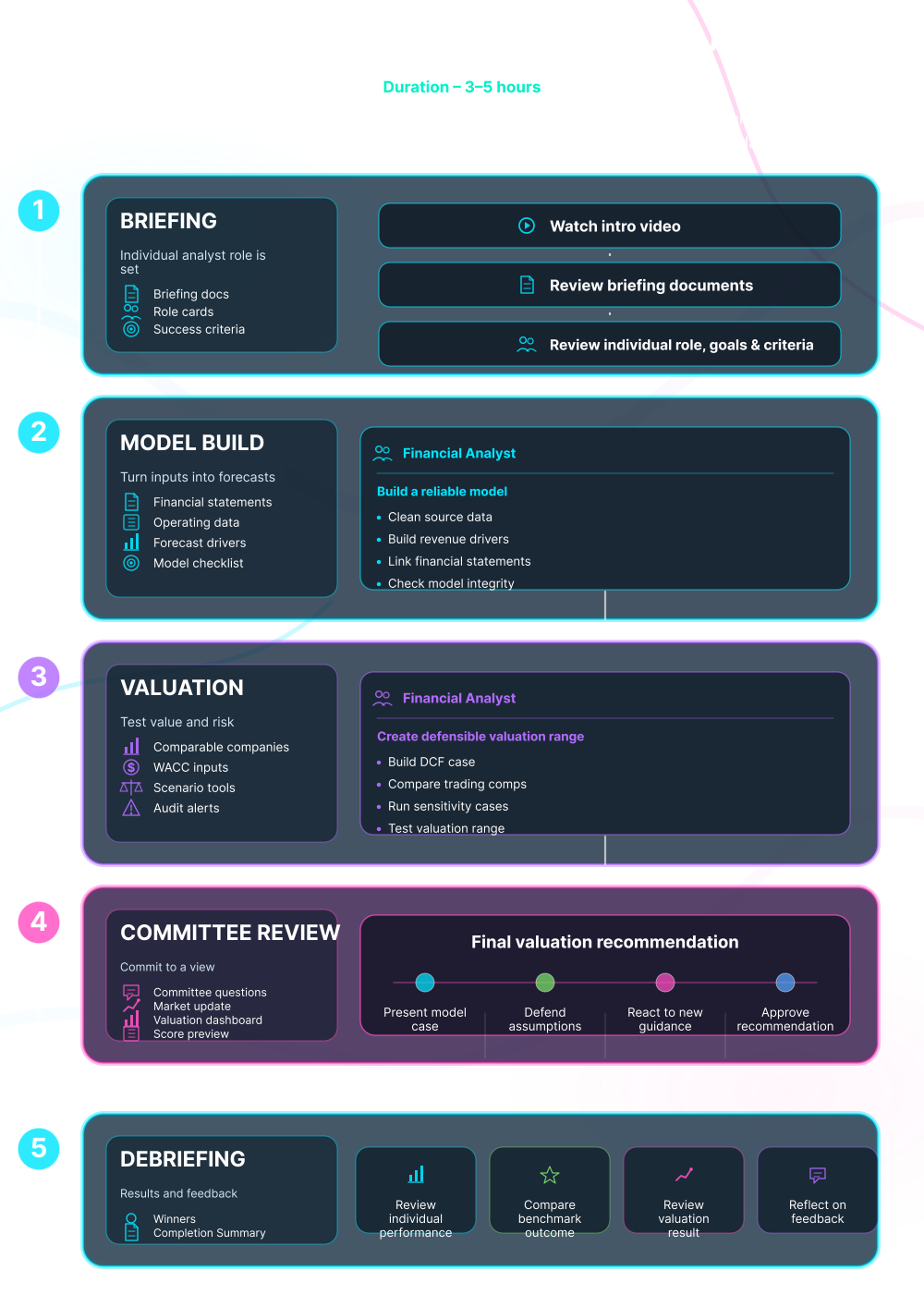

What Participants Do
In this training, participants take on the role of analysts at an advisory or investment firm. Over multiple rounds, they:
- Receive a company’s historical financials and qualitative background
- Identify key performance drivers and build a fully integrated financial model
- Select and apply relevant valuation methods (DCF, comps, transactions)
- Perform sensitivity analysis and calculate valuation ranges
- Create investment memos, board decks, or client-ready valuation summaries
- Defend modeling logic and valuation conclusions to simulated stakeholders

What Participants Learn
The training builds technical mastery and decision-making confidence. Participants learn how to:
- Translate financial statements into dynamic forecasting tools
- Think critically about business assumptions and valuation logic
- Choose appropriate methodologies for different types of companies or deals
- Structure clear, audit-proof models used in real investment settings
- Communicate complex models in a concise, strategic format
- Understand the expectations of investors, clients, and senior executives

Why This Financial Modeling and Valuation Training Works
Financial modeling is a foundational skill in finance - but too often, it’s taught in fragments. This training delivers the end-to-end experience, connecting technical modeling with strategic insight.
By mirroring real analyst workflows, it teaches not just Excel proficiency, but also client-facing thinking: how to defend your work, focus on what matters, and deliver clarity under time pressure. The training is adaptable for undergraduate, MBA, and professional training programs.