No. The simulation introduces wealth management principles in a practical way.

Wealth Management Simulation
In this Wealth Management Simulation, participants act as advisors designing client strategies - balancing investments, risk, taxes, and goals while navigating market shifts, ethical considerations, and the complexities of long-term financial planning.

Wealth Management Simulation Overview
Participants step into the role of wealth managers working with diverse client profiles. Each round introduces new challenges such as changing market conditions, shifting life goals, tax considerations, or regulatory requirements.
They must balance client risk tolerance with performance expectations, design tailored portfolios, and address ethical dilemmas while maintaining trust. The simulation highlights the relationship-building and technical skills central to wealth management.
This simulation is ideal for university programs, executive education, and corporate training. It makes wealth management practical and engaging by replicating the human, financial, and ethical pressures advisors face daily.

Wealth Management Simulation Concepts
Participants work through realistic scenarios, which can be customized to emphasize or exclude specific topics depending on the learning goals. This modular structure allows the simulation to be tailored to any type of session. Key concepts include:
- Client profiling and financial goal setting
- Asset allocation and portfolio construction
- Risk-return trade-offs and diversification
- Tax and estate planning considerations
- Retirement planning strategies
- Ethical challenges and fiduciary responsibility
- Communicating with clients under uncertainty
- Impact of market shocks on client strategies
- ESG integration in wealth management
- Long-term relationship management and trust building

Gameflow
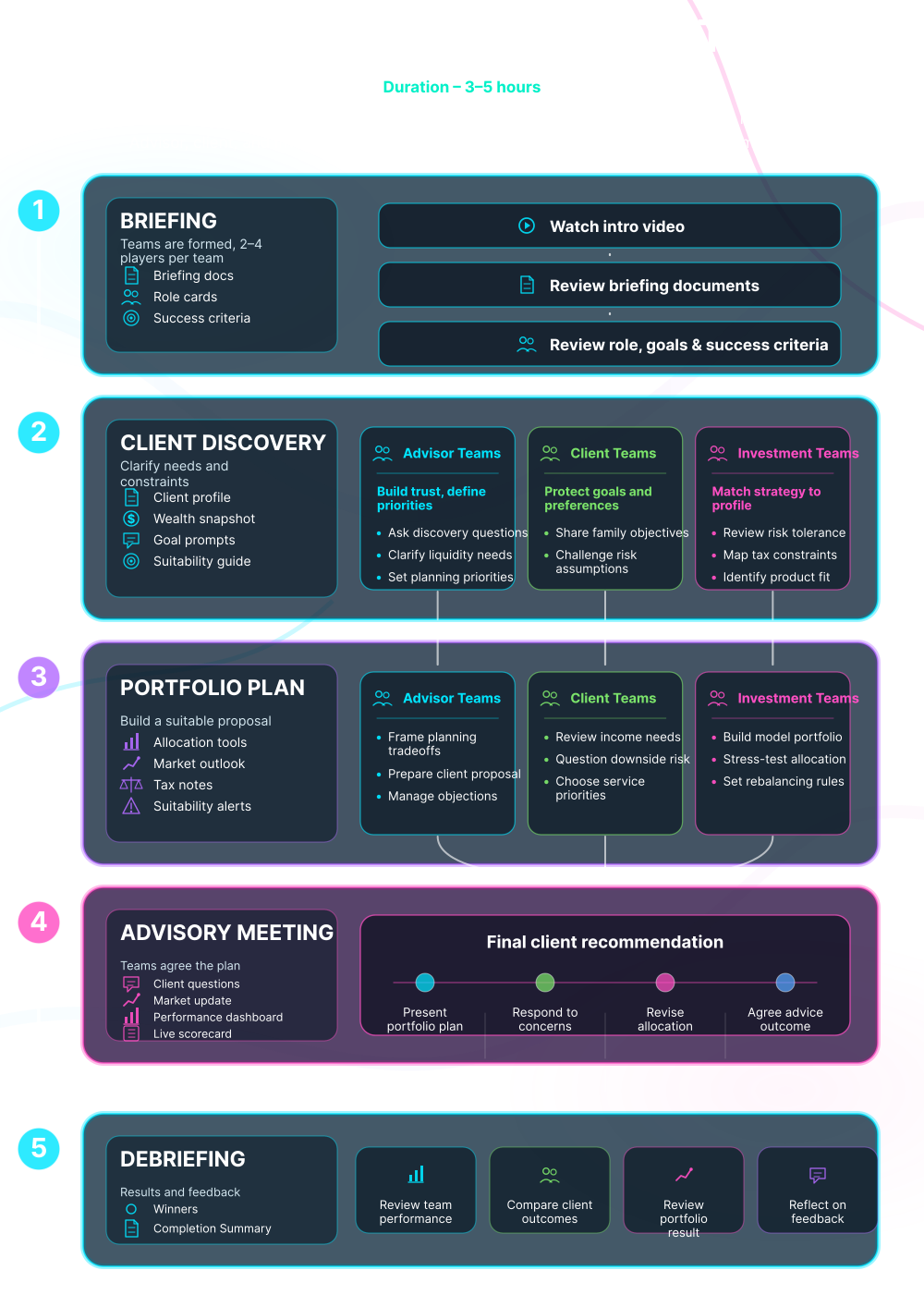

What Participants Do
In the simulation, participants act as wealth managers responsible for advising clients. They:
- Review detailed client profiles and objectives
- Design portfolios that balance growth, risk, and liquidity
- Incorporate tax and estate planning into recommendations
- Respond to shocks such as recessions or regulatory changes
- Address client concerns with clarity and empathy
- Present strategies through meetings, memos, or updates

Learning Objectives
By the end of the simulation, participants will be able to:
- Build tailored wealth management strategies for diverse clients
- Apply asset allocation and risk management techniques
- Integrate tax and estate considerations into financial planning
- Communicate effectively and empathetically with clients
- Manage ethical and fiduciary responsibilities
- Adapt plans in response to market shocks or life changes
- Balance short-term needs with long-term goals
- Recognize ESG’s role in client portfolio design
- Strengthen trust and credibility in advisory roles
- Gain confidence in holistic wealth management practices
The simulation’s flexible structure ensures that these objectives can be calibrated to match the depth, duration, and focus areas of each program, whether in higher education or corporate learning.

How the Wealth Management Simulation Works
The simulation can be delivered individually or in teams, across classrooms or professional programs. Each cycle mirrors the advisor-client interaction process.
1. Receive a Scenario or Brief: Participants are introduced to a client with specific goals, constraints, and market conditions.
2. Analyse the Situation: They review financial statements, risk preferences, and life stage details.
3. Make Strategic Decisions: Participants design portfolios, tax strategies, or estate plans under given constraints.
4. Collaborate Across Roles: Teams may role-play as wealth managers, clients, or regulators debating outcomes.
5. Communicate Outcomes: Participants present strategies through client meetings, memos, or presentations.
6. Review and Reflect: Feedback highlights portfolio performance, client satisfaction, and ethical alignment. Participants refine strategies across rounds.
Frequently Asked Questions
Assessment
Assessment can be tailored to focus on technical, communication, or ethical skills. Participants may be evaluated on:
- Portfolio design and performance against goals
- Responsiveness to market shocks or client changes
- Clarity and empathy in client communication
- Ethical judgment and fiduciary responsibility
- Collaboration and professionalism in advisory teams
You can also include memo writing and debrief presentations as part of the assessment structure. Additionally, you can also add a built-in peer and self-assessment tool to see how participants rate themselves. This flexibility allows the simulation to be easily integrated by professors as graded courses at universities and by HR at assessment centres at companies.