The simulation is 100% web-based and runs on any modern browser (Chrome, Safari, Firefox) with an internet connection. No special software is required.

Trade Finance Simulation
Navigate the intricate world of international trade, mitigate risks, and finance global supply chains in this dynamic, hands-on simulation.

Trade Finance Simulation Overview
Global trade is the engine of the world economy, but it is fraught with complexities and risks that are often overlooked in traditional finance courses. The Trade Finance Simulation plunges participants into the high-stakes role of a Trade Finance Officer at a major international bank.
Participants will be responsible for evaluating and structuring financial solutions for importers and exporters from around the globe. Each transaction is a puzzle involving credit risk, country risk, logistics, and complex international regulations.
Participants will learn to use the essential tools of the trade to facilitate smooth and secure transactions for clients while protecting the bank's interests and profitability. This simulation provides an unparalleled, risk-free environment to bridge the gap between academic theory and the practical demands of a global trade finance desk.

Trade Finance Simulation Concepts
Participants work through realistic scenarios, which can be customized to emphasize or exclude specific topics depending on the learning goals. This modular structure allows the simulation to be tailored to any type of session. Key concepts include:
- Incoterms
- Letters of Credit
- Documentary Collections
- Supply Chain Finance and Receivables Discounting
- Bank Guarantees and Standby LCs
- Bill of Lading and Other Shipping Documents
- Country and Counterparty Risk Analysis
- UCP 600 and International Rules
- Trade-based Money Laundering
- Working Capital Cycle

Gameflow

What Participants Do
In the simulation, participants will:
- Evaluate requests from importers and exporters, assessing their creditworthiness and the risks of the transaction.
- Decide whether to issue a Letter of Credit, provide a loan, or use documentary collections.
- Interact with virtual clients to negotiate fees, interest rates, and collateral.
- Scrutinize Bills of Lading, commercial invoices, and insurance certificates to ensure compliance with LC terms.
- Build and manage a book of trade finance transactions, balancing risk and return.
- Handle unexpected events like shipping delays, document discrepancies, and political turmoil.
- Ensure all deals adhere to international standards and anti-money laundering protocols.

Learning Objectives
By the end of the simulation, participants will be able to:
- Explain the role and mechanics of key trade finance instruments in facilitating international trade.
- Differentiate between the risks and responsibilities of importers, exporters, and their banks under different Incoterms and payment methods.
- Structure appropriate trade finance solutions for a variety of real-world scenarios.
- Analyze the credit, country, and documentary risks inherent in a cross-border transaction.
- Apply the principles of UCP 600 to examine shipping and commercial documents for discrepancies.
- Develop a strategic approach to managing a profitable and compliant trade finance portfolio for a bank.
How the Trade Finance Simulation Works
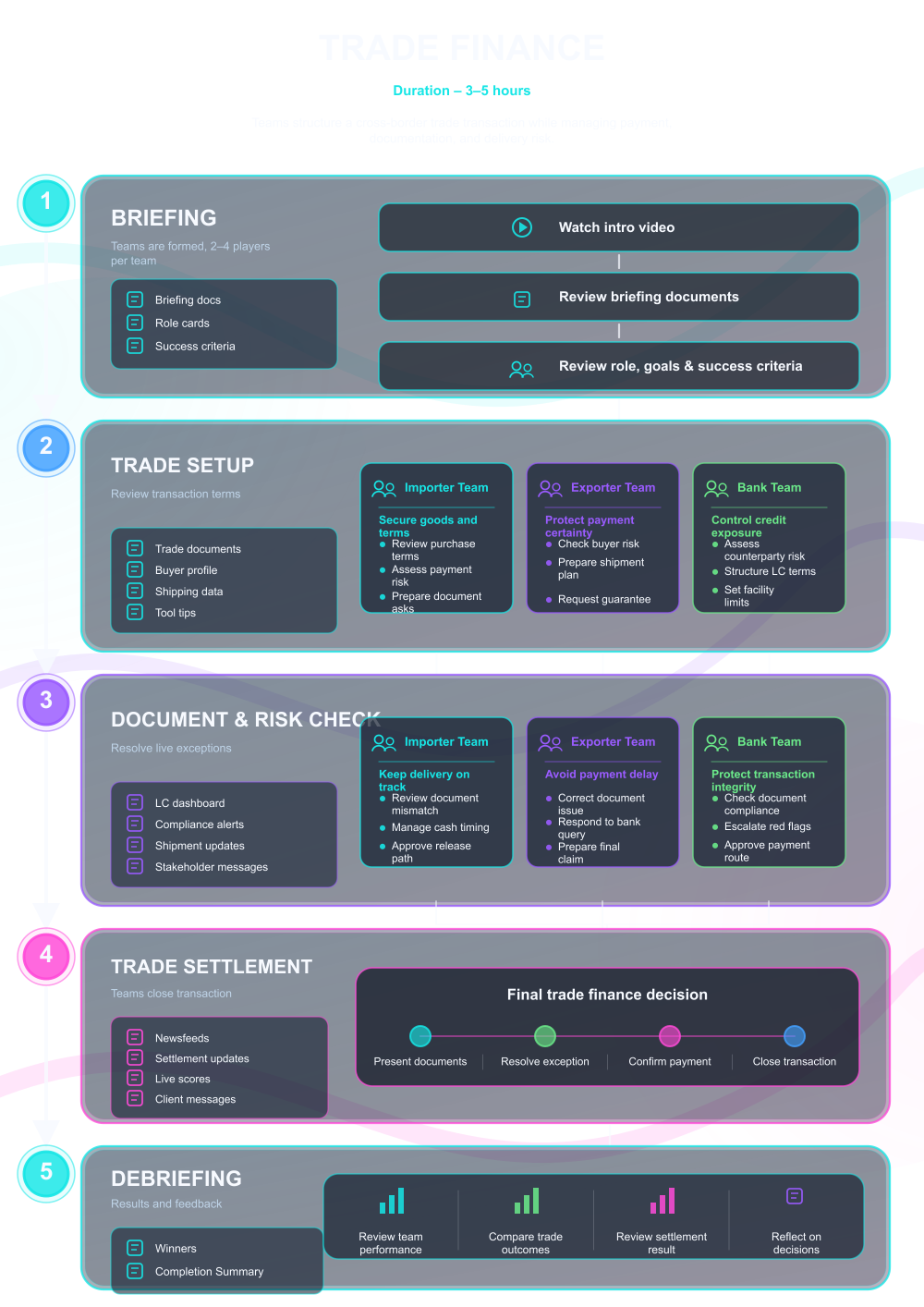
This simulation can be run individually or in teams in academic or corporate contexts. Each cycle represents a stage of getting through a pressing financial situation.
1. Brief and Role Introduction Participants are assigned the role of a Trade Finance Officer. Participants receive their objectives and an overview of the simulation platform. Brief, focused modules introduce core concepts like LCs and Incoterms, preparing participants for the deals ahead.
2. Deals Release The simulation presents participants with a dynamic pipeline of deals from various industries and countries. Participants must analyze each one.
3. Analysis Stage For each deal, participants choose the right instrument, negotiate terms, and approve the transaction. Participants will process documents and manage discrepancies.
4. Real-Time Shock Events The simulation includes a changing economic environment and random events that test participant’s risk management skills.
5. Final Deliverable Participants consolidate their findings, resolve outstanding issues, and prepare a final presentation for the mock committee, defending their opinion and key judgments.
Frequently Asked Questions
Assessment
Assessment of participant performance can be tailored according to the host institution’s objectives (business school, corporate training, assessment centre). Typical assessment criteria include:
- Profitability Score
- Risk Management Index
- Compliance and Accuracy Score
- Portfolio Diversification
Assessment may incorporate peer and self-review components, facilitator scoring, and debrief discussion. Results may feed into grades, executive feedback, certification or development plans.