Unlike generic consulting simulations, this program is hyper-focused on the financial services industry, incorporating real-world regulatory pressures, legacy system challenges, and the specific technological drivers (like fintech disruption) that are unique to banks and asset managers.

Technology Consulting Simulation
Navigate the intersection of finance and technology. Deliver strategic IT solutions that drive value for major financial institutions.

Technology Consulting Simulation Overview
In today's financial landscape, technology is not just a support function; it is a core driver of competitive advantage, regulatory compliance, and operational efficiency. This simulation plunges participants into the high-stakes world of a top-tier technology consulting firm.
Participants’ teams are hired by a major financial institution (such as a bank, asset manager, or insurance company) facing a critical business challenge. They will be tasked with analyzing their current technology stack, processes, and strategic goals to design and recommend a comprehensive technology solution.
Through realistic client interactions, RFPs, and team collaboration, participants will learn to bridge the gap between complex financial problems and cutting-edge technological solutions, all while managing project scope, budget, and stakeholder expectations.

Technology Consulting Simulation Concepts
Participants work through realistic scenarios, which can be customized to emphasize or exclude specific topics depending on the learning goals. This modular structure allows the simulation to be tailored to any type of session. Key concepts include:
- IT Strategy and Digital Transformation
- Business Requirements Gathering
- Systems Analysis and Architecture
- Cost-Benefit and ROI Analysis
- Project Scoping and Phasing
- Risk Management and Cybersecurity
- Regulatory Compliance (e.g., GDPR, PSD2, Basel III)
- Stakeholder Management and Presentation
- Agile vs. Waterfall Methodologies
- Vendor Selection and Management

Gameflow
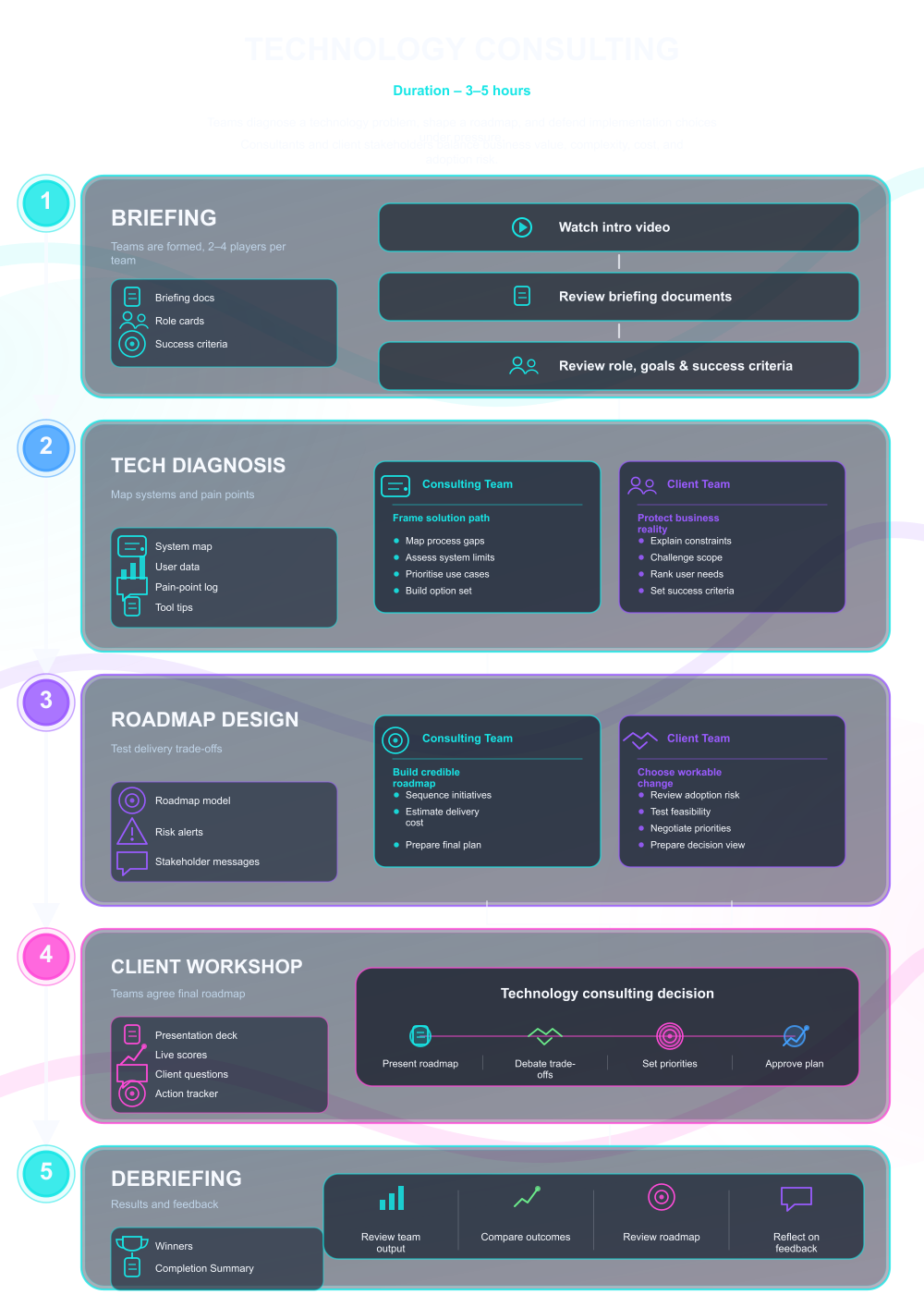

What Participants Do
In the simulation, participants will:
- Conduct meetings to understand the client's pain points, strategic objectives, and operational bottlenecks.
- Evaluate the client's existing IT infrastructure, data management, and software applications.
- Create a detailed consulting proposal outlining your recommended solution, including architecture, implementation roadmap, and budget.
- Justify the investment through rigorous financial analysis, projecting ROI, TCO, and key performance indicators.
- Defend your strategy and recommendations in a high-pressure final presentation to the client's board (played by instructors or peers).
- Respond to unexpected changes in client demands, budget cuts, and emerging technological risks.

Learning Objectives
By the end of the simulation, participants will be able to:
- Analyze complex business problems within financial institutions and translate them into technology requirements.
- Design a coherent and practical technology strategy that aligns with business and regulatory goals.
- Evaluate different technology solutions (e.g., Cloud Migration, AI/ML, Blockchain, API integration) based on cost, risk, and strategic fit.
- Construct a compelling business case and financial model to secure client buy-in for a proposed IT investment.
- Demonstrate effective client communication, teamwork, and executive presentation skills.
- Understand the critical role of cybersecurity and data governance in financial technology projects.
How the Technology Consulting Simulation Works
This simulation can be run individually or in teams in academic or corporate contexts. Each cycle represents a stage of getting through a pressing financial situation.
1. Team Formation and Briefing Participants are divided into consulting teams and receive a detailed case study of their financial client.
2. Initial Analysis Phase Teams research the client and industry, then conduct a simulated client meeting to gather initial requirements.
3. Strategy Development Phase Using the simulation platform, teams analyze data, evaluate technology options, and build their strategic proposal and financial model.
4. Proposal Submission Teams submit a formal proposal document outlining their solution, implementation plan, and budget.
5. Client Presentation and Q&A Each team presents their strategy to the "client board," followed by a rigorous Q&A session defending their recommendations.
6. Debrief and Feedback Instructors provide comprehensive feedback on the strategic, financial, and presentation aspects of each team's performance.
Frequently Asked Questions
Assessment
Assessment of participant performance can be tailored according to the host institution’s objectives (business school, corporate training, assessment centre). Typical assessment criteria include:
- Performance in the Technology Consulting in Finance Simulation is evaluated across multiple dimensions to reflect the multifaceted nature of consulting work.
- Comprehensiveness, feasibility, and clarity of the proposed technology solution and implementation roadmap.
- Accuracy of cost-benefit analysis, ROI/TCO calculations, and the financial justification for the investment.
- Professionalism, structure, persuasiveness, and effective use of visual aids during the presentation.
- Ability to think on foot, handle objections, and defend strategic choices under pressure from the "client".