Absolutely. The simulation is designed to be accessible. The primary focus is on team dynamics, and the financial concepts are taught in a simplified, intuitive manner. It's a fantastic way for cross-functional teams to understand the pressures of finance.

Team Building Simulation
Master the Markets, Master Your Team. Our simulation transforms high-stakes finance into the ultimate team-building challenge, forging unbreakable collaboration, communication, and strategic alignment under pressure.

Team Building Simulation Overview
Technical expertise alone is not enough to survive the cut-throat world of Finance. Success hinges on a team's ability to collaborate seamlessly, communicate with clarity, and make decisive, unified decisions under immense pressure. The Team Building for Finance Simulation is a powerful, experiential learning program that places participants at the heart of a dynamic financial market.
Unlike traditional team-building exercises, our simulation uses the compelling framework of a financial trading or investment challenge to create a realistic, high-stakes environment.
Teams compete against the market and each other, forcing them to leverage individual strengths, manage conflicts, and develop a cohesive strategy. This is not about abstract puzzles: it's about applying real financial concepts while building the soft skills that define top-performing finance teams.

Team Building Simulation Concepts
Participants work through realistic scenarios, which can be customized to emphasize or exclude specific topics depending on the learning goals. This modular structure allows the simulation to be tailored to any type of session. Key concepts include:
- Psychological Safety
- Strategic Alignment
- Role Clarity and Delegation
- Conflict Resolution
- Communication Under Pressure
- Collective Decision-Making
- Trust and Accountability
- Adaptive Leadership

Gameflow
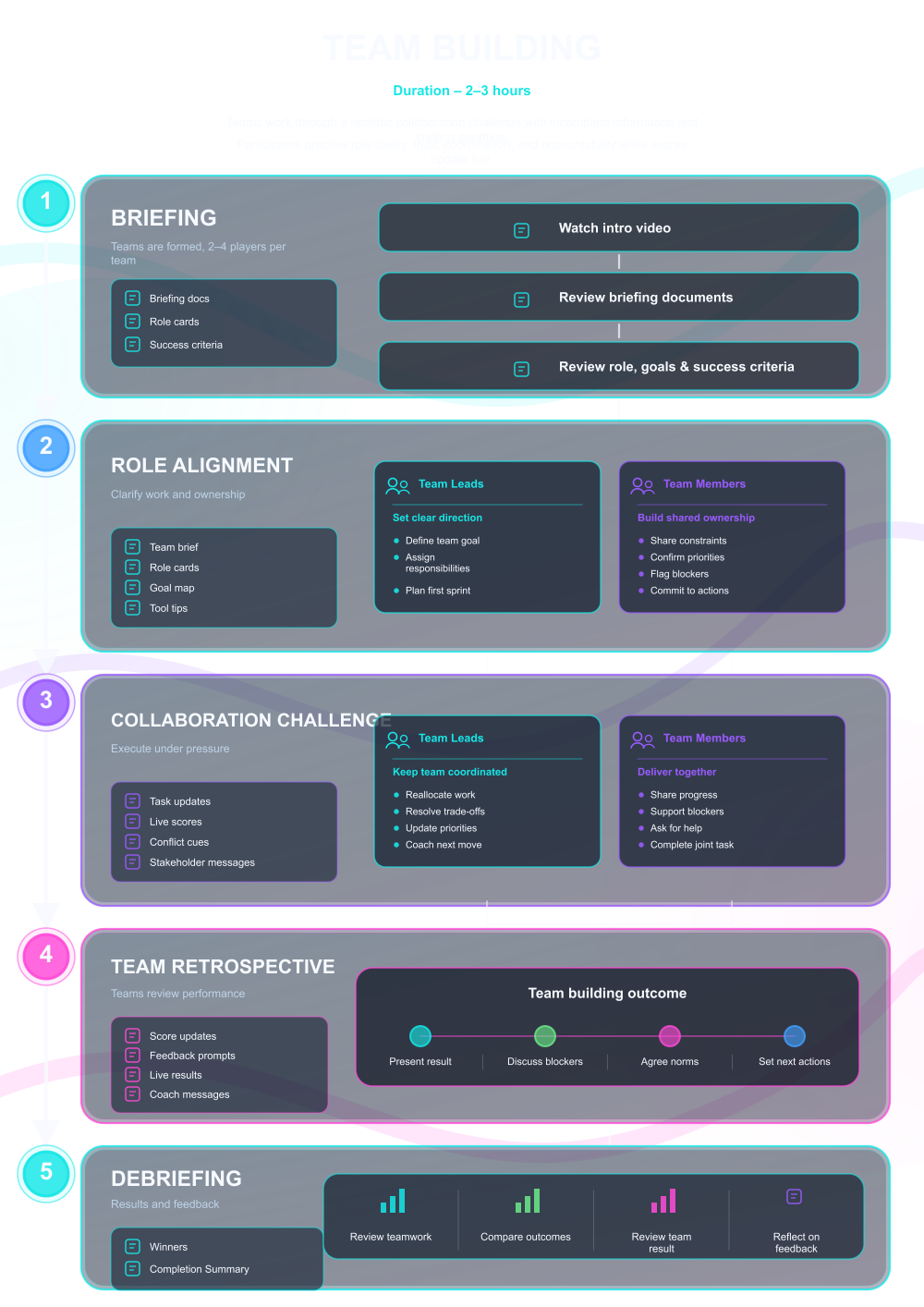

What Participants Do
In the simulation, participants will:
- Form into competing "fund" or "deal" teams.
- Assume specific roles (Portfolio Manager, Risk Analyst, Head of Research, Trader).
- Analyze live, simulated market data and news feeds.
- Debate investment strategies and risk tolerance as a team.
- Execute trades or deals in a dynamic, multi-period simulation.
- Manage a portfolio or a complex transaction under time constraints.
- Present their team's strategy and performance to the wider group.
- Receive a detailed Team Dynamics Report analyzing their collaboration.

Learning Objectives
By the end of the simulation, participants will be able to:
- Demonstrate improved collaboration and communication skills within a finance-specific context.
- Develop a shared team strategy and execute it under dynamic market conditions.
- Identify and leverage the diverse strengths and risk profiles of team members.
- Navigate team conflicts and decision-making bottlenecks effectively.
- Analyze the direct link between team cohesion and financial performance.
- Construct a framework for effective team dynamics that can be applied back in the workplace.
How the Team Building Simulation Works
This simulation can be run individually or in teams in academic or corporate contexts. Each cycle represents a stage of getting through a pressing financial situation.
1. Team Formation and Briefing Participants are divided into teams and introduced to the simulation platform, their starting capital, and the market rules.
2. Role Assignment Each team internally assigns roles, clarifying decision-making authority and responsibilities.
3. Market Simulation Rounds The core activity consists of multiple timed rounds representing trading days or deal-making phases. In each round, teams must analyze new economic data and company news, discuss and debate opportunities and threats and agree on a unified strategy and execute transactions.
4. Feedback and Evaluation Participants receive multi-source feedback. This includes analytics on their speech (pace, use of filler words), scored rubrics from peers, and qualitative feedback from instructors.
5. Debrief and Playback The platform allows participants to watch a recording of their performance, compare it against the feedback, and reflect on their strengths and areas for improvement. Instructors lead a guided debrief to solidify key lessons.
Frequently Asked Questions
Assessment
Assessment of participant performance can be tailored according to the host institution’s objectives (business school, corporate training, assessment centre). Typical assessment criteria include:
- Persuasive Pitch Deck
- Live Presentation and Delivery
- Negotiation and Q&A Performance
- Peer Feedback Quality
- Final Written Executive Summary
Assessment may incorporate peer and self-review components, facilitator scoring, and debrief discussion. Results may feed into grades, executive feedback, certification or development plans.