This simulation is ideal for undergraduate and graduate students in accounting, finance, and MBA programs, as well as early-career professionals in corporate tax or public accounting looking to gain practical, strategic experience.

Tax Analyst Simulation
Confront realistic corporate tax scenarios, manage compliance deadlines, and make strategic decisions that directly impact the company's financial health and strategic goals.

Tax Analyst Simulation Overview
In the Tax Analyst Simulation participants become the Tax Analyst for a growing multinational corporation. Each decision period represents a fiscal quarter, where you must balance immediate compliance demands with long-term tax strategy. They will be presented with a series of complex business events—such as mergers, international expansion, R&D projects, and changes in tax law—that require your expert analysis.
Participants’ goal is to minimize the company’s effective tax rate legally and ethically, manage cash flow by optimizing tax payments, and ensure full compliance to avoid costly penalties.
Interact with other departments, assess the tax implications of executive decisions, and prepare calculations for the company’s financial statements. This hands-on experience bridges the gap between academic knowledge and the multi-faceted demands of a corporate tax career.

Tax Analyst Simulation Concepts
Participants work through realistic scenarios, which can be customized to emphasize or exclude specific topics depending on the learning goals. This modular structure allows the simulation to be tailored to any type of session. Key concepts include:
- Effective Tax Rate Management
- Tax Provision and Financial Statement Impact
- Intercompany Transactions and Transfer Pricing
- Permanent vs. Temporary Differences
- Tax Credits and Incentives
- International Taxation
- M&A Tax Strategy (Asset vs. Stock Deals, NOLs)
- State & Local Tax Compliance
- Tax Risk Management and Audit Defense

Gameflow
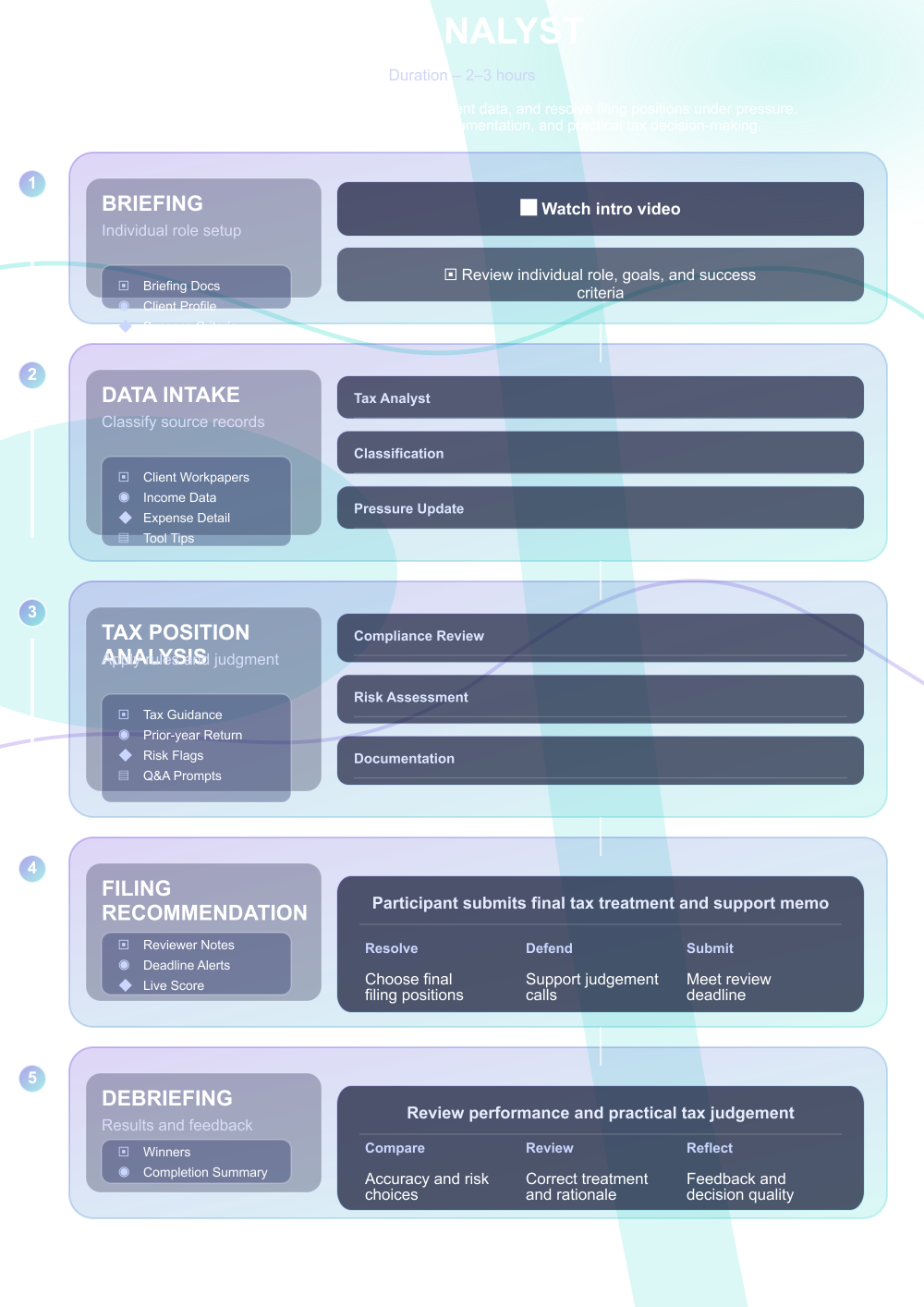

What Participants Do
In the simulation, participants will:
- Calculate the company’s quarterly tax provision under ASC 740.
- Analyze the tax implications of proposed mergers, acquisitions, and internal restructuring.
- Develop and document a transfer pricing policy for intercompany services.
- Research and apply for relevant R&D and other tax credit programs.
- Prepare and file simulated federal and state tax returns, ensuring accuracy and timeliness.
- Respond to a tax audit notice, gathering supporting documentation and formulating a defense strategy.
- Advise the executive team on the tax impact of key business decisions.
- Monitor legislative changes and adapt the company’s tax strategy accordingly.

Learning Objectives
By the end of the simulation, participants will be able to:
- Interpret and apply core corporate tax principles to real-world business situations.
- Calculate key tax metrics, including current and deferred tax expenses, and articulate their impact on the income statement and balance sheet.
- Formulate tax-efficient strategies for domestic and international business operations.
- Evaluate the tax consequences of mergers, acquisitions, and divestitures.
- Manage the end-to-end corporate tax compliance cycle, from provision to return filing.
- Communicate complex tax concepts and recommendations effectively to non-tax finance professionals and executives.
How the Tax Analyst Simulation Works
This simulation can be run individually or in teams in academic or corporate contexts. Each cycle represents a stage of getting through a pressing financial situation.
1. Introduction You receive a welcome package detailing the fictional company's current financials, tax profile, and strategic objectives.
2. Decision Rounds Each round represents a business quarter. You are presented with a new business event and a set of tax tasks.
3. Analysis and Input You analyze the scenario, perform necessary calculations (tax provision, projected liability), and input your strategic decisions into the platform.
4. Feedback and Results The simulation engine processes your inputs, producing a detailed report showing your company's new financial position, tax expense, cash flow impact, and any compliance risks or penalties incurred.
5. Progressive Complexity As the simulation progresses, scenarios become more complex, introducing international operations, M&A opportunities, and changing tax laws, requiring you to integrate and apply all learned concepts.
6. Debrief and Ranking A comprehensive final report summarizes your performance over all rounds, including your success in lowering the ETR, managing cash taxes, and avoiding penalties, with a ranking against your peers.
Frequently Asked Questions
Assessment
Assessment of participant performance can be tailored according to the host institution’s objectives (business school, corporate training, assessment centre). Typical assessment criteria include:
- Ability to legally minimize the company's Effective Tax Rate and cash taxes paid over the simulation period.
- Correct calculation and reporting of the quarterly tax provision, including deferred tax assets and liabilities.
- Timely and accurate filing of all returns, along with successful management of audit triggers and penalties.
- Quality of written justifications for key tax strategies and recommendations provided to the "executive team".