This simulation is ideal for students in MSc, MBA, or advanced BSc finance programs, as well as early-career banking professionals interested in leveraged finance, credit analysis, and syndicated lending.

Syndicated Loan Simulation
Step into the world of leveraged finance with our Syndicated Loan Simulation: a high-intensity, real-world training scenario where participants act as lead arrangers, syndicate banks, and corporate borrowers.

Syndicated Loan Simulation Overview
The Syndicated Loan Simulation replicates the full lifecycle of arranging a syndicated loan: from initial credit assessment, to structuring the deal, pricing the loan, and coordinating a syndicate of banks. Participants must analyze a borrower’s financials, determine debt capacity, design loan terms, negotiate with other banks, and commit portions of the facility.
The simulation fosters collaboration, strategic thinking, and intense deal-making under time pressure — much like real leveraged finance teams. Designed for business schools, corporate training, and banking courses, this simulation mirrors the interplay between borrower needs, lender risk appetites, and market conditions.
Although ideal for undergraduate and graduate finance courses, executive training, and corporate finance skill workshops, the simulation is modular and scalable, allowing instructors to vary complexity.

Syndicated Loan Simulation Concepts
Participants work through realistic scenarios, which can be customized to emphasize or exclude specific topics depending on the learning goals. This modular structure allows the simulation to be tailored to any type of session. Key concepts include:
- Credit analysis and borrower risk assessment
- Syndicate formation and roles
- Loan structuring
- Security and collateral
- Covenants
- Pricing and risk premia
- Debt capacity and leverage ratios
- Default risk, events of default, and remedies
- Syndicated loan documentation and intercreditor agreements
- Secondary trading and loan market liquidity
- Relationship management between borrower and lenders
- Negotiation dynamics among banks

Gameflow
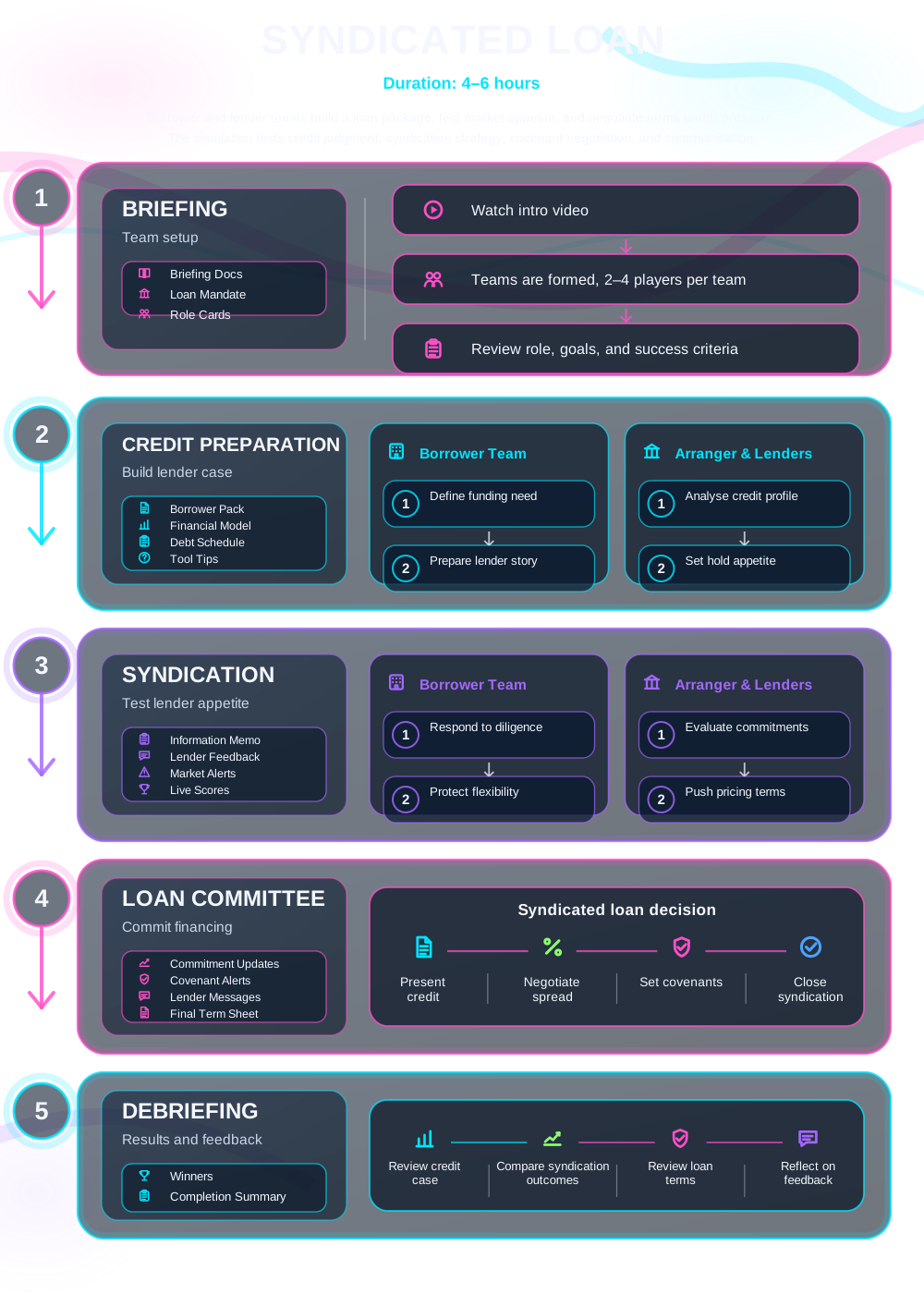

What Participants Do
In the simulation, participants will:
- Conduct due diligence on the borrower and the underlying transaction.
- Structure the initial loan facility.
- Create the Information Memorandum to market the deal to potential lenders.
- Propose pricing and underwrite the deal.
- Actively syndicate the loan by pitching to and negotiating with Participant Banks.
- Manage the book-building process and final allocation.
- Analyze the credit risk of the borrower and the deal structure.
- Assess the market-clearing price and the terms of the loan.
- Negotiate with the Lead Arranger on pricing and allocation.
- Decide on commitment levels based on risk-return appetite and relationship with the arranger.
- Manage internal credit committee approvals.

Learning Objectives
By the end of the simulation, participants will be able to:
- Understand how syndicated loans are structured and underwritten.
- Analyze borrower credit risk and determine appropriate leverage levels.
- Negotiate and design loan covenants and documentation.
- Coordinate a lending syndicate and balance risk among participating banks.
- Price a loan facility appropriately, balancing yield and risk.
- Assess and manage default risk, including covenant triggers, waiver decisions, and restructuring options.
- Appreciate intercreditor dynamics and how banks align incentives.
- Communicate complex loan terms clearly to both lenders and borrowers.
- Reflect on the trade-offs between borrower needs and lender risk.
- Build confidence in leveraged finance decision-making in a multi-stakeholder environment.
How the Syndicated Loan Simulation Works
This simulation can be run individually or in teams in academic or corporate contexts. Each cycle represents a stage of getting through a pressing financial situation.
1. Setup and Briefing Participants are grouped into teams, assuming roles such as lead arranger, co-arranger, participant bank, or borrower. Each team receives detailed documentation: borrower financials, business plan, market context, and risk parameters.
2. Analysis Phase Teams perform credit analysis, forecast cash flows, and determine debt capacity.
3. Syndicate Formation The lead arranger proposes a syndication strategy and invites other banks to join.
4. Structuring and Pricing Teams collaboratively design loan structure, covenants, collateral, tenor, and price the loan.
5. Negotiation Banks negotiate commitments, fees, covenants, and documentation terms.
6. Documentation and Commitments Finalize the term sheet; banks commit their portion and sign intercreditor agreements.
7. Stress Testing The simulation presents stress scenarios (e.g., financial downturn, covenant breach) requiring decisions on waivers, amendments, or restructuring.
8. Closing Teams finalize the deal and submit a term sheet and a deal memo.
Frequently Asked Questions
Assessment
Assessment of participant performance can be tailored according to the host institution’s objectives (business school, corporate training, assessment centre). Typical assessment criteria include:
- Deal Structuring Quality
- Accuracy and depth of cash-flow forecasts, leverage assessment, and default risk.
- Was the loan priced to reflect risk appropriately; how fees and spreads were balanced.
- Success in recruiting participants, achieving alignment, and managing intercreditor relationships.
- Favorability of terms achieved via negotiation (covenants, documentation).
- Performance under stress-test scenarios; decisions on waivers, amendments, or restructuring.
- Clarity and completeness of the final term sheet and deal memo.
- Ability to reflect on the deal process, justify decisions, and adapt strategies in subsequent rounds.