This simulation is ideal for MBA students, finance professionals, investment bankers, corporate bankers, and anyone in asset management or consulting looking to gain practical, hands-on experience in the rapidly growing field of sustainable finance.

Sustainability Services Simulation
This simulation places you at the helm of a dedicated Sustainability Services team. Compete to deliver the most effective and profitable ESG solutions to a diverse set of corporate clients, balancing financial returns with positive real-world impact.

Sustainability Services Simulation Overview
The global push for a sustainable economy is reshaping the financial landscape. Corporations are under immense pressure from investors, regulators, and consumers to integrate ESG principles. In this simulation, participants step into the role of financial advisors specializing in sustainability. They must analyze client companies, diagnose ESG-related risks and opportunities, and structure innovative financial products—from green bonds and sustainability-linked loans to impact investing portfolios and carbon credit financing.
The challenge is to win mandates by crafting proposals that are not only environmentally and socially sound but also financially compelling and strategically astute, all while managing the firm's resources and reputation.
Although ideal for undergraduate and graduate finance courses, executive training, and corporate finance skill workshops, the simulation is modular and scalable, allowing instructors to vary complexity.

Sustainability Services Simulation Concepts
Participants work through realistic scenarios, which can be customized to emphasize or exclude specific topics depending on the learning goals. This modular structure allows the simulation to be tailored to any type of session. Key concepts include:
- ESG Integration
- Green Bonds and Sustainability-Linked Bonds
- Sustainability-Linked Loans
- Carbon Markets and Carbon Credit Financing
- Impact Investing and Measurement
- ESG Risk Assessment and Due Diligence
- EU Sustainable Finance Disclosure Regulation and Taxonomy
- Task Force on Climate-related Financial Disclosures
- Socially Responsible Investing
- Greenwashing vs. Authentic Impact

Gameflow

What Participants Do
In the simulation, participants will:
- Assess the ESG performance and risks of various corporate clients across different industries.
- Design and price tailored sustainable finance products to meet client-specific needs.
- Develop and deliver compelling proposals to a simulated client board, justifying the financial and sustainability merits.
- Ensure all proposed solutions comply with evolving global sustainability reporting standards and regulations.
- Allocate the team's budget for research, marketing, and deal execution to maximize profitability and market share.
- Define and track key performance indicators to measure the success of implemented solutions.

Learning Objectives
By the end of the simulation, participants will be able to:
- Analyze the ESG profile of a company and identify key financial risks and opportunities.
- Differentiate between various sustainable finance instruments and their appropriate applications.
- Structure a basic term sheet for a sustainable finance product, linking financial terms to ESG performance targets.
- Evaluate the credibility of corporate sustainability claims to mitigate the risk of greenwashing.
- Articulate the business case for sustainable finance to both clients and internal stakeholders.
- Interpret the core requirements of major sustainability frameworks and regulations.
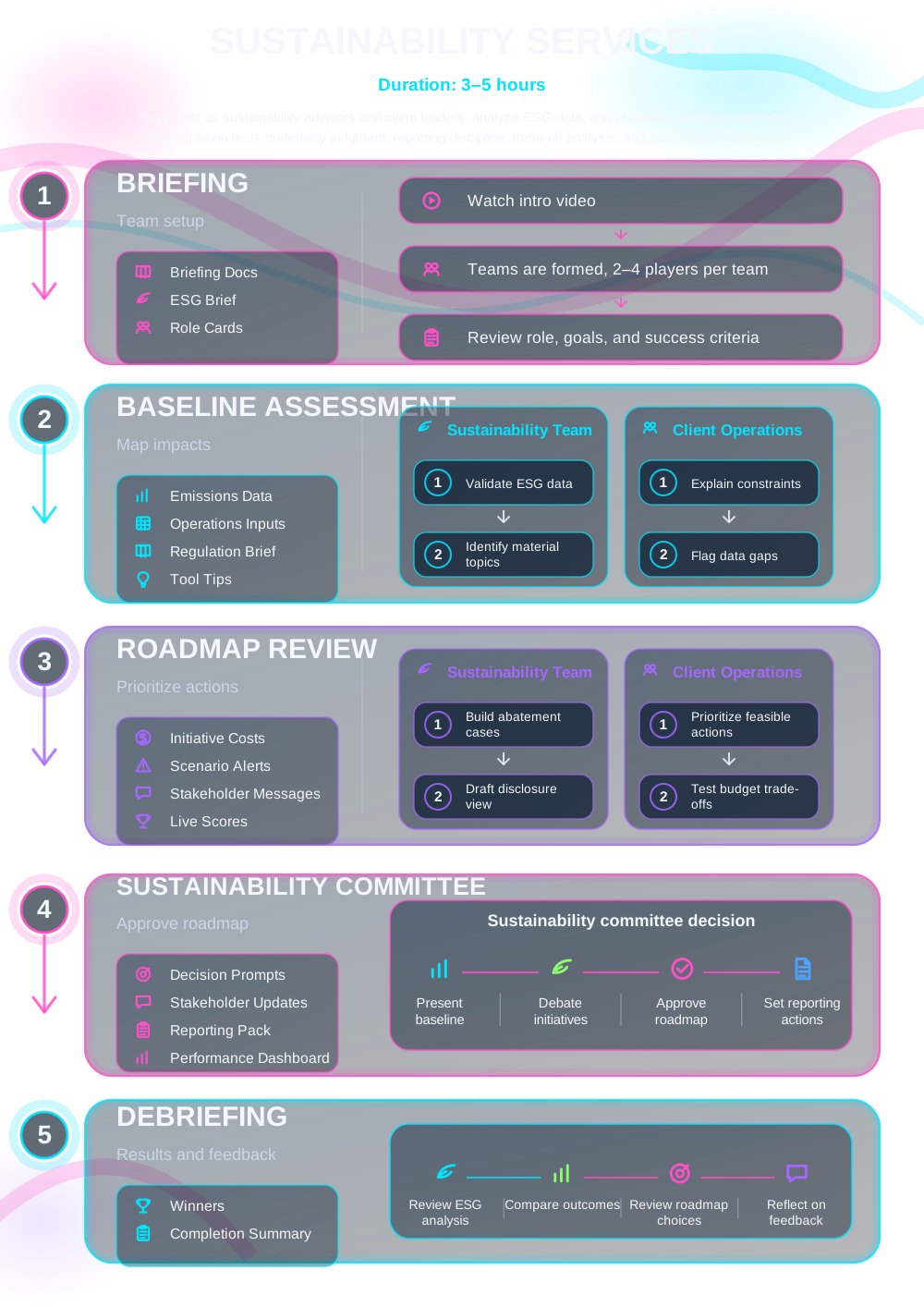
How the Sustainability Services Simulation Works
This simulation can be run individually or in teams in academic or corporate contexts. Each cycle represents a stage of getting through a pressing financial situation.
1. Setup Teams are formed and given a virtual budget and initial market data.
2. Client Rounds Each round, a new set of client RFPs (Request for Proposals) is released. Clients vary in industry, size, and sustainability maturity.
3. Analysis and Strategy Teams analyze the clients, research market conditions, and decide which mandates to pursue. They must allocate their limited resources wisely.
4. Solution Design For each chosen client, teams design a detailed proposal, selecting the right financial instrument, setting terms, and linking them to specific ESG KPIs.
5. Pitching and Scoring Teams submit their proposals. The simulation engine, combined with peer assessment or facilitator evaluation, scores the proposals based on Financial Soundness, ESG Impact, Strategic Fit, and Regulatory Compliance.
6. Results and Feedback A round debrief shows team rankings, profitability, and detailed feedback on their proposals, allowing them to refine their strategy for the next round.
Frequently Asked Questions
Assessment
Assessment of participant performance can be tailored according to the host institution’s objectives (business school, corporate training, assessment centre). Typical assessment criteria include:
- The financial success of the team's Sustainability Services division.
- The quality and authenticity of the environmental and social impact generated by the team's deals.
- Ability to win mandates and build a trusted brand.
- The strategic coherence, clarity, and compliance of submitted client proposals, often including peer evaluation components.
- Ability to adapt and revise valuations in light of news shocks or changes.