No prior specialization is needed. A basic understanding of working capital and supplier dynamics is helpful, and all key concepts are introduced in the simulation.

Supply Chain Finance Simulation
Students manage supplier relationships, working capital, and financing decisions across global trade networks in our Supply Chain Finance Simulation.

Supply Chain Finance Simulation Overview
The Supply Chain Finance Simulation places students in the role of financial managers responsible for optimizing liquidity, supporting supplier networks, and negotiating financing solutions with banks and vendors.
Created by finance professionals and operations experts, this simulation replicates the financial challenges faced by procurement, treasury, and supply chain teams. Students must balance cash flow needs, negotiate payment terms, assess supplier risk, and select financing tools such as reverse factoring or dynamic discounting.
This simulation bridges finance and operations, giving students a hands-on understanding of how working capital decisions affect supplier resilience, cost of capital, and strategic relationships.

Supply Chain Finance Simulation Concepts
Students work through real-world challenges at the intersection of supply chain operations and corporate finance, including:
- Working Capital Management: Managing payables, receivables, and inventory
- Trade Credit Terms: Net terms, early payment discounts, and deferred payment structures
- Supply Chain Financing Tools: Reverse factoring, dynamic discounting, and supplier financing
- Cost of Capital and Liquidity: Evaluating trade-offs between cash preservation and supplier support
- Supplier Risk Assessment: Creditworthiness, concentration, and geographic exposure
- Bank and Fintech Partnerships: Structuring third-party solutions
- ESG and Resilience Considerations: Balancing cost, ethics, and supplier health

Gameflow
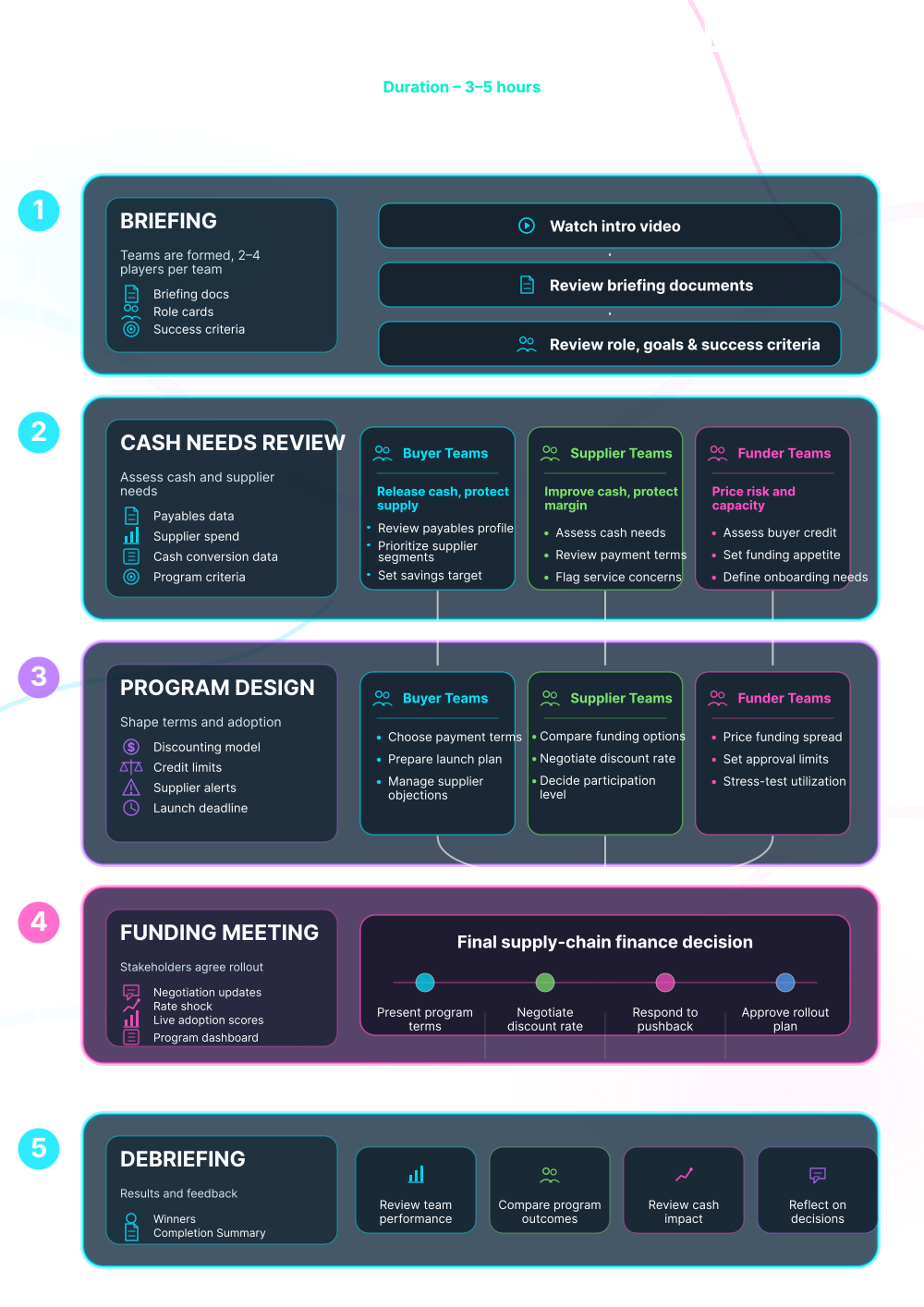

What Students Do
Students act as procurement or treasury managers at a mid-sized company. Over multiple simulation rounds, they:
- Evaluate supplier needs, liquidity positions, and strategic importance
- Negotiate payment terms and financing arrangements with suppliers and banks
- Choose between self-funded or third-party financing structures
- Respond to external shocks (e.g. raw material shortages, currency devaluation, or supplier insolvency)
- Optimize working capital while maintaining supplier health and relationships
- Justify decisions in board memos or supplier review meetings

What Students Learn
This simulation teaches students how finance and operations decisions interconnect. Students learn to:
- Manage liquidity not just internally, but across the entire supply chain
- Structure financing arrangements that support both buyer and supplier
- Weigh cost of capital against supplier reliability and continuity
- Apply ethical and strategic thinking to supplier relationships
- Collaborate across functions to align procurement, treasury, and strategy
- Communicate trade-offs and results clearly to financial and operational stakeholders

Why This Supply Chain Finance Simulation Works
Supply chain finance is one of the most strategic and overlooked tools in corporate finance. This simulation makes it real, urgent, and multidimensional.
By combining supplier health, financial constraints, and operational risk into one decision-making framework, students learn how companies can unlock value beyond the balance sheet. The simulation also prepares them for roles that require cross-functional collaboration, such as CFO track roles, procurement leadership, or supply chain strategy.