It is perfect for MBA students, executive education participants, and high-potential corporate leaders who need to understand how functional decisions integrate to drive overall corporate strategy and performance.

Strategic Management Simulation
In this Strategic Management Simulation, participants will make holistic decisions that shape their company’s future, balancing short-term performance with long-term strategic positioning, resource allocation, and competitive response.

Strategic Management Simulation Overview
Participants take on the role of a top management team responsible for steering a company through multiple business cycles. Each decision round represents a strategic planning period where teams must analyze market data, forecast trends, and make integrated choices across all business functions.
The dynamic simulation environment introduces new challenges such as shifting consumer demand, competitive maneuvers, technological disruptions, and economic volatility. This immersive experience compels participants to move beyond siloed thinking. They must align R&D investment with marketing strategy, scale production in line with sales forecasts, and finance growth while managing profitability.
The simulation is ideal for MBA programs, executive education, and corporate leadership training, providing a risk-free environment to test strategic theories and witness the long-term consequences of leadership decisions.

Strategic Management Simulation Concepts
Participants work through realistic scenarios, which can be customized to emphasize or exclude specific topics depending on the learning goals. This modular structure allows the simulation to be tailored to any type of session. Key concepts include:
- Strategic Analysis and Positioning
- Business and Corporate Strategy
- Resource Allocation and Investment
- Competitive Dynamics
- Financial Performance Alignment
- Organizational Design and Structure
- Innovation and Sustainable Advantage
- Global Strategy
- Risk Management and Scenario Planning

Gameflow
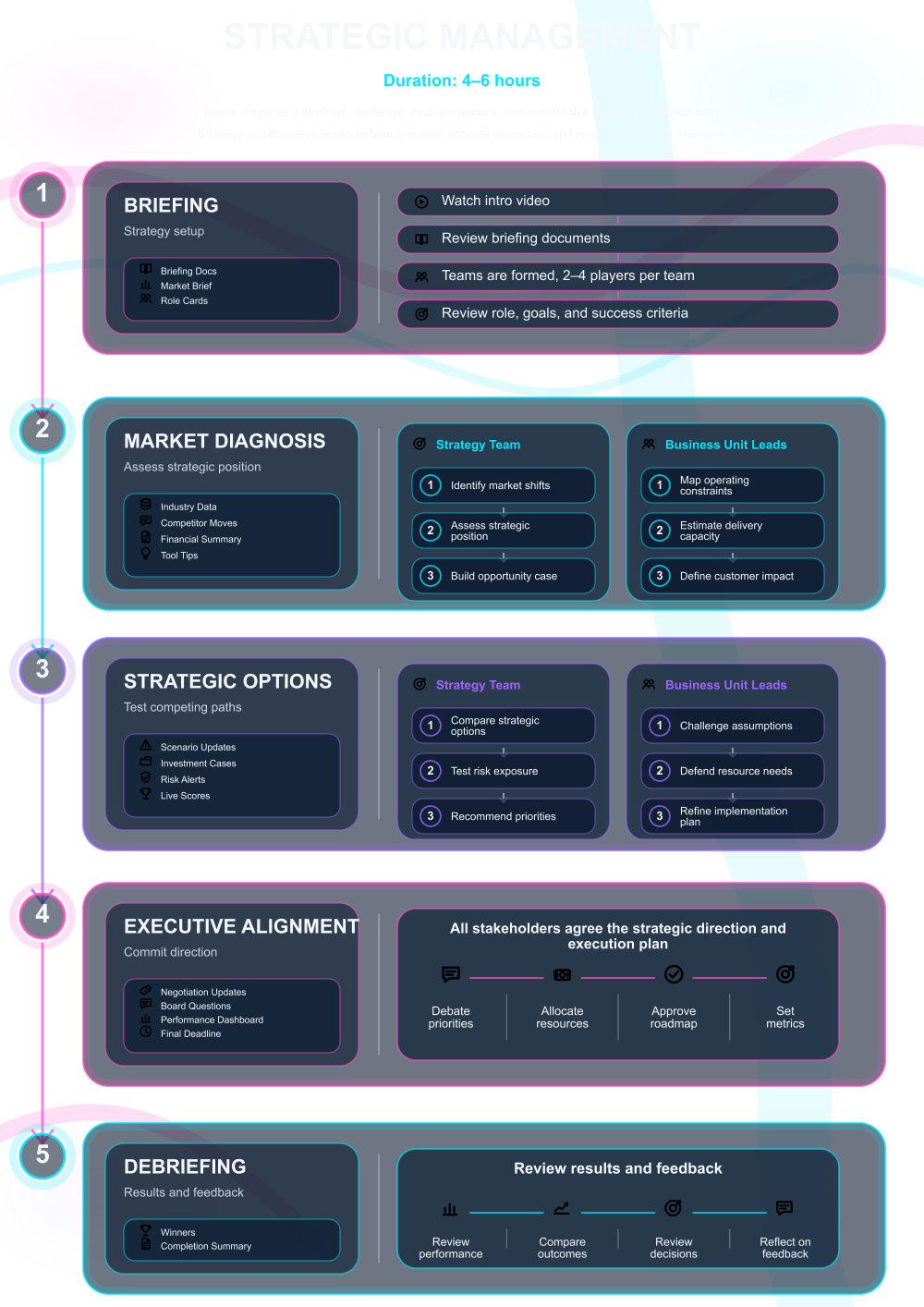

What Participants Do
In the simulation, participants will:
- Analyze comprehensive industry reports, financial statements, and competitor intelligence.
- Formulate a coherent multi-period strategy and set measurable strategic objectives.
- Make integrated decisions on product portfolio, pricing, marketing spend, production capacity, human resources, and R&D investments.
- Negotiate priorities and resource trade-offs within their management team.
- Respond to randomized market shocks, competitor actions, and stakeholder demands.
- Present their strategic vision and business results to a simulated board of directors.
- Critically evaluate their performance and adapt their strategy each round based on outcomes and feedback.

Learning Objectives
By the end of the simulation, participants will be able to:
- Apply core frameworks for internal and external strategic analysis.
- Develop and execute a integrated business strategy in a competitive market.
- Understand the financial implications of strategic choices and their impact on key metrics (e.g., market share, profitability, ROIC).
- Make effective trade-off decisions under conditions of uncertainty and limited resources.
- Enhance skills in executive teamwork, leadership, and persuasive communication of strategy.
- Build the strategic agility required to adapt plans in response to market feedback.
How the Strategic Management Simulation Works
This simulation can be run individually or in teams in academic or corporate contexts. Each cycle represents a stage of getting through a pressing financial situation.
1. Receive the Business Scenario Teams are given control of a company within a defined industry, complete with historical performance data and a market overview.
2. Analyze and Plan Teams analyze their starting position, market research, and competitor data to craft their strategic plan for the coming period.
3. Make Executive Decisions Using a dedicated interface, teams input simultaneous decisions across all business functions, from R&D projects to pricing and financing.
4. Process and Compete The simulation processes all team decisions, simulating market competition and generating results (financial statements, market share reports, competitor dashboards).
5. Review and Reflect Teams receive their performance reports, analyze outcomes versus plan, and receive facilitator-led debriefs on key strategic lessons.
6. Adapt and Repeat Teams use their insights to refine their strategy for the next decision round, experiencing the continuous cycle of strategic management.
Frequently Asked Questions
Assessment
Assessment of participant performance can be tailored according to the host institution’s objectives (business school, corporate training, assessment centre). Typical assessment criteria include:
- Achievement of strategic goals measured by metrics like revenue growth, profitability, market share, and shareholder value creation.
- The logical consistency of the strategy and the effectiveness of its implementation across decision rounds.
- Depth of market and competitive analysis supporting strategic choices.
- Ability to diagnose performance gaps and effectively pivot strategy in response to market changes.
- Quality of collaboration within the team and clarity in presenting the strategic rationale to stakeholders.