No. The simulation is designed to be accessible but challenging for all levels.

Startup Exit Strategy Simulation
In this hands-on Startup Exit Strategy Simulation, participants act as founders and investors navigating acquisition, IPO, or merger paths - balancing valuation, timing, negotiation, and stakeholder expectations under uncertainty.

Startup Exit Strategy Simulation Overview
Participants take on the role of startup founders, executives, or investors preparing for a high-stakes exit. Each round challenges them to evaluate exit options, negotiate with stakeholders, and adapt strategy as markets shift.
They must analyze financials, assess market timing, and decide whether to pursue an IPO, acquisition, or strategic merger. Each decision impacts valuation, investor sentiment, founder control, and long-term company trajectory.
This simulation is ideal for various university programs, venture capital and entrepreneurship courses, or corporate innovation workshops. It provides a practical lens on growth-to-exit dynamics and the real trade-offs faced by founders.

Startup Exit Strategy Simulation Concepts
Participants work through realistic scenarios, which can be customized to emphasize or exclude specific topics depending on the learning goals. This modular structure allows the simulation to be tailored to any type of session. Key concepts include:
- Exit strategy evaluation: IPO, M&A, secondary sales
- Valuation drivers and market timing
- Investor and founder alignment
- Negotiation tactics in high-stakes deals
- Stakeholder management: boards, employees, acquirers, and regulators
- Legal and compliance considerations in exits
- Trade-offs between liquidity, control, and growth
- Communication strategy during exit planning
- Role of market cycles and investor sentiment
- Long-term strategic positioning post-exit

Gameflow
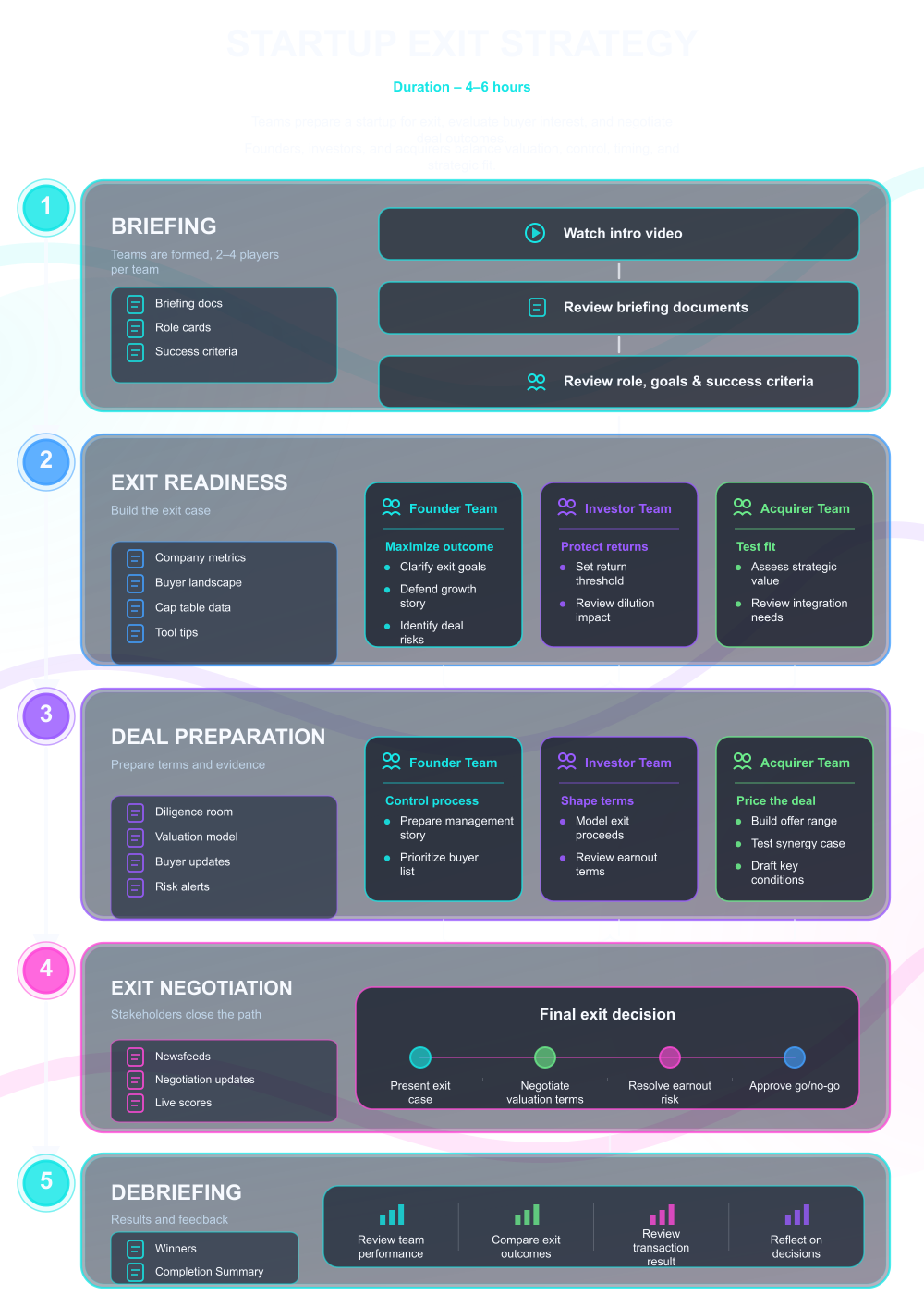

What Participants Do
Participants step into leadership and investor roles to:
- Analyze financial performance and market comparables
- Debate IPO vs acquisition strategies under changing conditions
- Negotiate term sheets and deal structures
- Manage competing stakeholder interests (founders, employees, VCs)
- Respond to regulatory, legal, or reputational challenges
- Communicate decisions through board presentations, press releases, or investor memos

Learning Objectives
By the end of the simulation, participants will be able to:
- Evaluate the advantages and risks of different exit strategies
- Understand valuation mechanics and timing implications
- Balance stakeholder objectives in exit negotiations
- Apply negotiation frameworks in high-pressure deal environments
- Communicate effectively with boards, employees, and investors
- Recognize legal and compliance issues in exit planning
- Anticipate post-exit strategic and cultural challenges
- Adapt strategy in response to market signals
- Collaborate across founder, investor, and management perspectives
- Build resilience in decision-making under uncertainty
The simulation’s flexible structure ensures that these objectives can be calibrated to match the depth, duration, and focus areas of each program, whether in higher education or corporate learning.
How the Startup Exit Strategy Simulation Works
The simulation works equally well in academic or corporate contexts and can run individually or in teams. Each cycle reflects a stage of the exit process.
1. Receive a Scenario or Brief: Participants are given a startup profile, investor dynamics, and exit options. The scenario sets objectives and context for decision-making.
2. Analyze the Situation: They review financials, market conditions, competitor exits, and regulatory landscapes to frame their choices.
3. Make Strategic Decisions: Participants decide whether to pursue an IPO, acquisition, or merger, and negotiate terms, valuation, and timing.
4. Collaborate or Negotiate: Teams role-play as founders, VCs, or acquirers - balancing perspectives and debating trade-offs.
5. Review Results and Reflect: Feedback reveals valuation outcomes, stakeholder sentiment, and reputational effects. Participants reflect on both quantitative and qualitative outcomes.
6. Iterate and Advance: Subsequent rounds introduce new shocks - market downturns, rival offers, or regulatory changes—forcing participants to adapt strategies.
Frequently Asked Questions
Assessment
Assessment can be tailored to focus on strategic thinking, negotiation, communication, or adaptability. Participants may be evaluated on:
- Quality of exit strategy evaluation and justification
- Valuation outcomes and timing decisions
- Effectiveness in negotiations and stakeholder alignment
- Communication clarity in investor or board updates
- Responsiveness to market shocks and new information
- Peer/self-assessments for collaboration and leadership
You can also include memo writing and debrief presentations as part of the assessment structure. Additionally, you can also add a built-in peer and self-assessment tool to see how participants rate themselves. This flexibility allows the simulation to be easily integrated by professors as graded courses at universities and by HR at assessment centres at companies.