No. The simulation is self-contained and designed for all levels, with built-in explanations and coaching prompts.

Stakeholder Management Simulation
In this Stakeholder Management Simulation, participants act as business leaders balancing internal and external interests - practicing negotiation, alignment, influence, and ethical decision-making in complex, high-pressure stakeholder environments.

Stakeholder Management Simulation Overview
Participants step into the role of decision-makers in a high-stakes business environment, where they must manage stakeholder dynamics to achieve strategic goals. They deal with a mix of internal teams, board members, regulators, community groups, and investors - each with different agendas, expectations, and levels of influence.
Participants face time pressure, incomplete information, and shifting conditions. Through realistic, interactive scenarios, they experience how stakeholder engagement, misalignment, or neglect can shape company performance, reputation, and long-term outcomes. The simulation sharpens decision-making under ambiguity and builds cross-functional confidence in navigating stakeholder landscapes.
Whether used in leadership programs, strategy courses, or corporate development workshops, the simulation is adaptable to suit a variety of learning contexts.

Stakeholder Management Simulation Concepts
Participants work through realistic scenarios, which can be customized to emphasize or exclude specific topics depending on the learning goals. This modular structure allows the simulation to be tailored to any type of session. Key concepts include:
- Stakeholder Mapping and Power Analysis
- Conflict Resolution and Trade-offs
- Building Influence Without Authority
- Strategic Communication and Narrative Framing
- Trust and Credibility in Decision-making
- Long-term vs Short-term Stakeholder Value
- Cross-functional Alignment
- Public Relations and Reputation Risk
- Ethical Dilemmas in Stakeholder Strategy

Gameflow
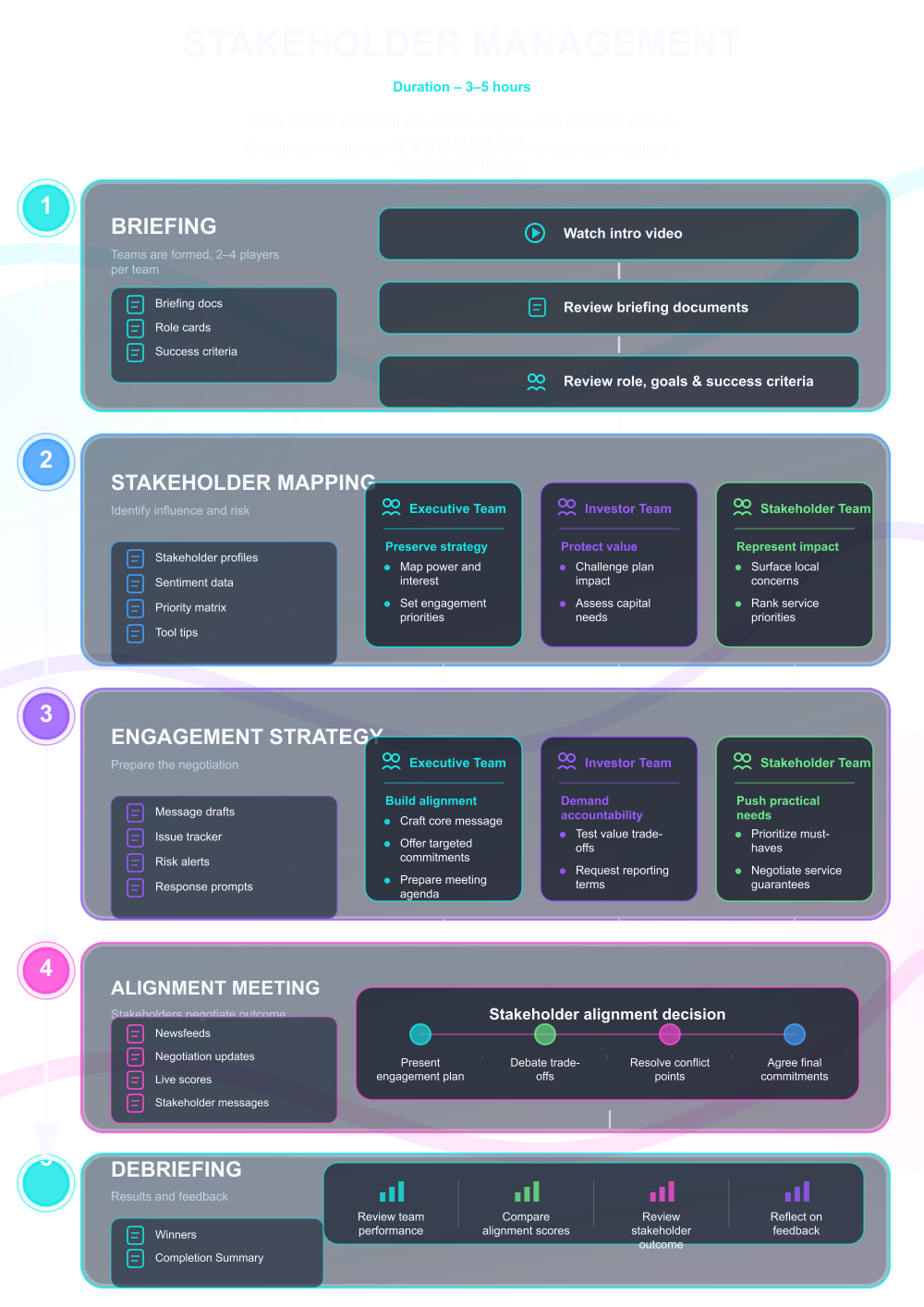

What Participants Do
Participants take on the role of senior managers or executive team members and work through stakeholder-heavy scenarios. They:
- Map and prioritise stakeholders by influence, interest, and urgency
- Develop engagement plans and communication strategies
- Negotiate internally and externally for alignment
- Manage competing goals between shareholders, employees, regulators, and communities
- Respond to reputation-sensitive crises or public pressure
- Present strategies to peers, instructors, or simulated boards

Learning Objectives
By the end, participants will be more confident in:
- Identifying and managing stakeholder interests under real-world pressure
- Communicating clearly with diverse audiences
- Making ethical, strategic decisions that consider multiple perspectives
- Building influence without formal power
- Leading alignment across business units or external parties
- Handling reputational risk during contentious decisions
- Practicing stakeholder empathy and constructive negotiation
- Working collaboratively while balancing individual and team goals
- Adapting strategy in response to feedback or political constraints
- Developing win-win outcomes in complex environments
The simulation’s flexible structure ensures that these objectives can be calibrated to match the depth, duration, and focus areas of each program, whether in higher education or corporate learning.
How the Stakeholder Management Simulation Works
This simulation is flexible enough to run in leadership programs, corporate workshops, or university classrooms. It can be played individually or in teams. Here's how it typically unfolds:
1. Receive a Scenario or Brief: Each round starts with a scenario and a challenge - for example, a regulatory backlash, activist investor, or community protest. Participants receive background, objectives, and key context.
2. Analyse the Situation: Participants assess stakeholder maps, communication breakdowns, power dynamics, and operational constraints to decide what matters most and what could escalate.
3. Make Decisions in the Simulation Interface: Participants choose how to engage with stakeholders, what trade-offs to accept, and which priorities to push forward - through structured options or written submissions.
4. Individual or Team Interactions: Depending on the format, participants may role-play negotiations, draft press releases, or align cross-functional teams within a time constraint.
5. Review Results and Reflect: They receive feedback via stakeholder reactions, simulated press coverage, or KPIs like alignment scores or reputational impact - leading to structured debriefs and personal reflection.
6. Repeat the Cycle: Each new round builds complexity or introduces new developments. Participants adapt and apply learning to evolving contexts.
Frequently Asked Questions
Assessment
Assessment can be tailored to focus on communication, ethical leadership, strategic agility, or negotiation ability. Participants may be evaluated on:
- Quality and consistency of stakeholder engagement strategy
- Clarity and tone of communication under pressure
- Resolution of misalignment or tension
- Responsiveness to stakeholder feedback
- Peer and self-assessments on collaboration and influence
You can also include memo writing and debrief presentations as part of the assessment structure. Additionally, you can also add a built-in peer and self-assessment tool to see how participants rate themselves. This flexibility allows the simulation to be easily integrated by professors as graded courses at universities and by HR at assessment centres at companies.