The simulation is designed for MBA students, finance professionals in corporate development, investment banking, equity research, and anyone seeking to deepen their practical understanding of corporate restructuring and M&A.

Spin-off Simulation
Navigate the high-stakes world of corporate strategy. The Spin-off Simulation places you in the boardroom, challenging you to plan, execute, and communicate the separation of a major business unit.

Spin-off Simulation Overview
A spin-off is one of the most significant and value-creating events a corporation can undertake. It requires meticulous planning across every function of the business. This simulation provides a dynamic, hands-on environment where participants step into the roles of corporate development, finance, and leadership teams.
Participants will be tasked with managing the entire spin-off lifecycle: from the initial strategic rationale and valuation to the final execution and investor roadshow. Confront real-world challenges such as allocating debt, establishing separate corporate functions, designing management incentives, and communicating the decision to skeptical markets.
This is not a passive case study; it is a pressure cooker for developing the strategic and financial acumen required for high-level corporate finance. Go beyond theory and experience the financial, strategic, and operational complexities of creating two independent, publicly-traded companies.

Spin-off Simulation Concepts
Participants work through realistic scenarios, which can be customized to emphasize or exclude specific topics depending on the learning goals. This modular structure allows the simulation to be tailored to any type of session. Key concepts include:
- Strategic Rationale
- Valuation Methodologies
- Capital Structure Optimization
- Legal and Regulatory Framework
- Financial Modeling and Pro Forma Statements
- Management and Incentive Alignment
- Investor Communications
- Post-Spin Performance Tracking

Gameflow
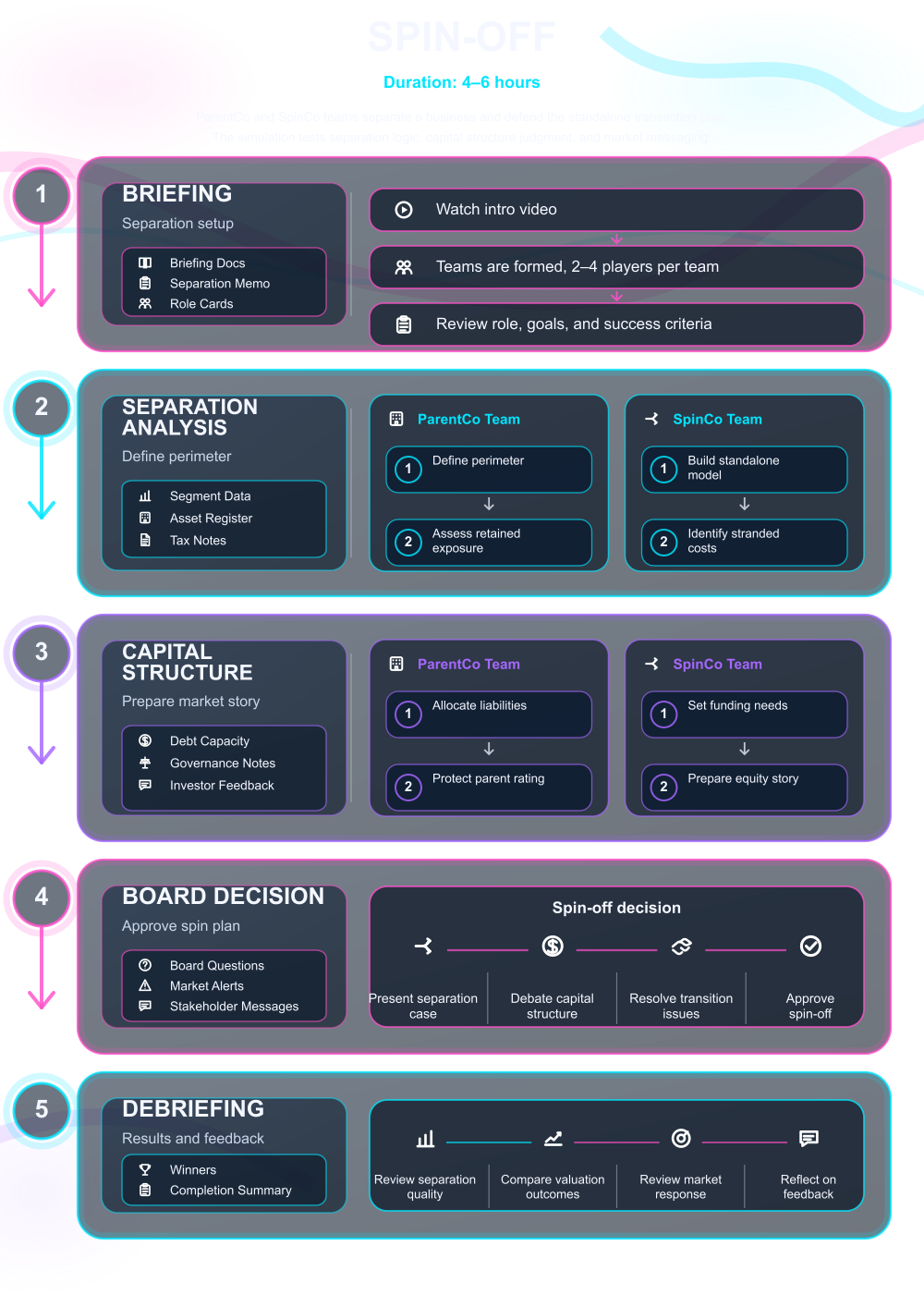

What Participants Do
In the simulation, participants will:
- Analyze the parent company's financials and operations to build a compelling strategic rationale for the spin-off.
- Build a comprehensive financial model to value the separate entities and determine an equitable distribution of assets and liabilities.
- Make Critical Decisions on capital structure, management teams, and corporate governance for the new spin-off company.
- Draft key sections of the Information Memorandum (Form 10) to be filed with the SEC.
- Develop a compelling investor presentation to articulate the value proposition of the spin-off to the market.
- Present and Defend their spin-off plan to a simulated board of directors or investor panel, answering challenging questions.
- Negotiate terms and resolve conflicts of interest between the Parent
- Company and Spin-off Company teams.
- Analyze the post-spin stock performance and assess the success of their strategy.

Learning Objectives
By the end of the simulation, participants will be able to:
- Evaluate a corporation's portfolio and determine when a spin-off is the optimal strategic alternative.
- Construct a robust financial model to value a spin-off transaction and assess its value-creation potential.
- Design a fair and efficient capital and organizational structure for both the parent and the spun-off company.
- Interpret the key legal, regulatory, and tax considerations critical to a successful spin-off execution.
- Formulate a persuasive communication strategy for both internal and external stakeholders.
- Synthesize complex financial and strategic data into a coherent and compelling equity story.
How the Spin-off Simulation Works
This simulation can be run individually or in teams in academic or corporate contexts. Each cycle represents a stage of getting through a pressing financial situation.
1. Introduction and Team Formation Participants are introduced to the case study of a diversified conglomerate ("GlobalCorp") and are divided into teams representing the Corporate Development task force.
2. Analysis and Planning Teams analyze GlobalCorp's financials, assess its business units, and build the initial financial model for the spin-off. They submit their preliminary strategic rationale and valuation.
3. Structuring and Modeling Teams receive dynamic market feedback. They must refine their model, make critical decisions on debt allocation, pension liabilities, and management incentives. They prepare the first draft of their investor presentation.
4. Execution and Communication Teams finalize their spin-off plan and present their strategy in a live "Investor Day" session, defending their decisions against questions from instructors and peers.
5. Debrief and Assessment The simulation concludes with a detailed debrief. Instructors reveal the optimal path, compare team strategies, and facilitate a discussion on the key lessons learned. Teams receive a detailed performance report.
Frequently Asked Questions
Assessment
Assessment of participant performance can be tailored according to the host institution’s objectives (business school, corporate training, assessment centre). Typical assessment criteria include:
- The technical precision of the sum-of-the-parts valuation, pro forma statements, and capital structure decisions.
- The clarity, depth, and logic of the written justification for the spin-off and key structural choices.
- The professionalism, persuasiveness, and clarity of the final team presentation delivered to the "board."
- Feedback from teammates on collaboration, contribution, and professionalism.
- A short test assessing the understanding of core spin-off concepts and terminology.