The primary goal is to provide a realistic, hands-on understanding of the entire seed funding process, from crafting a pitch to negotiating a term sheet, for both entrepreneurs and investors.

Seed Funding Simulation
Navigate the high-stakes world of early-stage finance. The Seed Funding Simulation immerses participants in the roles of ambitious founders and discerning investors, providing a hands-on understanding of the capital-raising process.

Seed Funding Simulation Overview
The journey from a brilliant idea to a funded startup is complex and competitive. This simulation replicates the critical seed funding stage, where entrepreneurs must validate their business model, craft a compelling narrative, and negotiate with potential investors to secure the capital needed for growth.
Participants are divided into two key roles: Startup Founders and Venture Capital Investors. Over multiple rounds, founders will develop their pitch, manage their company's financials and cap table, and engage in term sheet negotiations. Simultaneously, investors will perform due diligence, assess multiple investment opportunities, and structure deals to maximize their fund's return. The simulation creates a dynamic market where valuation, equity, and strategy are constantly in flux.
Although ideal for undergraduate and graduate finance courses, executive training, and corporate finance skill workshops, the simulation is modular and scalable, allowing instructors to vary complexity.

Seed Funding Simulation Concepts
Participants work through realistic scenarios, which can be customized to emphasize or exclude specific topics depending on the learning goals. This modular structure allows the simulation to be tailored to any type of session. Key concepts include:
- Startup Valuation
- Capitalization Tables
- Pitch Deck Development
- Financial Modeling and Burn Rate
- Term Sheets
- Due Diligence Process
- Equity Dilution
- Convertible Notes and SAFE Agreements
- Founder-Investor Dynamics
- Portfolio Strategy for VCs

Gameflow

What Participants Do
In the simulation, participants will:
- Develop a robust business plan and financial model.
- Create and refine a persuasive investor pitch deck.
- Communicate their vision and traction to multiple investor teams.
- Manage their company's burn rate and runway.
- Analyze and negotiate term sheets from competing VCs.
- Understand the impact of funding deals on founder ownership.
- Source and screen a pipeline of startup opportunities.
- Perform financial and strategic due diligence on target companies.
- Build a diversified investment portfolio.
- Model potential returns based on different valuation scenarios.
- Draft and negotiate term sheets to protect their investment.
- Compete with other VC firms for access to the most promising deals.

Learning Objectives
By the end of the simulation, participants will be able to:
- Structure a startup's financials and cap table from the ground up.
- Evaluate a startup's potential from both a founder's and an investor's perspective.
- Construct a compelling valuation argument supported by financial and market data.
- Negotiate key terms in a seed funding term sheet.
- Analyze the long-term implications of funding decisions on ownership and control.
- Articulate the strategic rationale behind an investment or funding choice.
How the Seed Funding Simulation Works
This simulation can be run individually or in teams in academic or corporate contexts. Each cycle represents a stage of getting through a pressing financial situation.
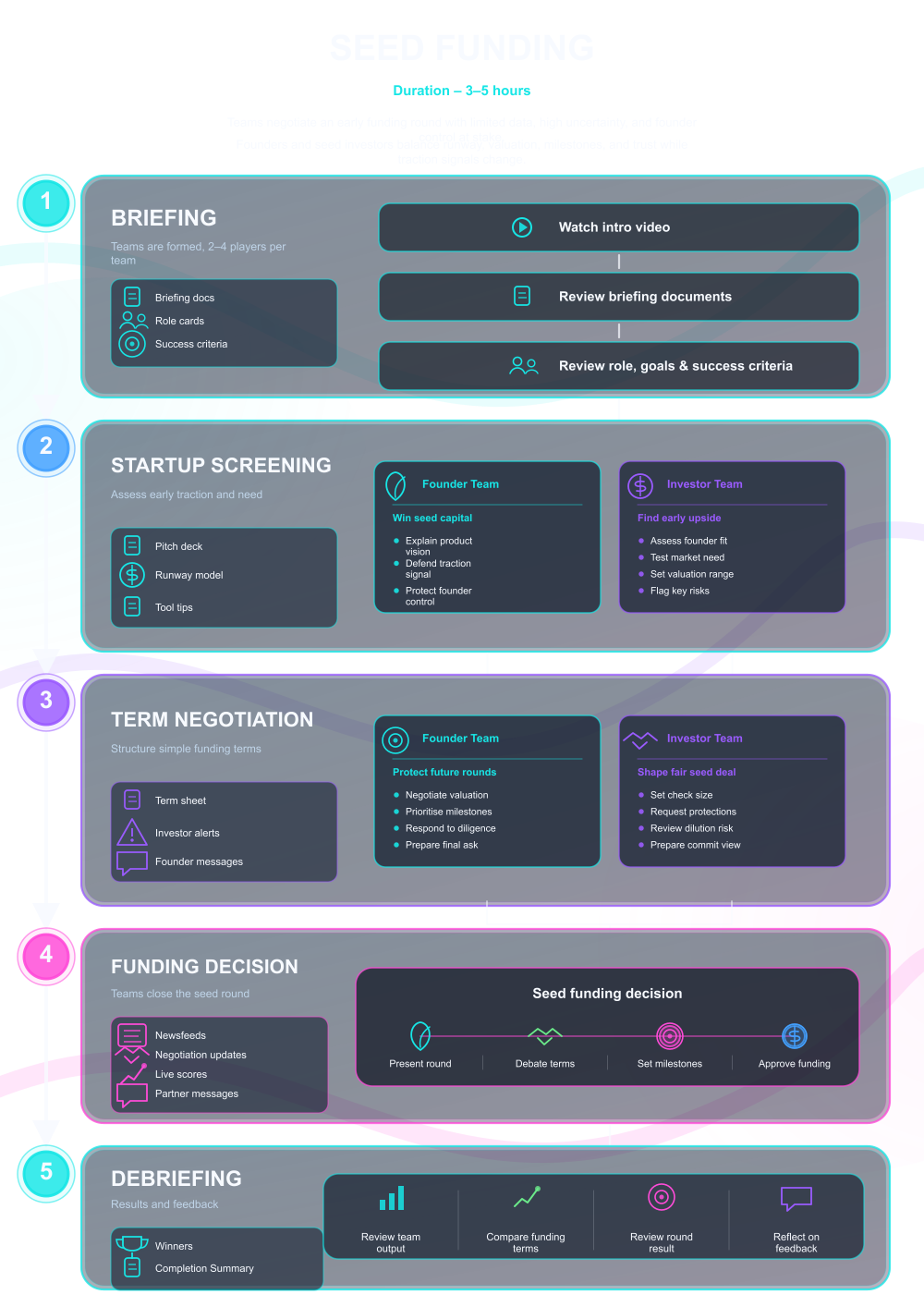
1. Setup and Role Assignment Participants are assigned to teams as either Founders or Investors and receive their initial briefing materials.
2. Team Formation Participants review their tasks and assign roles inside the teams.
3. Preparation Phase Founder teams build their company profile, financials, and pitch deck. Investor teams set their fund strategy and review initial startup profiles.
4. Pitching and Due Diligence Founders pitch their startups in a "demo day" format. Investors ask probing questions and request additional data for due diligence.
5. Term Sheet and Negotiation Interested investors issue term sheets to startups. Founder teams review multiple offers and enter into one-on-one negotiations to finalize a deal.
6. Closing and Analysis Deals are closed, and the platform updates cap tables and portfolio valuations. A debriefing session led by the facilitator explores the outcomes, strategic decisions, and key learnings.
Frequently Asked Questions
Assessment
Assessment of participant performance can be tailored according to the host institution’s objectives (business school, corporate training, assessment centre). Typical assessment criteria include:
- For Founder Teams — Successfully securing funding at a favorable valuation, maintaining an optimal level of founder ownership, and achieving a high post-money valuation.
- For Investor Teams — Generating the highest Internal Rate of Return (IRR) for their fund portfolio, demonstrated through a well-diversified and strategic set of investments.
- Active and constructive contribution during team discussions, pitching sessions, and negotiation rounds, as evaluated by peers and the facilitator.
- Team's strategy, key decisions made during negotiations.