It's ideal for participants interested in investment banking (structured finance teams), fixed income, credit analysis, asset management, and risk management. It is perfectly suited for MSc Finance, MBA, and advanced undergraduate students.

Securitisation Simulation
In this Securitisation Simulation, participants will structure deals, assess risks, and manage the entire securitisation process from origination to investor placement in a dynamic, competitive marketplace.

Securitisation Simulation Overview
The Securitisation Simulation immerses participants in the complex, high-stakes world of structured finance, where they take on the roles of investment bankers and structurers at a leading financial institution. Teams are tasked with creating and bringing to market a viable Asset-Backed Security or Mortgage-Backed Security deal.
Across multiple rounds, participants engage in the full deal lifecycle: they select and pool assets from various originators, perform in-depth risk analysis and cash flow modeling, structure the tranches, obtain credit ratings, and ultimately price and market the securities to institutional investors.
The simulation introduces real-world complications such as shifting market liquidity, changing investor risk appetite, regulatory announcements, and asset performance shocks, requiring teams to adapt their strategies. This hands-on, competitive environment is ideal for advanced university finance programs, MBA courses, and professional training within investment banks and asset management firms, providing an unparalleled practical understanding of securitisation mechanics and markets.

Securitisation Simulation Concepts
Participants work through realistic scenarios, which can be customized to emphasize or exclude specific topics depending on the learning goals. This modular structure allows the simulation to be tailored to any type of session. Key concepts include:
- Securitisation deal lifecycle
- Asset analysis and eligibility criteria
- Cash flow modeling and waterfall structures
- Credit enhancement techniques (overcollateralization, reserve accounts, wraps)
- Tranching and the creation of Senior, Mezzanine, and Equity securities
- Interaction with Credit Rating Agencies and rating methodologies
- Pricing securities and calculating yields
- Investor targeting and placement strategies
- Key regulations
- Managing prepayment, extension, and credit risks

Gameflow
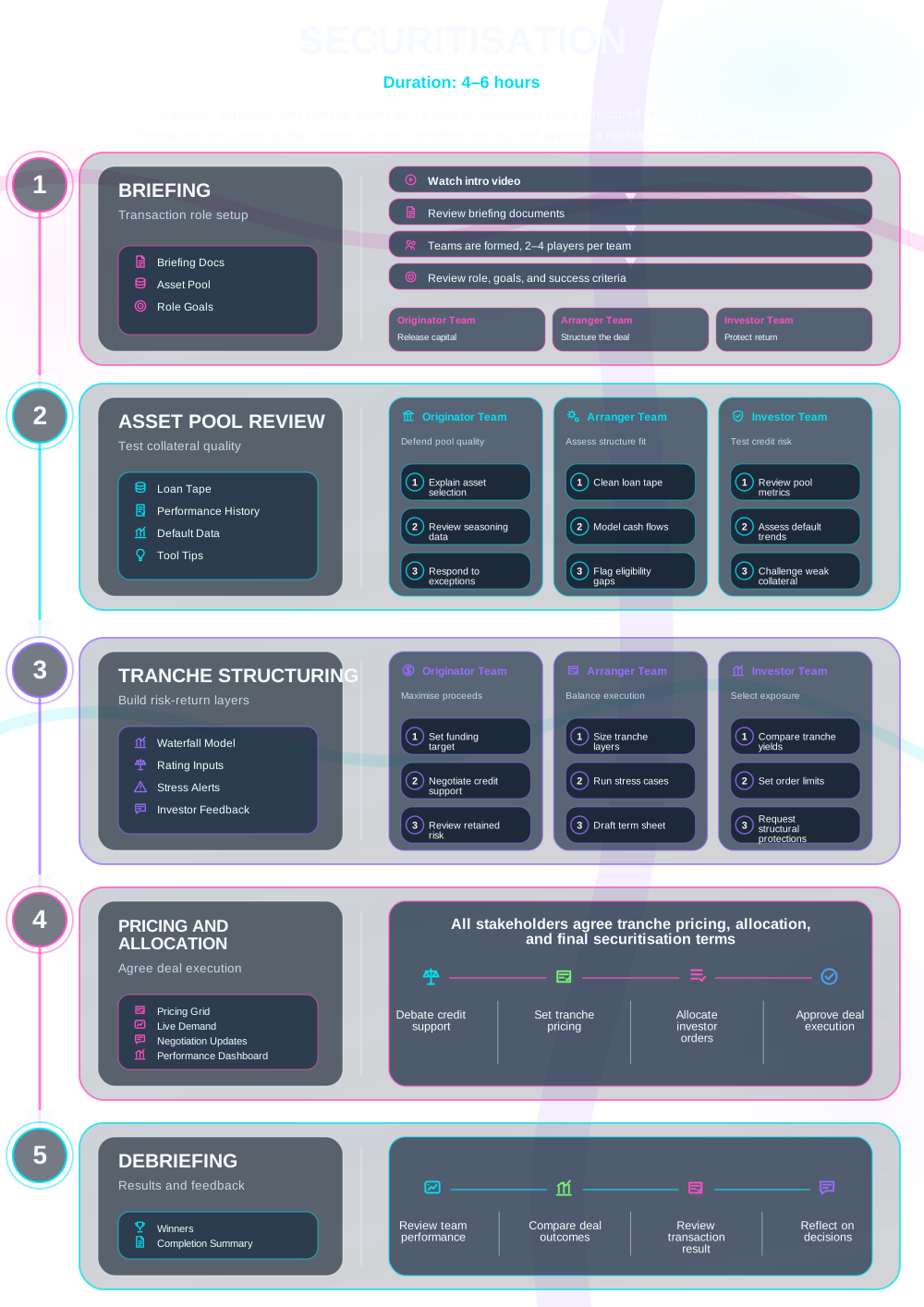

What Participants Do
In the simulation, participants will:
- Analyze and select asset pools from different originators.
- Build financial models to project asset cash flows and security performance.
- Structure the capital stack, determining the size and characteristics of each tranche.
- Negotiate with simulated Credit Rating Agencies to achieve desired ratings.
- Determine the pricing for each tranche to balance investor demand and issuer cost.
- Respond to market events like changing interest rates or asset delinquencies.
- Present and defend their final securitisation structure to simulated investors and facilitators.
- Reflect on the performance of their deal in the secondary market.

Learning Objectives
By the end of the simulation, participants will be able to:
- Understand the economic rationale and key participants in the securitisation market.
- Apply the step-by-step process of structuring an ABS/MBS transaction.
- Model cash flows and construct a payment waterfall for a securitisation deal.
- Evaluate the impact of tranching and credit enhancement on risk and return.
- Interpret the role and criteria of Credit Rating Agencies in securitisation.
- Price tranches effectively based on risk, rating, and market conditions.
- Assess and mitigate key risks inherent in securitised products.
- Communicate the investment thesis of a structured product to potential investors.
- Develop strategic decision-making skills under conditions of market uncertainty.
How the Securitisation Simulation Works
This simulation can be run individually or in teams in academic or corporate contexts. Each cycle represents a stage of getting through a pressing financial situation.
1. Deal Origination Teams receive a mandate and analyze potential asset pools from various sellers.
** 2. Structuring and Modeling** Participants model the cash flows of the asset pool and design the capital structure, deciding on tranche sizes, credit enhancement, and target ratings.
3. Rating Agency Interaction Teams submit their structure to the simulation's "rating agencies" and receive preliminary ratings, which they can adjust their model to improve.
4. Pricing and Marketing Based on the final ratings and market benchmarks, teams set offering yields for each tranche and prepare a brief investor pitch.
5. Deal Execution and Review Teams see the market's reaction to their deal, including investor uptake and initial trading performance. A comprehensive debrief compares team strategies and outcomes.
Frequently Asked Questions
Assessment
Assessment of participant performance can be tailored according to the host institution’s objectives (business school, corporate training, assessment centre). Typical assessment criteria include:
- The financial robustness and profitability of their final securitisation structure.
- The effective use of credit enhancement and tranching to balance risk.
- The accuracy and depth of their cash flow modeling and analysis.
- The persuasiveness and clarity of their investor pitch.
- Team collaboration and strategic adaptability during market shifts.