It is ideal for MBA students, finance professionals, corporate developers, and anyone seeking to understand the practical mechanics of alternative public listing strategies beyond the traditional IPO.

Reverse Merger Simulation
This simulation immerses participants in the strategic execution of a reverse merger, where a private company acquires a public shell to gain a stock market listing without a traditional IPO.

Reverse Merger Simulation Overview
A reverse merger is a powerful, yet often misunderstood, financial engineering tool used by private companies to become publicly traded. This simulation provides a hands-on, risk-free environment for finance professionals, investors, and business students to master the entire lifecycle of a reverse merger.
Participants will step into the roles of executives at a promising private tech company seeking rapid access to public capital markets. They will be tasked with identifying a suitable public shell company, negotiating the terms of the merger, navigating the regulatory requirements (such as filing a Super 8-K), and managing the critical post-merger period to unlock shareholder value and ensure market credibility.
Although ideal for undergraduate and graduate finance courses, executive training, and corporate finance skill workshops, the simulation is modular and scalable, allowing instructors to vary complexity.

Reverse Merger Simulation Concepts
Participants work through realistic scenarios, which can be customized to emphasize or exclude specific topics depending on the learning goals. This modular structure allows the simulation to be tailored to any type of session. Key concepts include:
- Reverse Merger vs. Traditional IPO
- Public Shell Companies (Clean vs. Checkered Shells)
- Due Diligence for Public Shells
- Deal Structuring and Valuation (PIPE Financing)
- Regulatory Filings (SEC Super 8-K)
- Post-Merger Integration & Strategy
- Investor Relations and Market Communication
- Corporate Governance in a New Public Entity

Gameflow
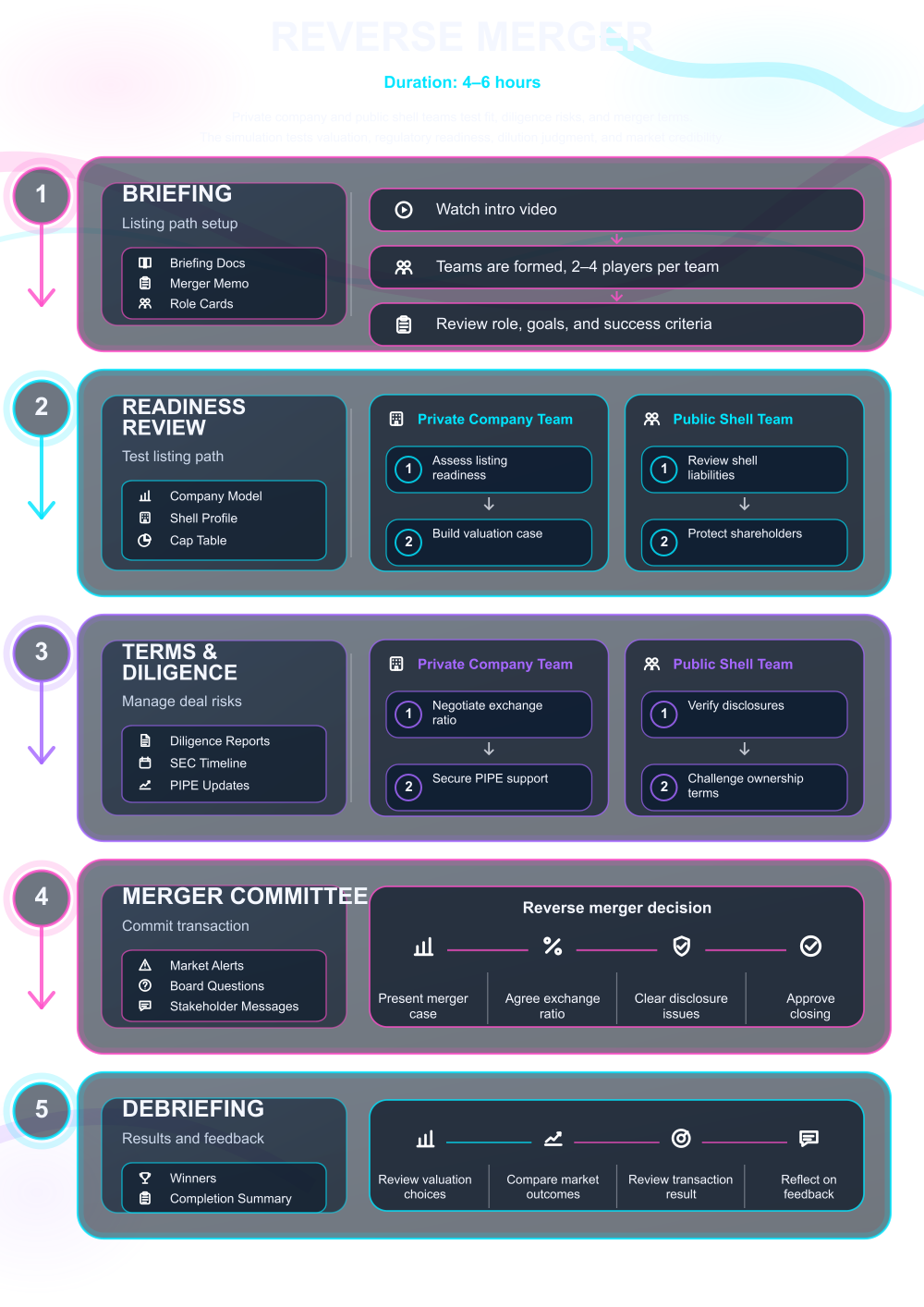

What Participants Do
In the simulation, participants will:
- Analyze the private company's financials and strategic rationale for going public.
- Identify and Evaluate potential public shell companies, assessing their cleanliness and compliance history.
- Conduct thorough financial and legal due diligence on the target shell.
- Structure the merger terms, including the exchange ratio and ownership percentage.
- Model the pro-forma financials and capital structure of the new public entity.
- Navigate a simulated regulatory filing process.
- Develop a 100-day post-merger plan focusing on investor relations, governance, and growth strategy.
- Respond to dynamic market events and shareholder concerns.

Learning Objectives
By the end of the simulation, participants will be able to:
- Understand the strategic advantages and disadvantages of a reverse merger compared to an IPO.
- Identify the key steps and critical success factors in a reverse merger transaction.
- Evaluate a public shell company for potential red flags and compliance issues.
- Structure a reverse merger deal, including the valuation and ownership distribution.
- Comprehend the core SEC reporting requirements for a reverse merger.
- Develop a robust strategy for managing the post-merger entity to build market confidence and drive valuation.
How the Reverse Merger Simulation Works
This simulation can be run individually or in teams in academic or corporate contexts. Each cycle represents a stage of getting through a pressing financial situation.
1. Role Assignment and Briefing Participants are divided into teams and take on the role of the management team of "TechNovate Inc.", a high-growth private tech firm. They receive a detailed company profile, financial statements, and strategic goals.
2. Shell Company Analysis Teams are presented with a curated list of several public shell companies. Each shell has a unique history, financial status, and set of potential liabilities. Teams must analyze and select the most suitable target.
3. Due Diligence and Deal Room Teams access a virtual data room for their chosen shell, uncovering key information that will impact their valuation and deal structure.
4. Financial Modeling and Structuring Using a provided Excel-based template, teams model the pro-forma capitalization table and financial statements post-merger. They must negotiate and finalize the merger terms.
5. Regulatory Hurdle Teams must complete a simplified version of a critical regulatory filing, ensuring all necessary disclosures are made to avoid future legal pitfalls.
6. Post-Merger Scenario After the "merger" is complete, teams face a series of real-world challenges, such as a skeptical analyst report, a volatile stock price, or an activist investor, requiring them to implement their post-merger plan.
Frequently Asked Questions
Assessment
Assessment of participant performance can be tailored according to the host institution’s objectives (business school, corporate training, assessment centre). Typical assessment criteria include:
- Financial soundness of the merger terms
- Valuation of the private company
- Negotiated exchange ratio
- Due Diligence and Risk Assessment
- Post-Merger Strategy
- Scenario Response