The simulation is 100% browser-based. Participants only need a stable internet connection and a modern web browser (like Chrome, Firefox, or Safari) on any device.

Receivable Management Simulation
Navigate the critical challenges of accounts receivable, where every decision directly impacts your company's liquidity, profitability, and customer relationships. This simulation places you at the heart of the credit-to-cash cycle.

Receivable Management Simulation Overview
In today's competitive environment, effective Receivable Management is not just a back-office function—it's a strategic advantage. This immersive simulation plunges participants into the role of a Credit Manager or CFO of a growing company. They will be responsible for designing credit policies, evaluating customer creditworthiness, making collection decisions, and managing the delicate balance between maximizing sales and minimizing bad debt.
Participants will experience the direct consequences of their decisions on the company's cash flow statement and balance sheet. Through multiple rounds of play, you will encounter realistic scenarios such as economic downturns, key customers facing financial distress, and the trade-offs between aggressive collection tactics and long-term customer retention.
Although ideal for undergraduate and graduate finance courses, executive training, and corporate finance skill workshops, the simulation is modular and scalable, allowing instructors to vary complexity.

Receivable Management Simulation Concepts
Participants work through realistic scenarios, which can be customized to emphasize or exclude specific topics depending on the learning goals. This modular structure allows the simulation to be tailored to any type of session. Key concepts include:
- Credit Policy Design
- Days Sales Outstanding
- Aging Schedule Analysis
- Bad Debt Expense and Allowance for Doubtful Accounts
- Cash Flow Forecasting
- Customer Risk Assessment
- Collection Strategies
- Sales growth vs. credit risk
- Collection aggressiveness vs. customer satisfaction.

Gameflow
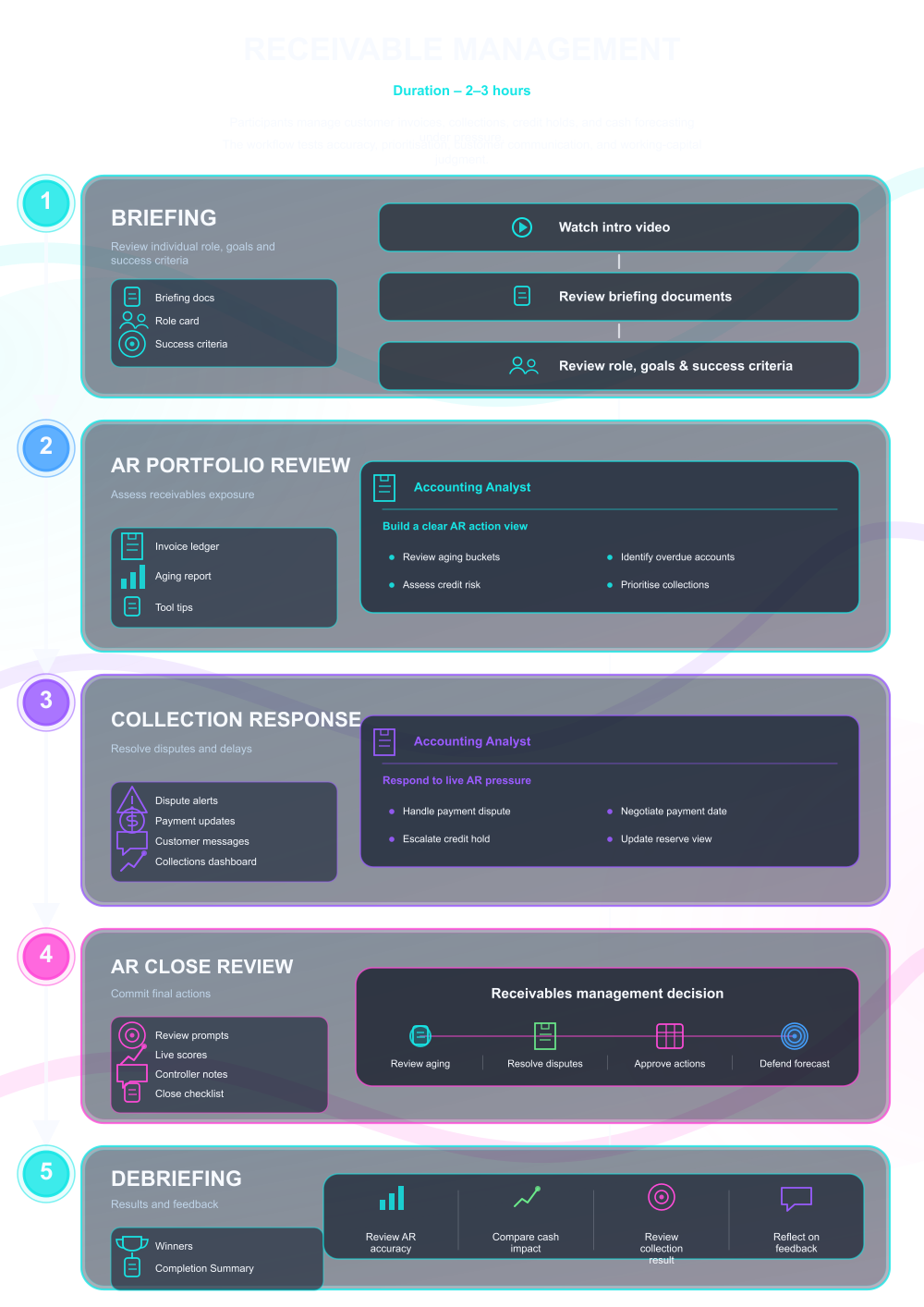

What Participants Do
In the simulation, participants will:
- Analyze and approve/reject credit applications for new and existing customers.
- Set and adjust the company's overall credit policy.
- Allocate limited resources to specific collection activities (emails, calls, agencies).
- Manage a portfolio of accounts through an interactive aging schedule.
- Make critical decisions on when to write off bad debt or offer payment plans.
- Interpret financial reports to see the impact of their choices on cash flow and profit.
- Compete against peers or a benchmark to achieve the lowest DSO and highest net cash flow.

Learning Objectives
By the end of the simulation, participants will be able to:
- Design an effective credit policy aligned with strategic sales and financial goals.
- Evaluate the creditworthiness of business customers using key financial metrics.
- Analyze an aging schedule to identify risks and prioritize collection actions.
- Quantify the impact of accounts receivable performance on company cash flow and profitability.
- Develop a structured, staged collection process to improve recovery rates.
- Articulate the trade-offs between different receivable management strategies.
How the Receivable Management Simulation Works
This simulation can be run individually or in teams in academic or corporate contexts. Each cycle represents a stage of getting through a pressing financial situation.
1. Introduction You are introduced to your company, its financial position, and a portfolio of existing customers with varying payment behaviors.
2. Decision Rounds Each round represents a fiscal quarter. You will review new order requests and set credit limits, allocate your collection team's effort to specific overdue accounts, choose actions for high-risk accounts (send reminder, hire collection agency, legal action) and adjust your overall credit policy based on economic updates.
3. Simulation Engine The simulation’s algorithm processes your decisions, simulating customer payment behaviors, potential defaults, and the reaction of sales to your credit policy changes.
4. Results and Feedback After each round, you receive a detailed report including an updated Aging Schedule, Income Statement, Cash Flow Statement, and key metrics like DSO. This feedback loop allows you to see the direct results of your strategy and adapt for the next round.
5. Debrief The session concludes with an instructor-led debrief linking the simulation experiences to core financial principles and best practices in receivable management.
Frequently Asked Questions
Assessment
Assessment of participant performance can be tailored according to the host institution’s objectives (business school, corporate training, assessment centre). Typical assessment criteria include:
- Days Sales Outstanding
- Bad Debt to Sales Ratio
- Net Cash Flow from Operations
- Customer Satisfaction Index.