The simulation is highly flexible. It works effectively with small groups of 10-15 participants and can be scaled to accommodate large classes of 50 or more by adjusting team sizes.

Recapitalization Simulation
The Recapitalization Simulation plunges participants into the complex process of fundamentally altering a company's capital structure, challenging them to balance risk, return, and stakeholder interests to maximize firm value.

Recapitalization Simulation Overview
A recapitalization is a pivotal corporate finance strategy used to significantly change a company's debt-to-equity ratio. This simulation presents a realistic, dynamic scenario where a mature, publicly-traded company is significantly under-leveraged.
Participants, acting as the financial advisory team, must analyze the current capital structure, model the impact of taking on substantial new debt, and execute a strategic recap—often through a large special dividend or share buyback. They will grapple with the trade-offs of debt financing, including the benefits of tax shields and the risks of financial distress, all while communicating their strategy to a skeptical board and a volatile market.
Although ideal for undergraduate and graduate finance courses, executive training, and corporate finance skill workshops, the simulation is modular and scalable, allowing instructors to vary complexity.

Recapitalization Simulation Concepts
Participants work through realistic scenarios, which can be customized to emphasize or exclude specific topics depending on the learning goals. This modular structure allows the simulation to be tailored to any type of session. Key concepts include:
- Capital Structure Theory
- Leveraged Recapitalization
- Cost of Capital
- Debt Capacity and Financial Distress
- Earnings Per Share and Valuation
- Credit Ratings and Debt Covenants
- Stock Market Reactions and Signaling
- Shareholder Value Maximization
- Mergers and Acquisitions
- Investment Banking Advisory Role

Gameflow
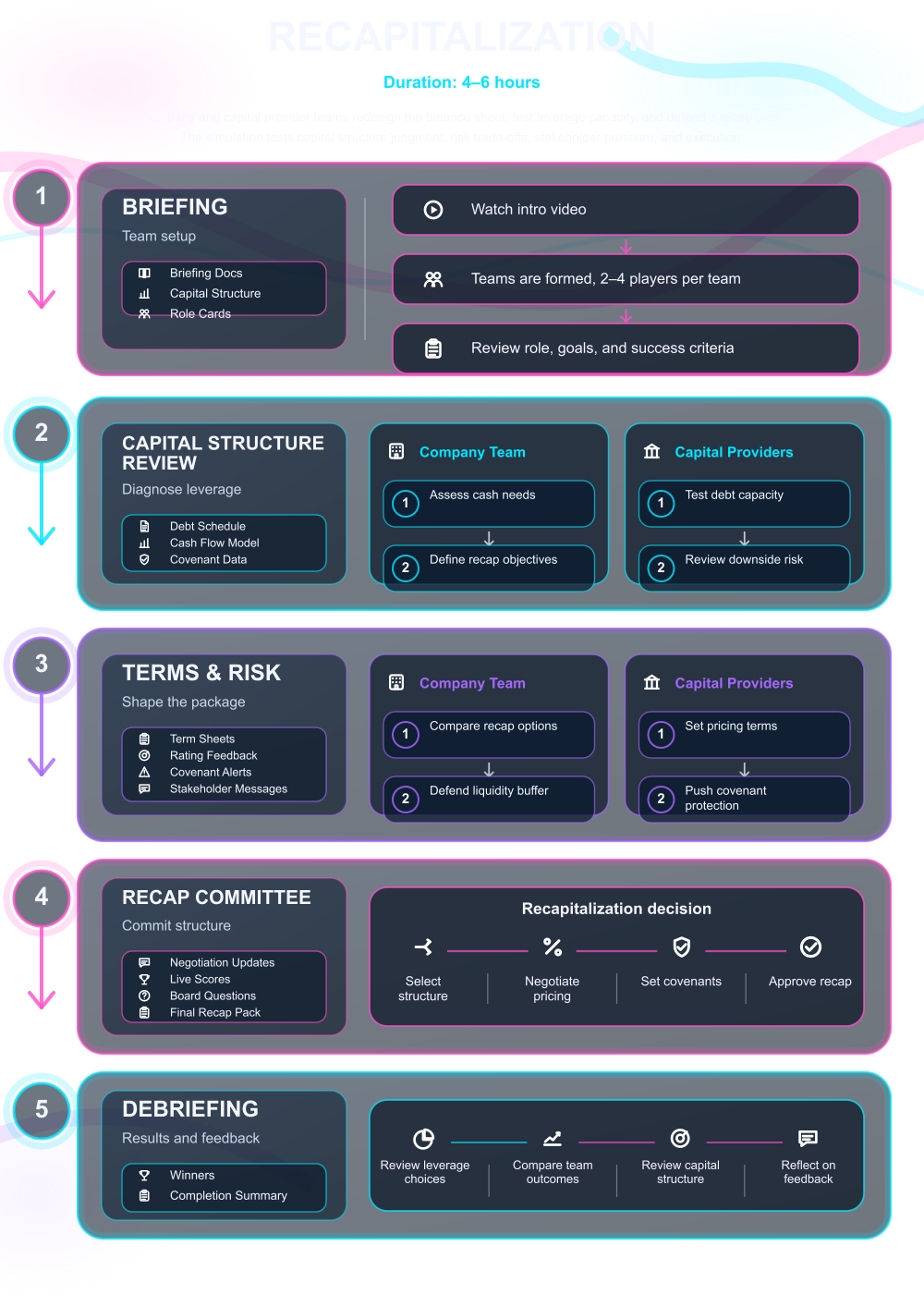

What Participants Do
In the simulation, participants will:
- Conduct a deep dive into the target company's financial statements, cash flow stability, and competitive position.
- Build a dynamic financial model to project the impact of various recapitalization structures on valuation, EPS, credit metrics, and WACC.
- Determine the optimal amount of debt the company can sustain by analyzing interest coverage ratios and debt-to-EBITDAs.
- Decide on the specific mechanism (special dividend, tender offer) and structure the new debt.
- Present and defend the recapitalization plan to the board of directors (instructors/facilitators), addressing concerns about risk.
- React to real-time market movements, analyst downgrades, and competitor actions triggered by their financial decisions.

Learning Objectives
By the end of the simulation, participants will be able to:
- Evaluate a company's current capital structure and articulate why a recapitalization could create value.
- Quantify the impact of increased leverage on a company's valuation, cost of capital, and key financial ratios.
- Design an optimal recapitalization strategy that balances tax benefits with the risks of financial distress.
- Construct a professional-grade financial model to analyze and present a leveraged recap transaction.
- Communicate a complex financial strategy persuasively to senior management and stakeholders.
How the Recapitalization Simulation Works
This simulation can be run individually or in teams in academic or corporate contexts. Each cycle represents a stage of getting through a pressing financial situation.
1. Introduction and Briefing Teams receive a detailed case study of "AlphaCorp", a stable but undervalued company with a conservative balance sheet.
2. Financial Analysis Phase Teams analyze AlphaCorp's financial health, benchmark it against leveraged peers, and identify the value-creation opportunity.
3. Financial Modeling and Strategy Phase Using a provided Excel-based template, teams model different debt levels and recap structures. They must decide on the final size and form of the recapitalization.
4. The Boardroom Pitch Each team presents its final recapitalization proposal to the "Board of Directors", justifying their chosen strategy with data from their models and strategic rationale.
5. Debrief and Results The facilitator reveals the market's reaction to each team's plan, followed by a guided debrief linking the simulation outcomes to core finance theories.
Frequently Asked Questions
Assessment
Assessment of participant performance can be tailored according to the host institution’s objectives (business school, corporate training, assessment centre). Typical assessment criteria include:
- Accuracy and functionality of the financial model.
- Soundness of assumptions and debt capacity analysis.
- Quantitative rationale for the chosen recapitalization structure.
- Clarity, logic, and persuasiveness of the boardroom pitch.
- Ability to defend the strategy and handle challenging questions.
- Quality of slides and supporting materials.
- Active contribution to team discussions and model building.
- Professionalism and collaborative spirit throughout the simulation.