It’s designed for students in public policy, economics, public administration, and political science programs.

Public Finance and Policy Simulation
Students take on the role of public finance policymakers, drafting budgets, designing tax strategies, and allocating resources to balance economic goals under real-world pressures with our public finance and policy simulator.

Simulation Overview
The Public Finance and Policy Simulation immerses students in the fiscal decision-making and policy formulation challenges faced by government officials and public sector economists. Students step into the roles of policymakers, budget directors, or municipal finance analysts, where they must allocate public resources, manage deficits, and evaluate the economic and social impacts of their fiscal decisions.
Through a dynamic and interactive simulation environment, learners engage with real-world economic scenarios, including tax reforms, infrastructure investments, public debt management, and intergovernmental transfers.
Designed to bridge economic theory and practical governance, the public finance simulation enhances both analytical and political awareness in the context of fiscal responsibility and public value creation.

Public Finance and Policy Concepts
- Government Budgeting and Forecasting
- Public Expenditure Allocation
- Tax Policy Design
- Debt Financing and Management
- Fiscal Federalism and Intergovernmental Transfers
- Social Program Funding
- Cost-Benefit and Cost-Effectiveness Analysis
- Economic Stabilization Policy
- Capital Project Evaluation
- Revenue Forecasting and Volatility
- Political Economy and Stakeholder Management
- Public Sector Performance Metrics

Gameflow
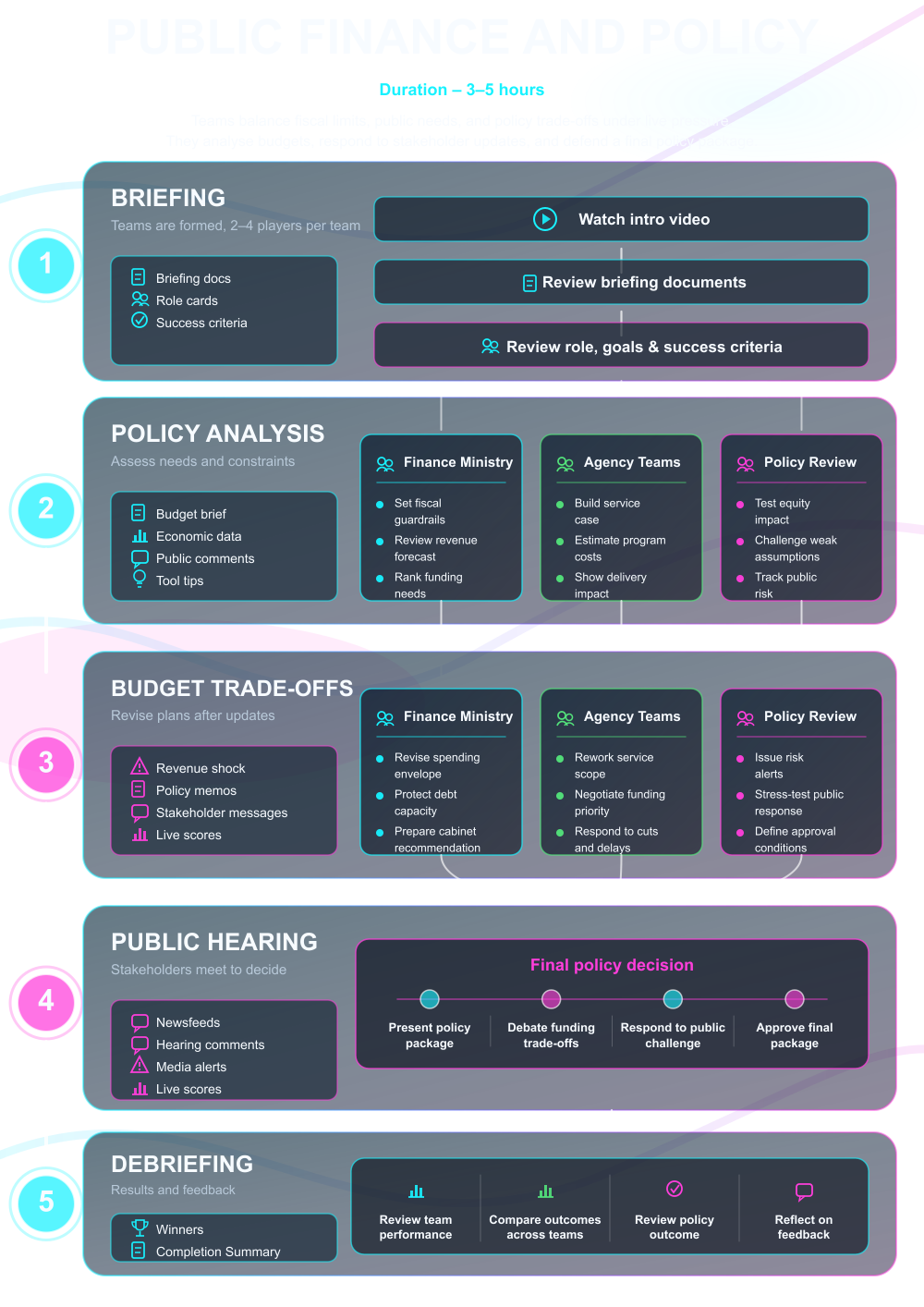

What Students Do
During the public finance and policy simulation, students engage in the following tasks to develop and apply public finance and policy skills:
- Draft Public Budgets: Allocate funds across departments, programs, and projects.
- Design Tax Policies: Balance equity, efficiency, and revenue generation.
- Manage Fiscal Deficits: Develop strategies to handle budget gaps and debt levels.
- Model Policy Impacts: Use economic tools to simulate the effects of fiscal policy changes.
- Fund Capital Projects: Prioritize infrastructure spending and assess return on investment.
- Engage Stakeholders: Balance the interests of citizens, interest groups, and political actors.
- Respond to Economic Shocks: Adjust fiscal policy in response to economic downturns or booms.
- Forecast Revenues and Costs: Analyze long-term fiscal trends and sustainability.
- Evaluate Public Program Outcomes: Measure effectiveness and efficiency of public services.
- Present Policy Proposals: Justify decisions through reports and presentations to simulated legislatures or citizen forums.

What Students Learn
- Budgeting and Fiscal Planning: Learn to design balanced budgets and financial forecasts.
- Policy Trade-off Analysis: Assess economic, political, and social implications of fiscal choices.
- Public Revenue Strategy: Understand the design and consequences of tax systems.
- Cost-Benefit Analysis: Apply frameworks to evaluate spending programs and projects.
- Crisis Response: Gain experience adjusting policies in response to external shocks.
- Debt Management Skills: Learn strategies for sustainable borrowing and repayment.
- Capital Allocation Principles: Prioritize investment based on impact and feasibility.
- Stakeholder Negotiation: Practice managing diverse viewpoints in public debates.
- Performance Measurement: Understand how to evaluate government effectiveness.
- Communication of Fiscal Policy: Build skills to convey complex decisions to varied audiences.

Why The Public Finance and Policy Simulation Works
The Public Finance and Policy Simulation delivers a powerful combination of economic modeling and political realism. By placing students in the driver’s seat of fiscal decision-making, it encourages an appreciation for the challenges governments face in balancing competing priorities with limited resources. The public finance simulation ensures that students see the real-world impact of abstract policy ideas - from changing tax structures to funding healthcare or education initiatives.
This experience is not just about managing numbers - it’s about making decisions under pressure, weighing values against data, and crafting outcomes that affect millions. Students leave with a deep understanding of the mechanics and responsibilities of public finance, ready to contribute meaningfully in roles that shape economic policy and public administration.