This simulation is ideal for MBA students, finance professionals, engineers, and government officials specializing in infrastructure, investment banking, corporate finance, and public policy.

Project Finance and Infrastructure Funding Simulation
Welcome to the cutting-edge Project Finance & Infrastructure Funding Simulation, a powerful experiential learning platform designed for future leaders in infrastructure, finance, and public policy.

Project Finance and Infrastructure Funding Simulation Overview
This simulation plunges participants into the high-stakes world of large-scale project development, where they must navigate the complex interplay of financing, risk management, and strategic execution.
Participants will form teams to act as the sponsors of a major infrastructure project—such as a renewable energy plant, a toll road, or a public hospital. From structuring a robust financial model to negotiating with banks and investors, and finally managing construction and operational risks, this simulation provides a holistic, hands-on understanding of why project finance is the preferred method for delivering the world's most critical infrastructure.
Although ideal for undergraduate and graduate finance courses, executive training, and corporate finance skill workshops, the simulation is modular and scalable, allowing instructors to vary complexity.

Project Finance and Infrastructure Funding Simulation Concepts
Participants work through realistic scenarios, which can be customized to emphasize or exclude specific topics depending on the learning goals. This modular structure allows the simulation to be tailored to any type of session. Key concepts include:
- Non-Recourse / Limited Recourse Financing
- Special Purpose Vehicle
- Financial Modeling and Feasibility Analysis
- Debt Structuring
- Public-Private Partnerships
- Cash Flow Waterfall and Debt Service Coverage Ratios
- Risk Identification and Mitigation
- Term Sheet Negotiation
- Investment Appraisal
- Contract Management

Gameflow
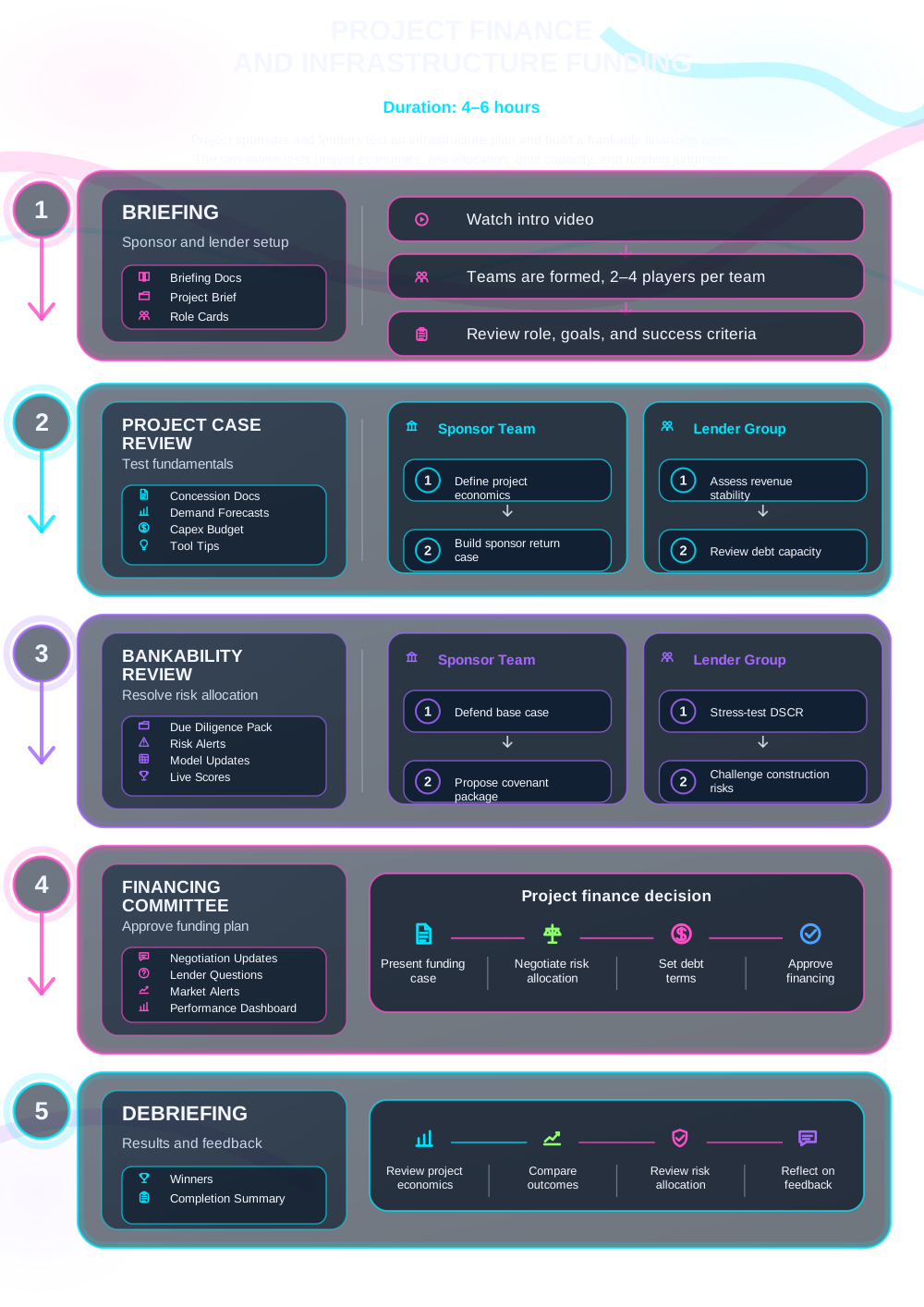

What Participants Do
In the simulation, participants will:
- Establish an SPV and design the optimal capital structure (debt vs. equity) for the project.
- Create a dynamic, integrated financial model to project revenues, costs, and cash flows over the project's lifecycle.
- Present your project to a simulated bank syndicate, negotiate loan terms, interest rates, and covenants.
- Develop an investment teaser and pitch to institutional investors to secure equity funding.
- Respond to randomized events during construction and operation, making critical decisions to keep the project on track.
- Calculate and present the project's equity IRR and overall viability to your stakeholders.

Learning Objectives
By the end of the simulation, participants will be able to:
- Understand the fundamental principles and structure of project finance and its application in infrastructure.
- Construct a comprehensive project finance model from the ground up, incorporating debt schedules and sensitivity analysis.
- Evaluate project viability through key metrics like NPV, IRR, and Debt Service Coverage Ratios (DSCR).
- Differentiate between various funding sources, including senior debt, mezzanine financing, and equity.
- Identify, assess, and mitigate key risks throughout the project lifecycle (pre-completion and operational).
- Negotiate effectively with different stakeholders, including lenders, investors, and government entities.
- Appreciate the strategic role of Public-Private Partnerships (PPPs) in modern infrastructure development.
How the Project Finance and Infrastructure Funding Simulation Works
This simulation can be run individually or in teams in academic or corporate contexts. Each cycle represents a stage of getting through a pressing financial situation.
1. Team Formation and Project Assignment Participants are divided into sponsor teams and assigned a unique infrastructure project with specific technical and economic parameters.
2. Feasibility and Structuring Teams analyze their project, build the initial financial model, and propose a financing structure.
3. Funding and Negotiation Teams enter negotiation rounds with simulated banks (for debt) and investors (for equity). The terms they secure directly impact their model's outputs.
4. Execution and Risk Management Once funded, teams proceed through construction and into operation. Random events (cost overruns, regulatory changes, demand shocks) test their risk mitigation strategies.
5. Final Review and Assessment The simulation concludes with a final review of each project's financial performance. Success is measured by the equity returns generated and the overall stability of the project.
Frequently Asked Questions
Assessment
Assessment of participant performance can be tailored according to the host institution’s objectives (business school, corporate training, assessment centre). Typical assessment criteria include:
- Profitability and financial stability of the Team project
- Evaluation of the technical accuracy, structure, and assumptions within your team's financial model and supporting documentation.
- Assessment of the terms (interest rates, covenants, equity splits) secured during funding rounds with banks and investors.
- Feedback from team members on collaboration, contribution, and application of strategic thinking.