Basic understanding of corporate finance would give participants an edge, but isn’t strictly required. The simulation includes model templates and guidance to support all levels.

Project Finance Simulation
Navigate the high-stakes world of infrastructure and energy development in Project Finance Simulation. Learn to balance risk and return, negotiate with lenders and investors, and bring a complex project from the drawing board to financial close.

Project Finance Simulation Overview
Fund long-term, capital-intensive projects: from toll roads and power plants to renewable energy farms. Unlike corporate finance, though, repayment depends on the project's own cash flows and not the sponsors' balance sheets.
This simulation provides a hands-on environment where participants must build a robust financial model, secure funding from diverse sources, and manage the project through construction and operation.
Participants will contend with real-world challenges like cost overruns, market volatility, and lender covenants, making critical decisions that will determine participants project's success or failure.

Project Finance Simulation Concepts
Participants work through realistic scenarios, which can be customized to emphasize or exclude specific topics depending on the learning goals. This modular structure allows the simulation to be tailored to any type of session. Key concepts include:
- Non-Recourse / Limited Recourse Financing
- Capital Stack Structuring
- Financial Modeling & Scenario Analysis
- Risk Identification & Mitigation
- Debt Sizing & Covenants
- Public-Private Partnerships
- Investment Analysis
- Term Sheet Negotiation

Gameflow
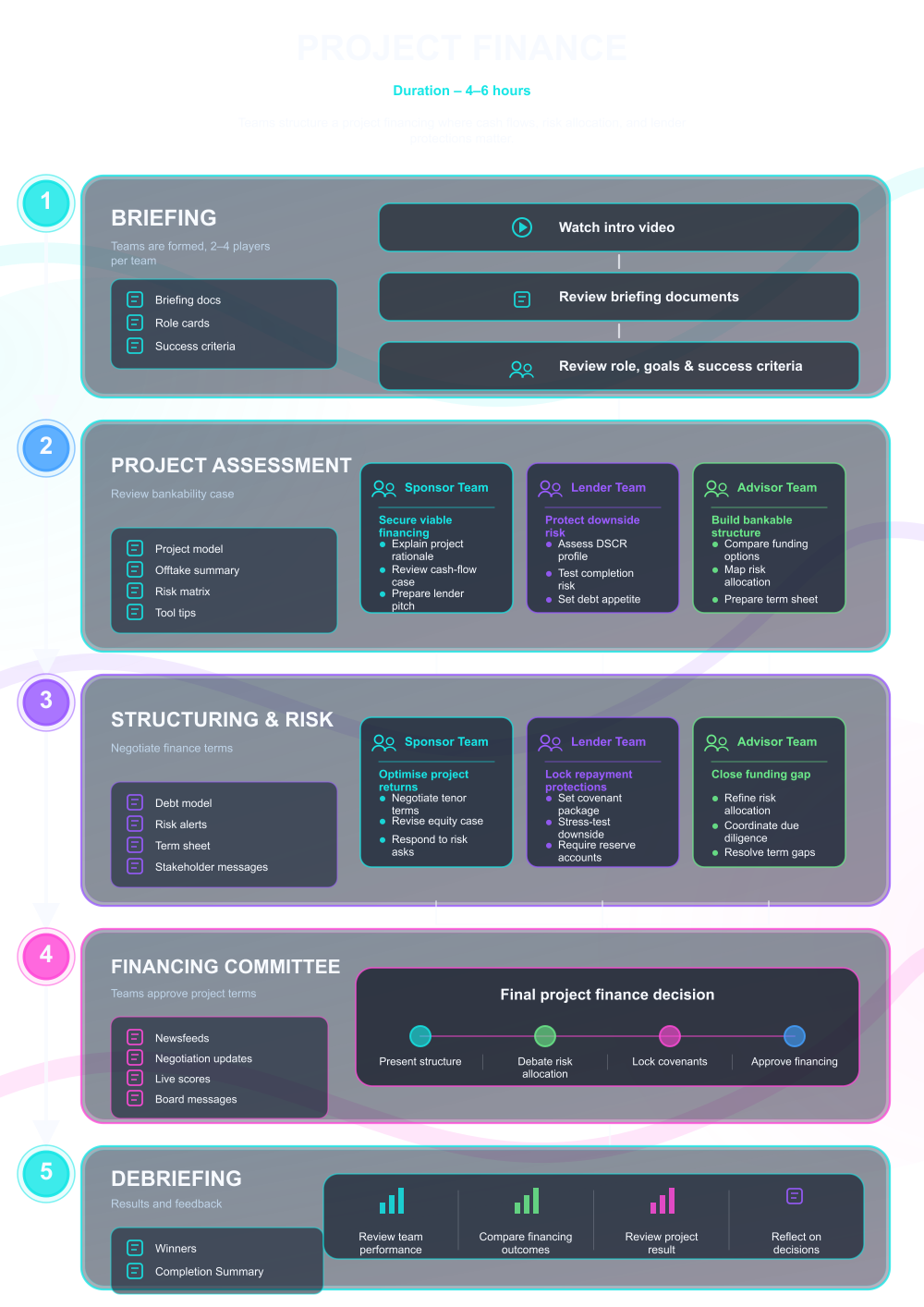

What Participants Do
In the simulation, participants will:
- Create a compelling business case and information memorandum to attract investors.
- Construct a detailed, scalable financial model from the ground up, integrating construction costs, operating revenues, and financing.
- Design the optimal mix of equity, mezzanine financing, and senior debt to maximize returns while ensuring bankability.
- Engage in live negotiations to secure the best possible terms on interest rates, tenors, and covenants.
- Oversee the construction phase, making critical decisions when faced with delays or cost overruns.
- Monitor operational cash flows, assess compliance with loan covenants, and evaluate exit strategies.

Learning Objectives
By the end of the simulation, participants will be able to:
- Structure the financing for a major infrastructure or industrial project.
- Build and interpret a complex project finance model.
- Evaluate project viability from the perspective of an equity investor, lender, and government sponsor.
- Identify, allocate, and mitigate key project risks.
- Negotiate term sheets and financing documents effectively.
- Calculate and analyze critical project finance metrics (DSCR, LLCR, IRR, NPV).
How the Project Finance Simulation Works
This simulation can be run individually or in teams in academic or corporate contexts. Each cycle represents a stage of getting through a pressing financial situation.
1. Team Formation and Briefing Participants are divided into project developer teams. Each team receives the project specifications.
2. Project Modeling and Structuring Teams build their financial model, run sensitivity analyses, and propose an initial financing structure.
3. The Bank Roadshow Teams present their project and financial model to a panel (instructors or other teams acting as banks) to secure a term sheet for the senior debt.
4. Equity Syndication Teams negotiate with private equity funds to secure the equity portion of the capital stack, focusing on the promised Equity IRR.
5. Construction and Operation The simulation engine runs the project, introducing random events. Teams must adapt and manage their finances to avoid default.
6. Review and Debrief All teams present their final project outcomes, financial returns, and lessons learned. A comprehensive instructor-led debrief ties the experience back to core concepts.
Frequently Asked Questions
Assessment
Assessment of participant performance can be tailored according to the host institution’s objectives (business school, corporate training, assessment centre). Typical assessment criteria include:
- Accuracy, completeness, and sophistication of the project finance model and proposed capital stack.
- Ability to secure favorable financing terms from lenders and investors during live negotiation rounds.
- The ultimate financial success of the project, measured by achieved Equity IRR and successful debt repayment.
- Clarity and persuasiveness in presenting the project proposal and final results.
Assessment may incorporate peer and self-review components, facilitator scoring, and debrief discussion. Results may feed into grades, executive feedback, certification or development plans.