The primary objective is to provide a hands-on, practical understanding of why and how a corporation issues preferred stock. You will learn to structure the terms, price the security, negotiate with investors, and understand the profound impact this financing choice has on a company's capital structure, control, and valuation.

Preferred Stock Issuance Simulation
Preferred Stock Issuance Simulation offers participants an immersive experience in the process of issuing preferred stock, emphasizing strategic decision-making, market analysis, and regulatory compliance.

Preferred Stock Issuance Simulation Overview
The Preferred Stock Issuance Simulation guides participants through the structured steps of issuing preferred shares, starting from pre-issuance preparations including financial assessment and compliance checks, to marketing and pricing the offer, and culminating in the final sale and distribution.
The simulation highlights critical facets such as collaborating with underwriters, responding to market conditions, and executing investor communications.
Designed for adaptability, the simulation can be tailored for educational programs or corporate training, focusing on realistic scenarios integrating financial, legal, and strategic challenges faced during preferred stock issuance.

Preferred Stock Issuance Simulation Concepts
Participants work through realistic scenarios, which can be customized to emphasize or exclude specific topics depending on the learning goals. This modular structure allows the simulation to be tailored to any type of session. Key concepts include:
- Structure and features of preferred stock (dividends, redemption, participation rights)
- Pre-issuance preparations and financial assessment
- Regulatory and legal compliance (SEC rules, disclosures)
- Marketing and pricing of preferred shares
- Role of underwriters and investor roadshows
- Issuance execution and post-issuance management
- Impact of market conditions on issuance success
- Communication with investors and stakeholders

Gameflow
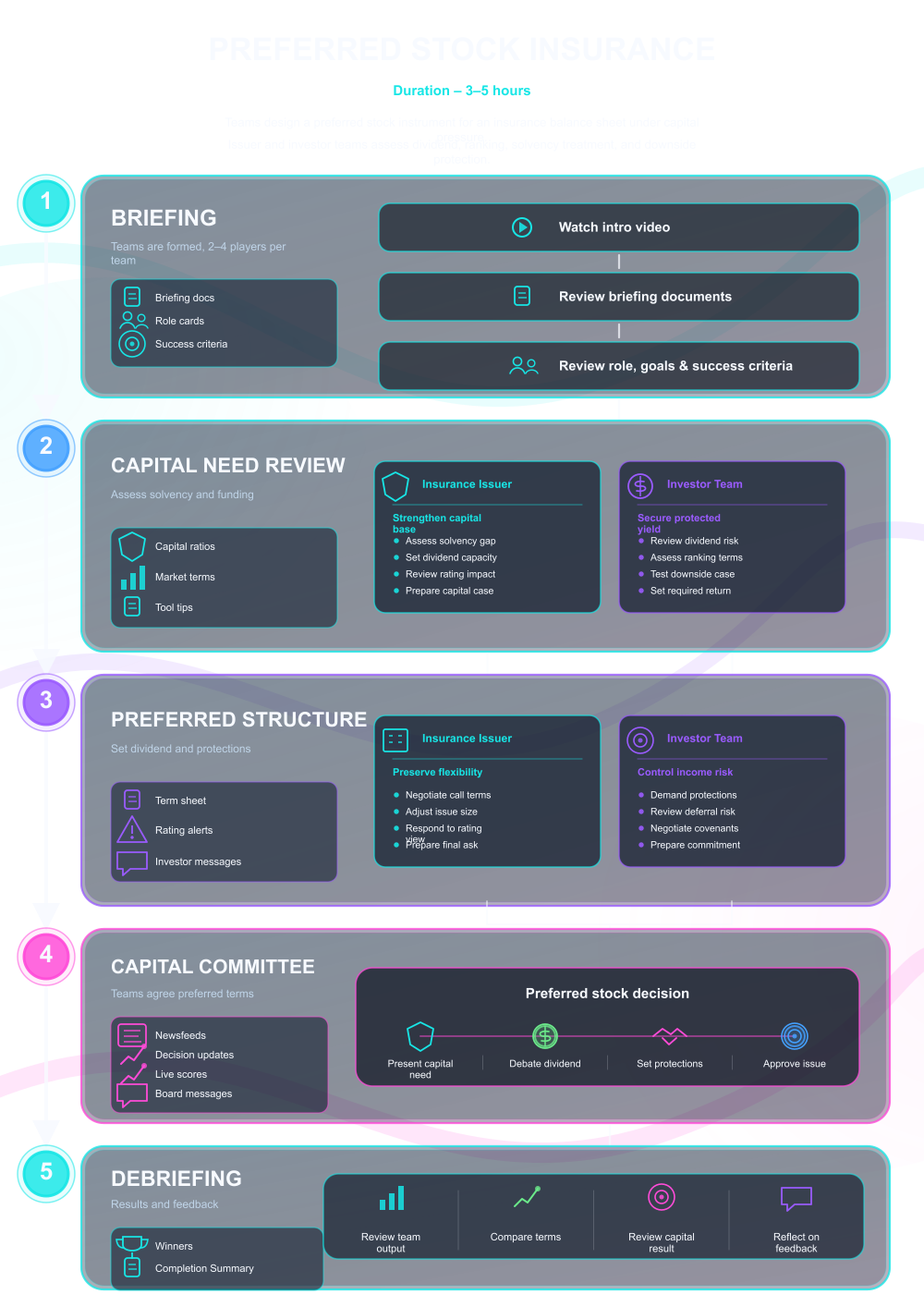

What Participants Do
In the simulation, participants will:
- Analyze company financials and preferred stock terms
- Develop a pricing and marketing strategy for the issuance
- Conduct simulated roadshows and investor meetings
- Collaborate with underwriters to refine the offering
- Make decisions under changing market conditions
- Execute the issuance and manage post-sale investor relations
- Prepare and present investor updates and regulatory documents

Learning Objectives
By the end of the simulation, participants will be able to:
- Understand the full lifecycle of preferred stock issuance
- Apply regulatory and compliance requirements effectively
- Develop pricing strategies responsive to market and investor demand
- Manage investor communications and expectations
- Navigate coordination with underwriters and legal teams
- Build strategic judgment in financial structuring for capital raising
- Recognize the importance of timing and market analysis in issuance success
How the Preferred Stock Issuance Simulation Works
This simulation can be run individually or in teams in academic or corporate contexts. Each cycle represents a stage of getting through a pressing financial situation.
1. Receive a Scenario or Brief Participants are provided with a corporate profile, current financials, market conditions, and a mandate outlining repurchase objectives.
2. Analyze Financials and Market Data Using provided data, teams analyze cash flow availability, stock price trends, regulatory boundaries, and investor sentiment.
3. Develop a Repurchase Strategy Choose the type of buyback (open market, tender offer, accelerated), scale, timing, and funding sources while considering impact on valuation and capital structure.
4. Execute Decisions Through Rounds Implement buyback actions in iterative rounds, adjusting in response to market feedback, stock price movements, liquidity, and evolving corporate priorities.
5. Collaborate and Communicate Coordinate between finance, legal, and investor relations roles to manage compliance, risk, and stakeholder messaging.
6. Review Outcomes and Reflect Evaluate buyback effectiveness using performance metrics including EPS growth, cash flow impact, stock price changes, and shareholder feedback.
7. Adapt Strategy as Needed React dynamically to simulated shocks such as market volatility spikes, regulatory changes, or liquidity constraints by modifying repurchase plans.
Frequently Asked Questions
Assessment
Assessment of participant performance can be tailored according to the host institution’s objectives (business school, corporate training, assessment centre). Typical assessment criteria include:
- Ability to determine optimal timing, method, and scale of repurchase considering market conditions and company financial goals.
- Financial impact analysis, evaluation of effects on EPS, ROE, cash flow, and overall shareholder value.
- Resourcefulness in capital allocation and liquidity management
- Anticipating and managing stock price reactions and investor sentiment resulting from repurchase announcements and execution.
- Navigation of legal restrictions, disclosure requirements, and tax implications linked to repurchases.
- Identifying and managing risks including overpaying shares, leverage, and market volatility.
- Quality of communication and investor relations