It is ideal for undergraduate and graduate students in finance, accounting, and business, as well as professionals in corporate finance, project management, or entrepreneurial roles seeking to sharpen their capital allocation skills.

Payback Simulation
In this Payback Simulation, participants become corporate finance managers, tasked with analyzing, evaluating, and selecting capital investment projects using key appraisal metrics to drive strategic growth and profitability for their firm.

Payback Simulation Overview
The Payback Simulation immerses participants in the critical corporate function of capital budgeting. Faced with multiple potential investment opportunities, teams must act as financial managers to allocate limited capital resources effectively. Each round presents a new set of project proposals with varying costs, risk profiles, cash flow projections, and strategic alignments.
Participants will analyze financial data, calculate key investment appraisal metrics, and make tough decisions under constraints like budget limits and corporate strategy requirements. They must weigh quantitative results against qualitative strategic factors, learning that the fastest payback isn't always the best long-term decision. The simulation emphasizes the practical application of financial theory in a competitive, time-pressured environment that mirrors real-world business conditions.
This simulation is ideal for undergraduate finance courses, MBA programs, and corporate training workshops, providing hands-on experience in one of the most fundamental areas of corporate finance.

Payback Simulation Concepts
Participants work through realistic scenarios, which can be customized to emphasize or exclude specific topics depending on the learning goals. This modular structure allows the simulation to be tailored to any type of session. Key concepts include:
- Investment Appraisal Fundamentals
- Payback Period Calculation
- Discounted Payback Period
- Net Present Value
- Internal Rate of Return
- Profitability Index
- Cash Flow Forecasting
- Risk Analysis
- Capital Rationing
- Strategic Alignment

Gameflow
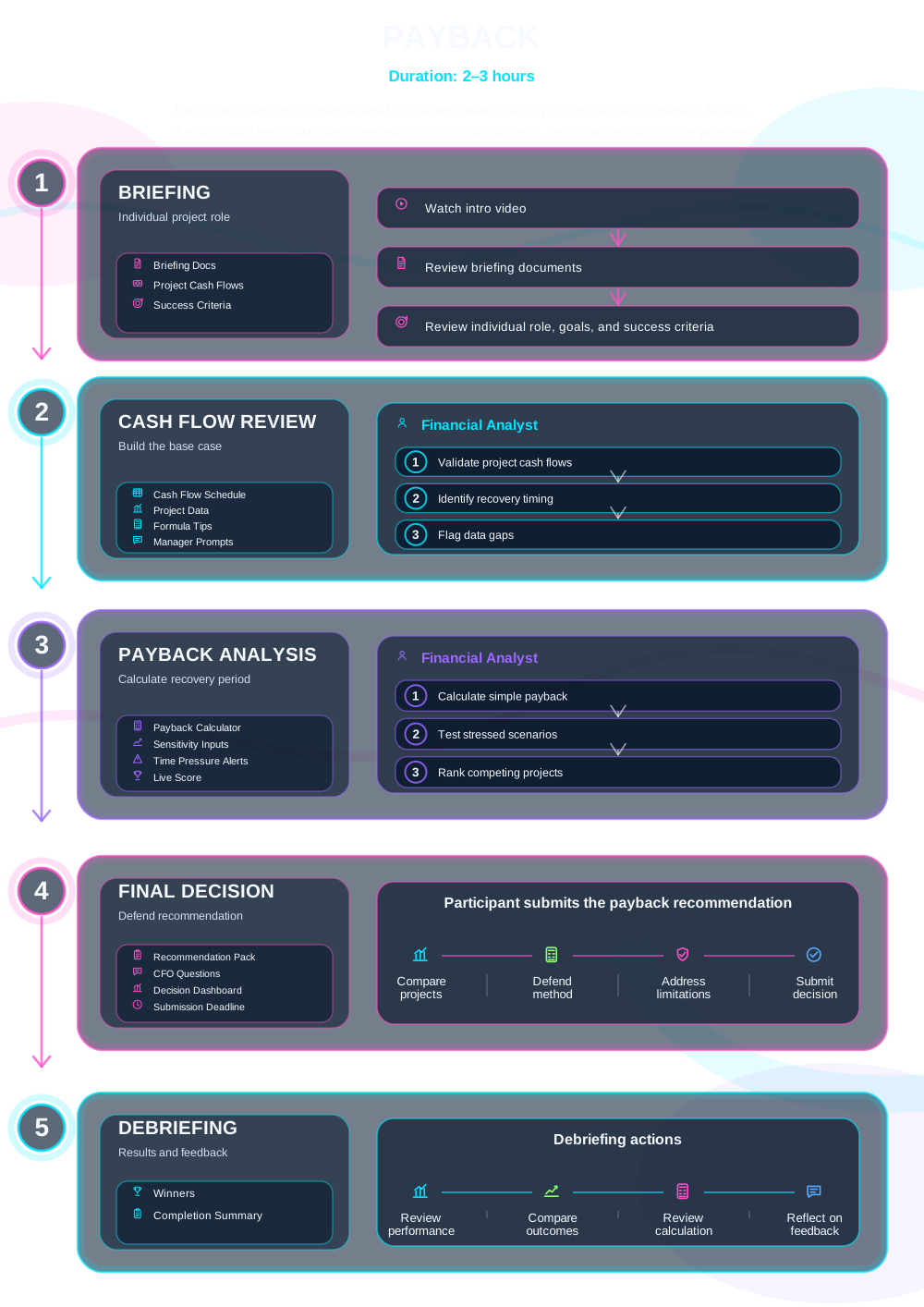

What Participants Do
In the simulation, participants will:
- Analyze detailed project briefs containing financial forecasts and strategic data.
- Calculate and interpret payback period, NPV, IRR, and other appraisal metrics.
- Rank competing projects under capital rationing and strategic constraints.
- Debate and justify project selections based on financial and non-financial factors.
- Respond to dynamic changes in company strategy, cost of capital, or market conditions.
- Present and defend their final capital budget recommendation to the board.

Learning Objectives
By the end of the simulation, participants will be able to:
- Calculate and interpret key investment appraisal metrics, including payback period and NPV.
- Apply capital budgeting techniques to evaluate and select value-adding projects.
- Make sound financial decisions under constraints like limited capital and time.
- Critically evaluate the strengths and limitations of the payback method.
- Balance quantitative financial analysis with qualitative strategic considerations.
- Communicate investment recommendations clearly and persuasively.
- Develop confidence in applying corporate finance theory to practical business problems.
How the Payback Simulation Works
This simulation can be run individually or in teams in academic or corporate contexts. Each cycle represents a stage of getting through a pressing financial situation.
1. Receive the Capital Budget Teams are given a set budget and a portfolio of potential investment projects with varying details.
** 2. Analyze Project Proposals** Teams review project data, forecast cash flows, and perform financial calculations.
3. Make Investment Decisions Teams decide which projects to fund, creating a balanced portfolio that fits their budget and strategy.
4. Review Outcomes and New Data After submitting choices, teams receive results and feedback. New information or changed conditions are introduced in subsequent rounds.
5. Adapt Strategy Teams use insights from previous rounds to refine their appraisal approach and decisions.
6. Final Presentation and Debrief Teams present their final capital allocation strategy, followed by a guided debrief linking the experience to core finance principles.
Frequently Asked Questions
Assessment
Assessment of participant performance can be tailored according to the host institution’s objectives (business school, corporate training, assessment centre). Typical assessment criteria include:
- Correct calculation and application of investment appraisal metrics.
- The financial and strategic soundness of the final project portfolio selected.
- How well the team incorporates feedback and new information in subsequent rounds.
- The effectiveness of team discussions in reaching a decision.
- The clarity and persuasiveness of the final investment recommendation.