An Organisational Behaviour Simulation is an experiential learning tool that uses a dynamic business case to teach leadership, team dynamics, motivation, and change management through hands-on decision-making and real-time feedback.

Organisational Behaviour Simulation
Navigate the complex human dynamics of the modern workplace. The Organisational Behaviour Simulation plunges participants into a corporate environment. Mastering leadership, motivation, team processes, and change management is the key to success.

Organisational Behaviour Simulation Overview
This immersive simulation replicates the challenges of managing and working within a dynamic organisation. Participants are grouped into teams, each forming the leadership core of a competing company. They must make critical decisions on leadership style, communication, team structure, motivation, and conflict resolution while adapting to internal disruptions and market shifts.
The experience moves beyond theory, creating an emotional and intellectual understanding of how individual and group behaviours directly impact morale, productivity, and ultimate performance. It’s a powerful tool for developing the “soft skills” essential for effective management and a positive organisational culture.
Although ideal for undergraduate and graduate finance courses, executive training, and corporate finance skill workshops, the simulation is modular and scalable, allowing instructors to vary complexity.

Organisational Behaviour Simulation Concepts
Participants work through realistic scenarios, which can be customized to emphasize or exclude specific topics depending on the learning goals. This modular structure allows the simulation to be tailored to any type of session. Key concepts include:
- Leadership Styles and Power
- Motivation Theories
- Team Development and Effectiveness
- Communication Channels and Barriers
- Organisational Structure and Design
- Conflict Management and Negotiation
- Organisational Culture and Climate
- Decision-Making Processes
- Resistance to Change and Change Management
- Perception, Attribution, and Bias

Gameflow

What Participants Do
In the simulation, participants will:
- Assume specific managerial roles within a simulated company.
- Analyze employee profiles, motivation levels, and team climate data.
- Make quarterly decisions on leadership approaches, resource allocation, and communication strategies.
- Respond to critical in-basket events involving conflict, ethical dilemmas, and change initiatives.
- Negotiate with team members to align on strategy and priorities.
- Present their management philosophy and action plans.
- Review performance metrics linked directly to their behavioural decisions.

Learning Objectives
By the end of the simulation, participants will be able to:
- Diagnose and analyse complex organisational behaviour situations.
- Apply OB theories to real-world managerial challenges.
- Evaluate the consequences of different leadership and communication strategies.
- Develop actionable plans to improve team motivation, cohesion, and performance.
- Formulate strategies to effectively lead and manage organisational change.
- Enhance self-awareness of their own leadership and conflict-handling tendencies.
How the Organisational Behaviour Simulation Works
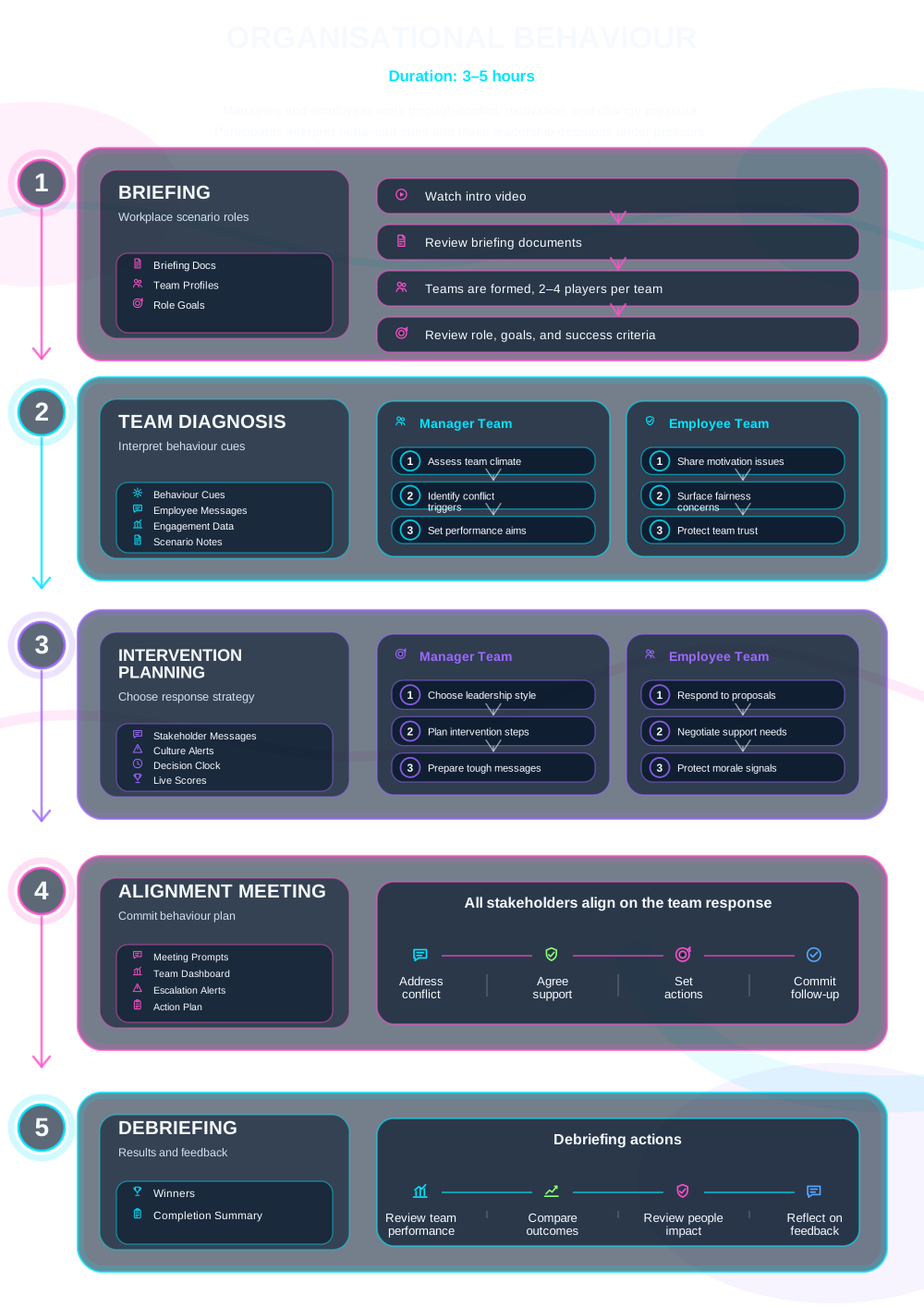
This simulation can be run individually or in teams in academic or corporate contexts. Each cycle represents a stage of getting through a pressing financial situation.
1. Analysis Reviewing a dashboard of company health, including employee satisfaction, turnover risk, and productivity metrics.
** 2. Decision-Making** The team collaborates to choose from a set of actions addressing leadership, team dynamics, and internal events.
3. Input and Execution Decisions are entered into the sophisticated simulation engine.
4. Results and Feedback Teams receive a unique report showing the outcomes of their choices, with clear cause-and-effect linkages to OB principles.
5. Debrief A guided instructor-led discussion connects the experiential results to theoretical frameworks, solidifying the learning.
Frequently Asked Questions
Assessment
Assessment of participant performance can be tailored according to the host institution’s objectives (business school, corporate training, assessment centre). Typical assessment criteria include:
- Effectiveness in applying OB theories to solve people-centric problems.
- The observed outcomes of their choices on simulated team performance and climate.
- Clarity, empathy, and persuasiveness in written and verbal feedback/plans.
- The ability to navigate dilemmas with integrity and social responsibility.
- How effectively they work within a team to analyse situations and decide on actions.