No. The simulation is designed to be accessible to students and professionals from various backgrounds, with intuitive interfaces and foundational tutorials provided.

Operations Management Simulation
Master the engine room of the enterprise. Make strategic decisions that optimize processes, balance costs, and drive real-world efficiency.

Operations Management Simulation Overview
Welcome to the Operations Management Simulation, an immersive, competitive business exercise where participants step into the role of operations executives. Teams take control of a manufacturing and distribution company, making integrated decisions across the entire value chain. From supply chain logistics and inventory management to production scheduling, quality control, and capacity planning.
Each decision round represents a fiscal quarter, and teams must navigate fluctuating demand, supplier constraints, and internal process inefficiencies. The simulation emphasizes the critical link between operational levers and financial performance, teaching that superior process management is a decisive competitive advantage.
Although ideal for undergraduate and graduate finance courses, executive training, and corporate finance skill workshops, the simulation is modular and scalable, allowing instructors to vary complexity.

Operations Management Simulation Concepts
Participants work through realistic scenarios, which can be customized to emphasize or exclude specific topics depending on the learning goals. This modular structure allows the simulation to be tailored to any type of session. Key concepts include:
- Process Design and Analysis
- Capacity and Inventory Management
- Supply Chain Coordination
- Quality Management
- Lean Operations
- Aggregate Planning
- Performance Metrics
- Sustainability in Operations

Gameflow
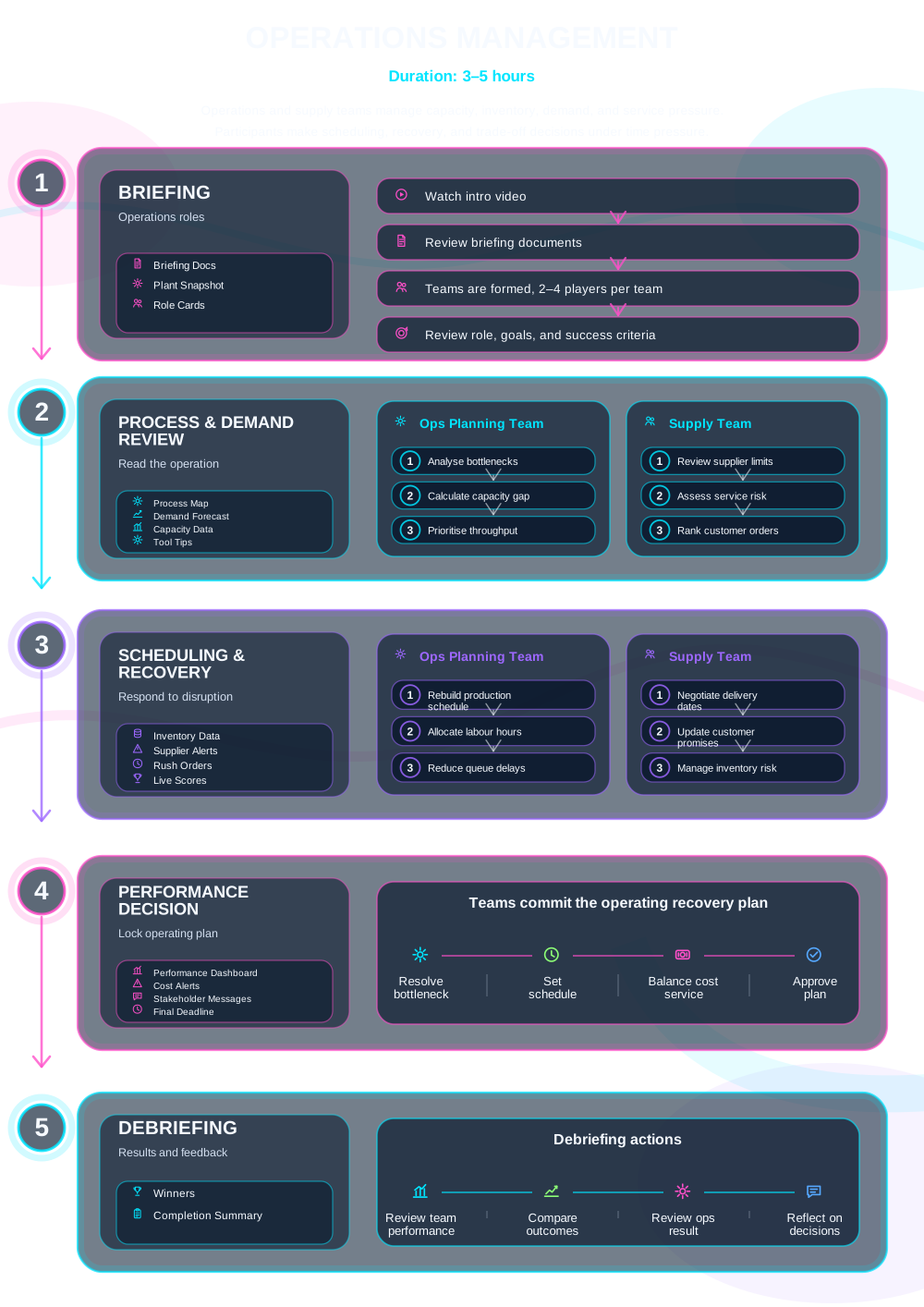

What Participants Do
In the simulation, participants will:
- Analyze a complex operational system with interdependent processes.
- Formulate a holistic operations strategy aligned with business goals.
- Execute quarterly decisions on procurement, production, workforce, and logistics.
- Negotiate with virtual suppliers and manage stakeholder requirements.
- Respond to random operational disruptions, such as supply shortages or machine breakdowns.
- Interpret detailed feedback reports on operational and financial KPIs.
- Benchmark their performance against competitor teams in a dynamic market.
- Present their operational strategy and lessons learned to instructors and peers.

Learning Objectives
By the end of the simulation, participants will be able to:
- Diagnose inefficiencies in operational processes and prescribe actionable improvements.
- Understand the direct impact of operational decisions on profitability, cash flow, and competitive positioning.
- Apply core OM frameworks and quantitative tools for decision-making under constraints.
- Develop a systemic, end-to-end view of the organization as an integrated value chain.
- Craft a coherent operations strategy that supports broader business objectives.
- Communicate operational plans and performance insights effectively.
How the Operations Management Simulation Works
This simulation can be run individually or in teams in academic or corporate contexts. Each cycle represents a stage of getting through a pressing financial situation.
1. Team Formation Participants are divided into management teams running competing companies.
** 2. Initial Analysis** Teams review the starting company position, including process maps, cost structures, and market data.
3. Decision Rounds Each round, teams input decisions for multiple operational variables. The simulation engine processes all inputs against a dynamic market model.
4. Results and Feedback Teams receive comprehensive reports showing their operational outcomes, financial statements, and industry rankings.
5. Instructor Debrief Facilitators highlight key lessons, connect results to theory, and guide strategic discussions.
6. Progression Scenarios increase in complexity, introducing new challenges like new product lines or global expansion decisions.
Frequently Asked Questions
Assessment
Assessment of participant performance can be tailored according to the host institution’s objectives (business school, corporate training, assessment centre). Typical assessment criteria include:
- Rank based on cumulative profitability, efficiency scores, and strategic consistency.
- Quality of the pre-simulation operations strategy document.
- Individual or group report analyzing their decisions, outcomes, and key learnings.