It is designed for business and finance students, early-career professionals in risk/compliance/audit functions, and executives seeking to understand enterprise-wide risk management.

Operational Risk Simulation
In this Operational Risk Simulation, participants step into the roles of risk managers and executives, tasked with identifying and mitigating operational threats that can disrupt business continuity, cause financial loss, and damage reputation.

Operational Risk Simulation Overview
Participants navigate the intricate world of operational risk management within a dynamic and pressurized business environment. Each decision cycle presents new challenges (from cyber-attacks and internal fraud to supply chain failures and regulatory compliance breaches) mirroring the unpredictable nature of real-world operations.
Teams must analyze risk data, allocate finite resources for controls, decide on risk response strategies, and communicate effectively with stakeholders during crises. The simulation emphasizes decision-making under uncertainty and time pressure, blending quantitative risk assessment with qualitative judgment and strategic business acumen.
This simulation is ideal for university finance and business programs, corporate risk departments, and executive training workshops. It brings the critical, often overlooked, domain of operational risk to life, demonstrating how effective risk management underpins organizational resilience and strategic success.

Operational Risk Simulation Concepts
Participants work through realistic scenarios, which can be customized to emphasize or exclude specific topics depending on the learning goals. This modular structure allows the simulation to be tailored to any type of session. Key concepts include:
- Operational Risk Frameworks and Taxonomy
- Risk Identification and Assessment
- Key Risk Indicators and Loss Data Analysis
- Internal Controls and Mitigation Strategies
- Business Continuity Planning and Crisis Management
- Conduct Risk and Human Factor
- Third-Party and Supply Chain Risk
- Cyber Risk and Data Security
- Regulatory Compliance and Operational Resilience
- Risk Culture and Communication

Gameflow
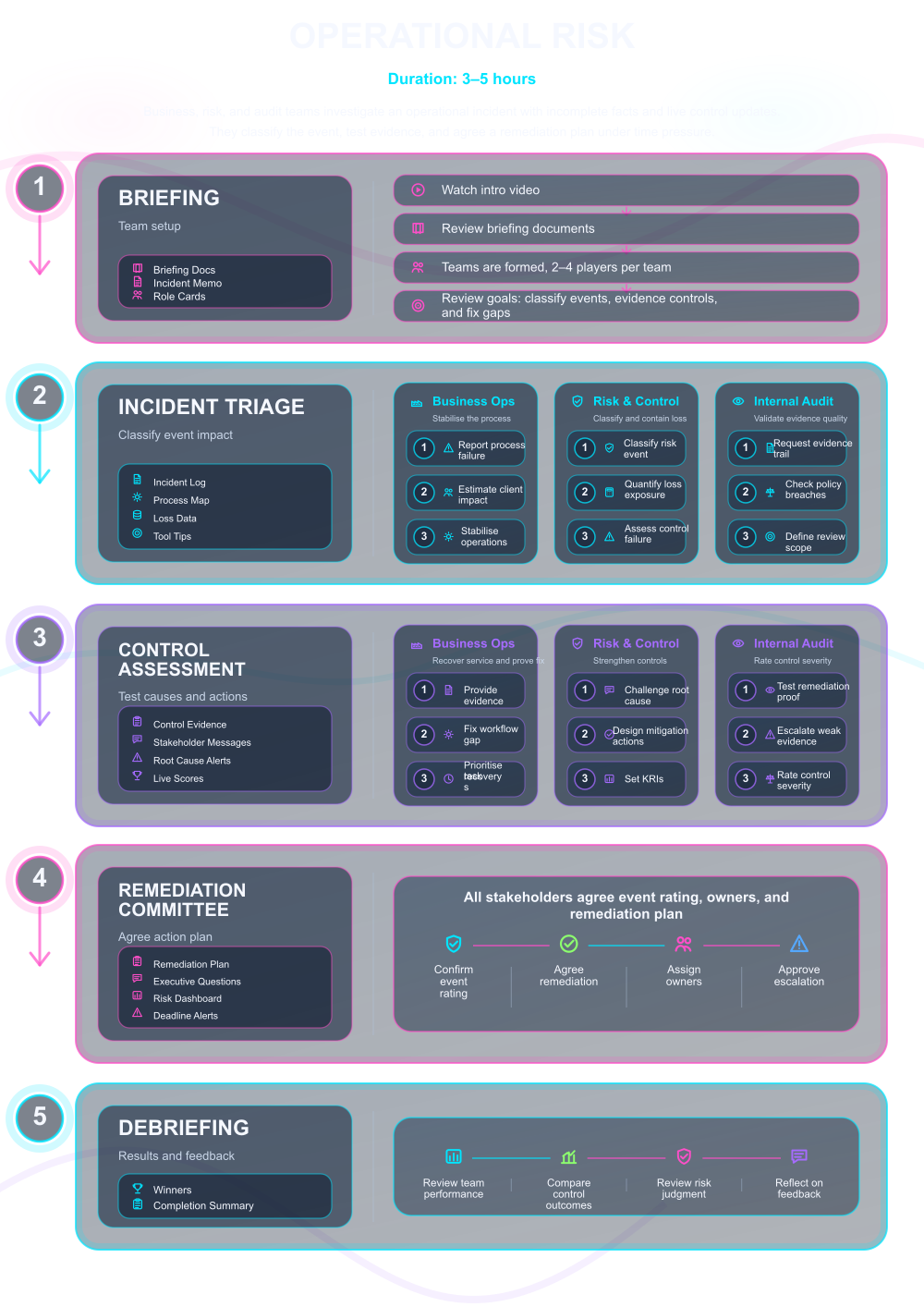

What Participants Do
In the simulation, participants will:
- Analyze incoming risk reports and external data to identify emerging threats.
- Assess and prioritize risks based on potential financial, operational, and reputational impact.
- Allocate a limited budget to implement control measures, technology upgrades, or insurance.
- Respond to simulated crisis events with decisive action plans.
- Negotiate for resources and justify risk strategies to a simulated senior management team or board.
- Balance short-term cost pressures against long-term risk exposure.
- Reflect on the effectiveness of their risk framework and adapt strategies between rounds.

Learning Objectives
By the end of the simulation, participants will be able to:
- Understand the core components of a modern operational risk management framework.
- Apply key methodologies for identifying, assessing, and quantifying operational risks.
- Evaluate the cost-benefit of different risk mitigation and control strategies.
- Develop effective response plans for operational risk incidents and crises.
- Communicate risk assessments and strategic recommendations clearly to stakeholders.
- Recognize the importance of risk culture and governance in organizational decision-making.
- Build confidence in making risk-informed decisions under conditions of uncertainty.
- Appreciate the interconnected nature of operational risks across different business functions.
How the Operational Risk Simulation Works
This simulation can be run individually or in teams in academic or corporate contexts. Each cycle represents a stage of getting through a pressing financial situation.
1. Receive the Scenario Participants are introduced to their company's profile, strategic objectives, and initial risk landscape.
** 2. Analyze the Risk Environment** They review internal loss data, KRI dashboards, audit reports, and external threat intelligence.
3. Make Strategic Decisions Teams decide which risks to mitigate, accept, transfer, or avoid. They invest in controls, purchase insurance, and set risk appetite thresholds.
**4. Collaborate and Negotiate Participants role-play as Chief Risk Officers, business unit heads, or audit committee members, debating priorities and resource allocation.
5. Face Simulated Events The simulation engine triggers random or scenario-based risk events, testing their preparedness.
6. Report and Reflect Teams present their risk posture, incident responses, and strategy to a "board." Feedback is provided on financial performance, risk exposure reduction, and stakeholder confidence.
Frequently Asked Questions
Assessment
Assessment of participant performance can be tailored according to the host institution’s objectives (business school, corporate training, assessment centre). Typical assessment criteria include:
- Reduction in potential loss exposure and efficient use of the risk management budget.
- Effective use of risk frameworks and appropriate selection of mitigation strategies.
- Speed and effectiveness of decisions in managing simulated risk events.
- Clarity, persuasiveness, and professionalism in risk reporting and board updates.
- Ability to work in a team, negotiate, and refine strategies based on feedback.