A basic understanding of corporate finance (time value of money, bonds) is helpful but not required. All necessary concepts are introduced in pre-simulation materials.

Municipal Finance Simulation
Our Municipal Finance Simulation immerses participants in the high-stakes role of city treasurers and financial advisors, tasked with funding critical infrastructure while maintaining fiscal health and creditworthiness.

Municipal Finance Simulation Overview
Municipal finance is the backbone of functional societies, funding everything from roads and schools to water systems and public safety. This simulation places teams in charge of a mid-sized city facing significant capital needs and budgetary constraints.
Participants must analyze the city's financial statements, assess project priorities, and structure optimal financing solutions in a dynamic environment of changing interest rates, political pressures, and rating agency scrutiny. They will experience the full deal lifecycle, from initial needs assessment and stakeholder management, through the structuring of general obligation bonds, revenue bonds, and potentially public-private partnerships, to final pricing and investor presentation.
Although ideal for undergraduate and graduate finance courses, executive training, and corporate finance skill workshops, the simulation is modular and scalable, allowing instructors to vary complexity.

Municipal Finance Simulation Concepts
Participants work through realistic scenarios, which can be customized to emphasize or exclude specific topics depending on the learning goals. This modular structure allows the simulation to be tailored to any type of session. Key concepts include:
- Debt Issuance Process
- Credit Analysis and Bond Ratings
- General Obligation Bonds vs. Revenue Bonds
- Debt Capacity and Coverage Ratios
- Tax-Backed vs. Enterprise Funds
- Capital Planning and Budgeting
- Arbitrage and Tax Compliance
- Investor Targeting and Marketing
- Political and Stakeholder Considerations
- Refunding Opportunities and Debt Restructuring

Gameflow
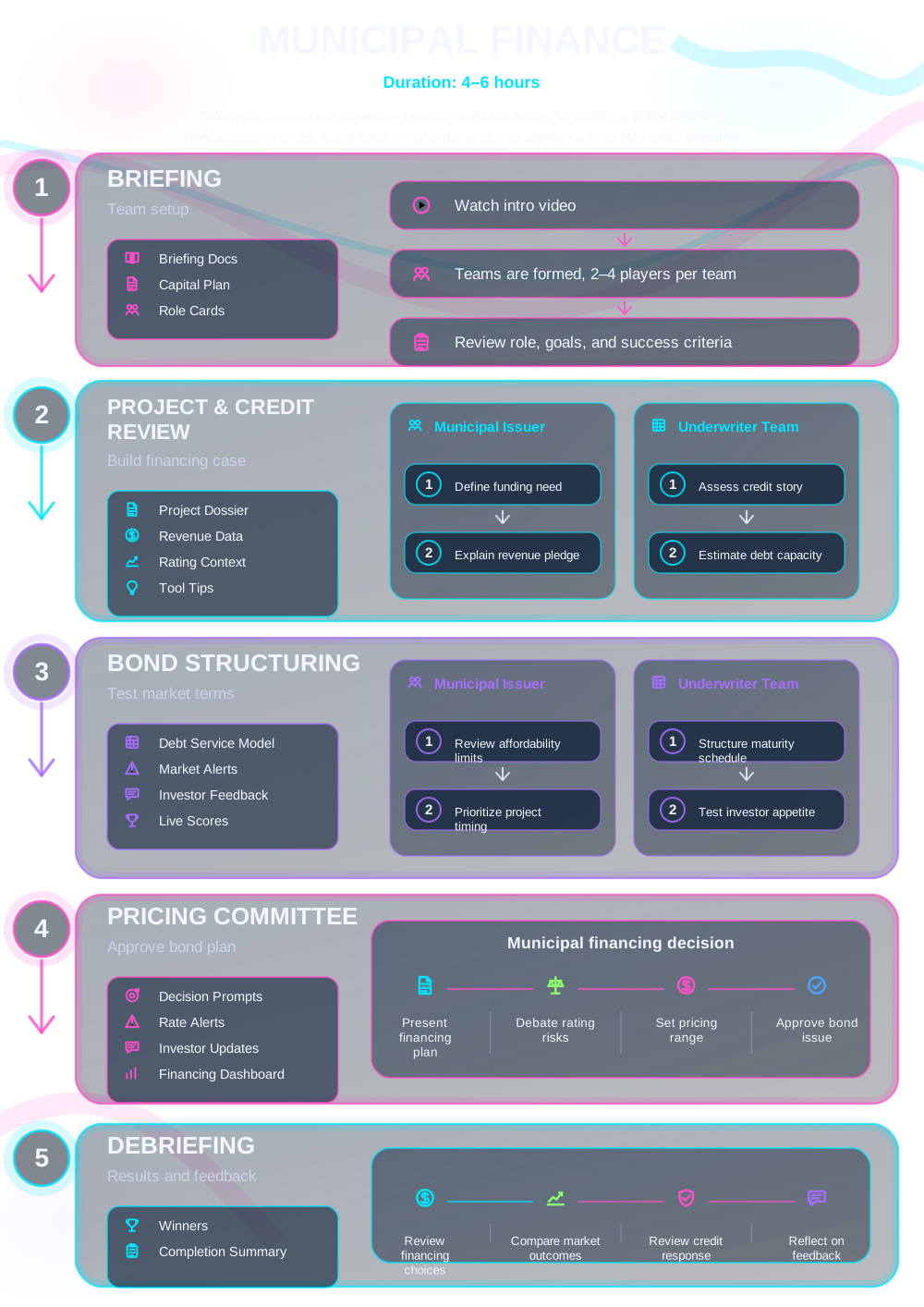

What Participants Do
In the simulation, participants will:
- Analyze a city’s capital improvement plan and balance sheet.
- Model the debt service impact of different bond structures and tenors.
- Present a financing proposal to a simulated "City Council" (instructors/other teams).
- Negotiate with a simulated "Rating Agency" to defend the city's credit rating.
- Participate in a competitive bond pricing auction, reacting to live market moves.
- Structure a Public-Private Partnership (P3) for a specific infrastructure asset.
- Prepare a final investor memorandum and debrief.

Learning Objectives
By the end of the simulation, participants will be able to:
- Understand the drivers of municipal credit strength and bond ratings.
- Differentiate between and appropriately apply various municipal bond structures.
- Build a pro-forma debt service model and calculate key coverage ratios.
- Navigate the key steps in the municipal bond issuance timeline.
- Articulate the trade-offs between cost, risk, and political acceptability in financing decisions.
- Appreciate the role of financial advisors, underwriters, and rating agencies.
- Evaluate the suitability of alternative financing methods like P3s.
How the Municipal Finance Simulation Works
This simulation can be run individually or in teams in academic or corporate contexts. Each cycle represents a stage of getting through a pressing financial situation.
1. Diagnosis and Strategy Teams analyze financials, prioritize projects, and choose a preliminary financing mix.
2. Structuring and Ratings Teams submit a formal financing plan, receive a preliminary rating based on their choices, and can appeal with a presentation.
3. Pricing and Execution A live market screen displays changing Muni-AAA yields. Teams must decide when to "go to market" and bid for their bonds, aiming for the lowest true interest cost (TIC).
4. Synthesis Teams finalize their comprehensive financing solution, incorporating feedback from all rounds, and present to a panel.
Frequently Asked Questions
Assessment
Assessment of participant performance can be tailored according to the host institution’s objectives (business school, corporate training, assessment centre). Typical assessment criteria include:
- Final all-in cost of capital, debt service coverage, and preservation of credit rating.
- Coherence of the financing strategy, clarity of trade-off analysis, and quality of stakeholder communication.
- Based on contributions during team negotiations and Q&A sessions with the "rating agency" and "city council."
- Post-simulation analysis of key learnings and decision-making processes.