No prior coursework is required. The simulation is beginner-friendly and includes built-in guidance for all economic concepts used.

Microeconomics Simulation
Students act as market participants - consumers, producers, or regulators - making pricing, production, and purchasing decisions that bring core microeconomic concepts to life in our Microeconomics Simulation.

Microeconomics Simulation Overview
The Microeconomics Simulation is an interactive, decision-based learning experience designed by economists and academic instructors to help students apply economic theory in a practical, competitive environment.
Students operate within a simulated market where they face real-time decisions around supply, demand, pricing, production capacity, and regulation. As market conditions evolve, they must respond to shifts in consumer behavior, cost structures, and competitor actions.
This simulation replaces abstract graphs with real consequences, enabling students to experience the push and pull of market forces through direct participation.

Microeconomics Simulation Concepts
This simulation builds a deep, intuitive understanding of key microeconomic principles, including:
- Supply and Demand Dynamics: Equilibrium pricing, elasticity, and shifts in market curves
- Cost Structures: Fixed vs variable costs, marginal cost, average cost
- Market Structures: Perfect competition, monopolistic competition, and oligopoly
- Consumer Behaviour: Utility maximization and price sensitivity
- Producer Behaviour: Profit maximization, marginal analysis
- Government Intervention: Taxes, subsidies, price floors/ceilings, and externalities
- Strategic Behaviour: Pricing responses, capacity planning, and market entry/exit decisions

Gameflow
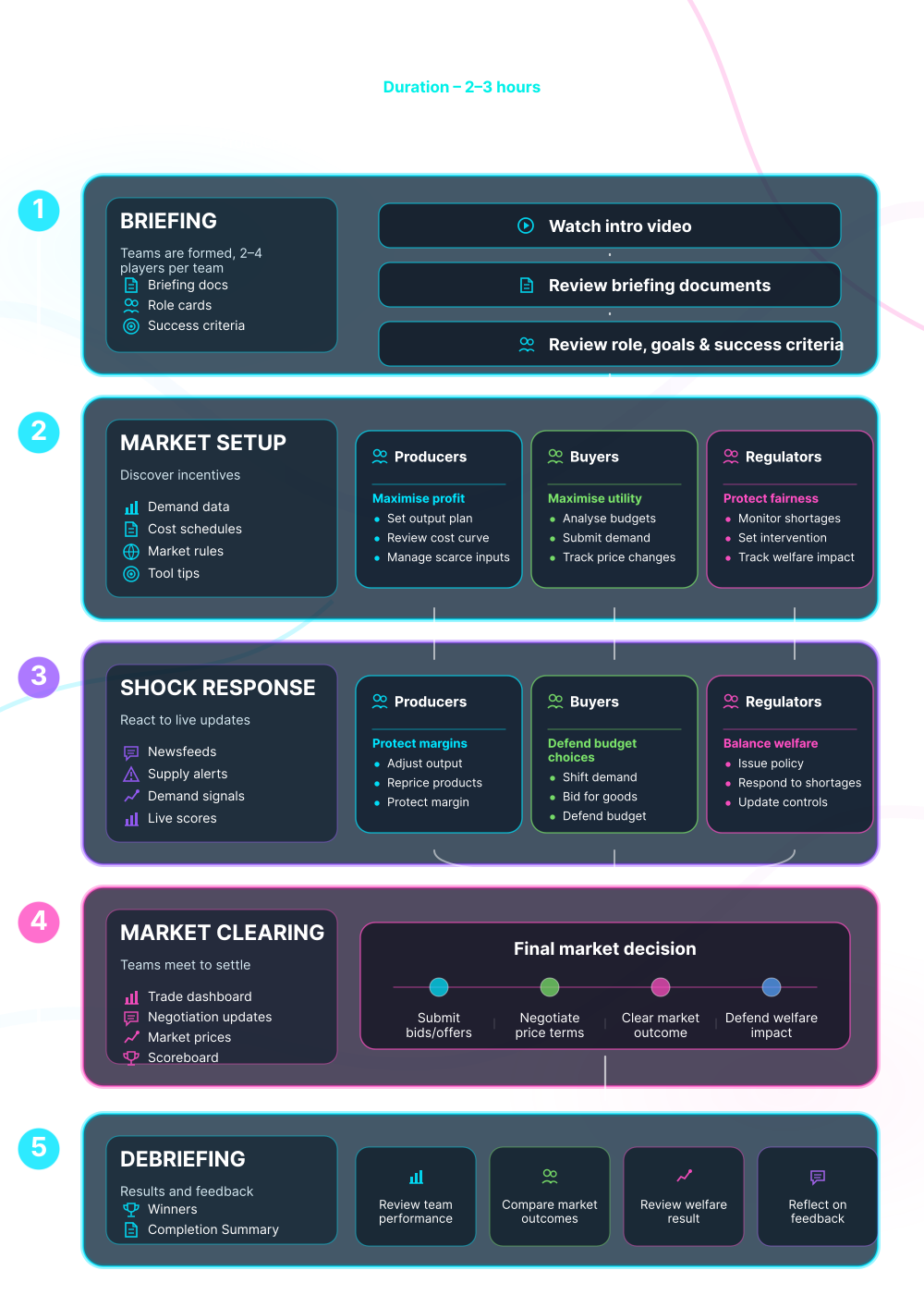

What Students Do
In this single- or multiplayer simulation, students take on the role of producers competing in a product market. Depending on the simulation round, they may also be cast as consumers or regulators. Students will:
- Set prices, choose output levels, and allocate production capacity
- Analyze market signals, competitor actions, and customer demand trends
- Adjust strategies based on cost changes, government intervention, or shocks
- Observe real-time feedback through market equilibrium, profit/loss, and customer share
- Reflect on trade-offs between pricing power, cost efficiency, and market share
- Debate or present decisions in response to policy changes or regulatory proposals

What Students Learn
Students gain hands-on understanding of how economic theory operates in dynamic settings. They will learn to:
- Apply microeconomic models in realistic, evolving markets
- Anticipate how shifts in supply and demand affect equilibrium outcomes
- Identify optimal pricing and production strategies under different market structures
- Understand how regulation and taxation influence firm behavior and consumer outcomes
- Experience competition, scarcity, and trade-offs firsthand
- Use economic reasoning to justify decisions and interpret market outcomes

Why This Microeconomics Simulation Works
Microeconomics can feel abstract to many students - this simulation makes it tangible, dynamic, and memorable.
By shifting from theory to action, the simulation creates an environment where students internalize cause-and-effect relationships through experiential learning. Whether they are pricing a product, responding to a subsidy, or analyzing customer responses, students witness how their economic decisions ripple across a market.
The simulation also promotes collaboration, debate, and reflective discussion, making it ideal for both in-person and online classrooms.