No. The simulation includes embedded instruction, tooltips, and guidance for users at various levels.

Merger Modelling Simulation
The Merger Modelling Simulation immerses participants in the role of an investment banker, tasked with analyzing, valuing, and negotiating a multi-billion dollar merger.

Merger Modelling Simulation Overview
This intensive simulation places Participants at the center of a live M&A transaction. They will be provided with the financials, market data, and strategic rationale for two major public companies.
Each team's objective is to determine the deal's feasibility, structure the transaction, and build a comprehensive merger model to assess its accretion/dilution and value creation potential. Participants will grapple with real-world complexities such as purchase price allocation, goodwill calculation, financing options, and synergy integration.
The simulation culminates in a negotiation phase and a presentation to a board of directors, mirroring the exact process used by top investment banks and corporate development teams.

Merger Modelling Simulation Concepts
Participants work through realistic scenarios, which can be customized to emphasize or exclude specific topics depending on the learning goals. This modular structure allows the simulation to be tailored to any type of session. Key concepts include:
- M&A Deal Rationale and Strategic Fit
- Financial Statement Analysis
- Discounted Cash Flow Valuation
- Comparable Company and Precedent Transaction Analysis
- Accretion/Dilution Analysis
- Purchase Price Allocation and Goodwill Calculation
- Sources and Uses of Funds
- Synergy Identification and Modelling
- Deal Structuring
- Pro-Forma Financial Statement Consolidation

Gameflow
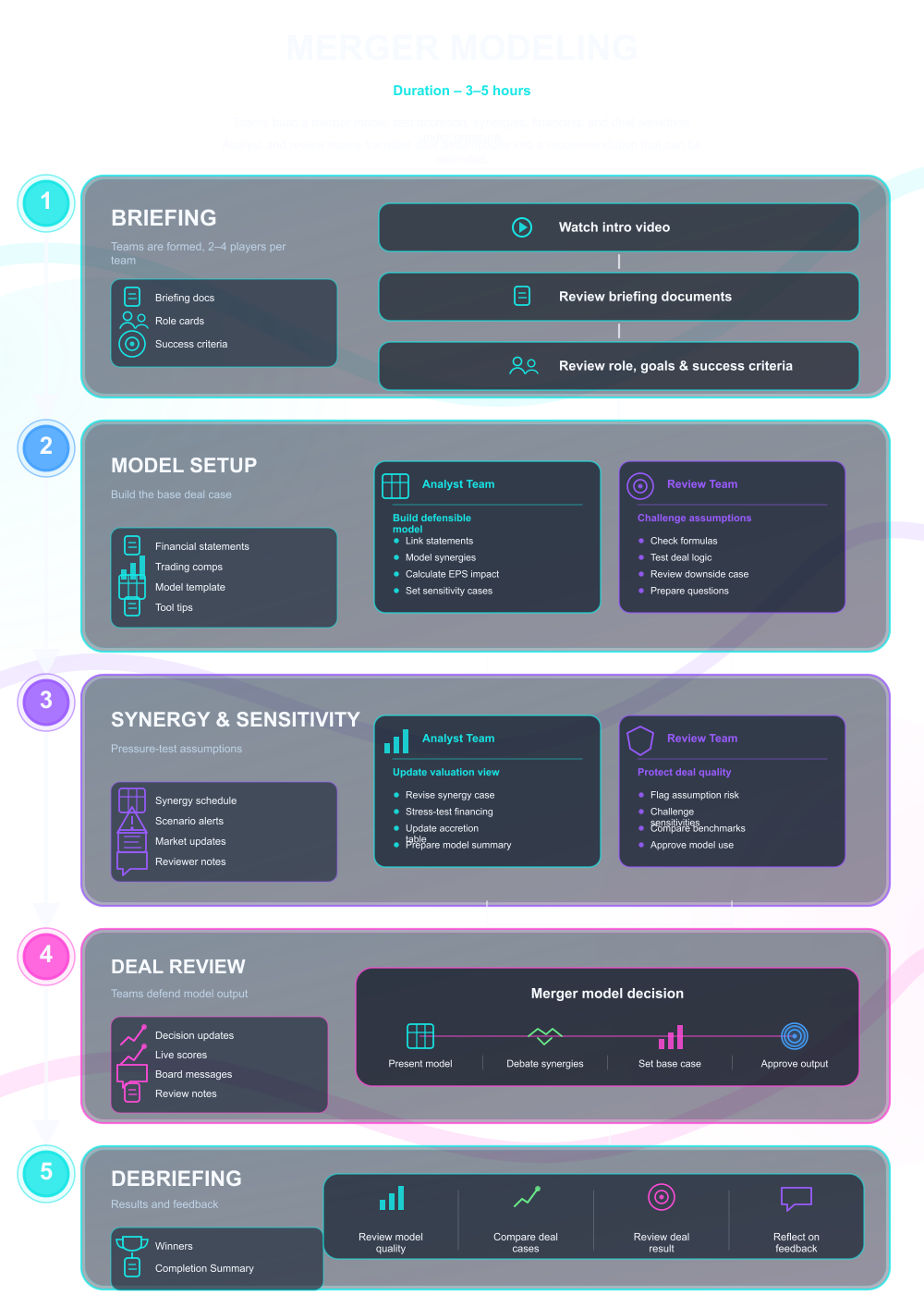

What Participants Do
In the simulation, participants will:
- Analyze the target and acquirer's financial statements and business models.
- Value both companies using multiple valuation methodologies.
- Build a dynamic, integrated merger model from scratch.
- Analyze the accretion/dilution impact on EPS under various scenarios.
- Model and sensitize the financial impact of operational synergies.
- Structure the deal by deciding the mix of cash and stock.
- Negotiate key terms, including the offer price and exchange ratio, with another team.
- Prepare and deliver a final investment recommendation to justify the deal.

Learning Objectives
By the end of the simulation, participants will be able to:
- Construct a robust, three-statement merger model.
- Evaluate the strategic and financial merits of a potential M&A deal.
- Apply core valuation techniques to determine a fair acquisition price.
- Calculate and interpret the EPS accretion/dilution of a transaction.
- Integrate operational and financial synergies into a financial model.
- Structure a deal, considering financing constraints and market conditions.
- Communicate the investment thesis and model outputs effectively to stakeholders.
How the Merger Modelling Simulation Works
This simulation can be run individually or in teams in academic or corporate contexts. Each cycle represents a stage of getting through a pressing financial situation.
1. Team Formation and Briefing Participants are divided into teams (Acquirer Advisors) and receive confidential briefing books.
2. Financial Analysis Teams conduct in-depth analysis of the provided company financials and market data.
3. Valuation and Modelling Teams build a DCF model and a full merger model to analyze the deal.
4. Scenario Analysis Teams test their model under different financing mixes and synergy realization scenarios.
5. Negotiation Round Teams engage in a structured negotiation with another team to agree on a final offer price and structure.
6. Final Deliverable Teams refine their model and prepare a final presentation deck outlining their recommendation.
7. Debrief and Awards The facilitator leads a comprehensive debrief, comparing team strategies and outcomes, and announces the most successful team.
Frequently Asked Questions
Assessment
Assessment of participant performance can be tailored according to the host institution’s objectives (business school, corporate training, assessment centre). Typical assessment criteria include:
- Technical accuracy, structure, and functionality of the final merger model is graded. This includes the correct calculation of accretion/dilution, pro-forma statements, and synergy integration.
- Teams are assessed on their ability to clearly and convincingly present their investment thesis, model conclusions, and negotiation outcome to a board of directors.
- The financial terms achieved during the negotiation round (achieved premium, favorable exchange ratio) and the team's strategic approach are evaluated.
- Individual contribution is measured through peer assessments and facilitator observations on teamwork, collaboration, and engagement throughout the simulation.
Assessment may incorporate peer and self-review components, facilitator scoring, and debrief discussion. Results may feed into grades, executive feedback, certification or development plans.