An MBO is a specific type of LBO where the existing management team is the acquirer, often partnering with a financial sponsor. This introduces unique dynamics, such as management's insider knowledge and the rollover of their own equity.

Management Buyout Simulation
The Management Buyout Simulation takes participants into the high-stakes world of corporate acquisitions, where they step into the shoes of a management team aiming to buy out the company they run

Management Buyout Simulation Overview
In this intensive simulation, participants form teams to act as the incumbent management of a profitable, mature company seeking independence from its parent corporation or private equity owners. The goal is clear but challenging: structure and negotiate a viable deal to acquire the company.
The simulation encompasses the entire MBO lifecycle, from the initial valuation and deal structuring to securing financing from banks and private equity sponsors, and finally, negotiating the final terms. Participants will grapple with real-world constraints, including debt capacity, equity dilution, lender covenants, and the conflicting interests of different stakeholders.
Participants must create a compelling investment thesis to attract capital while ensuring the future financial health and operational viability of the business under a new, highly leveraged capital structure.

Management Buyout Simulation Concepts
Participants work through realistic scenarios, which can be customized to emphasize or exclude specific topics depending on the learning goals. This modular structure allows the simulation to be tailored to any type of session. Key concepts include:
- Leveraged Buyout Modeling
- Company Valuation
- Debt Structuring
- Financial Sponsorship
- Sources and Uses of Funds
- Debt Capacity and Leverage Ratios
- Financial Covenants
- Management Equity Rollover and Incentives
- Stakeholder Management
- Post-Acquisition Business Plan

Gameflow

What Participants Do
In the simulation, participants will:
- Build a comprehensive LBO model from scratch to determine valuation and investment returns.
- Pitch the investment opportunity to a private equity firm to secure equity sponsorship.
- Negotiate term sheets with banks and other lenders to secure the optimal debt package.
- Structure the management equity pool, deciding on the amount of personal capital to roll over.
- Analyze and negotiate the final purchase price with the seller.
- Present the final deal proposal to a board of directors, justifying its financial and strategic merits.
- Defend their financial assumptions and deal structure under scrutiny from instructors and peers.

Learning Objectives
By the end of the simulation, participants will be able to:
- Construct a detailed, three-statement LBO model to evaluate deal feasibility.
- Value a target company using appropriate valuation methodologies under a leveraged scenario.
- Critique different capital structures and assess their impact on risk and return.
- Articulate the roles and motivations of all parties involved in a leveraged buyout.
- Negotiate key deal terms, including valuation, debt covenants, and equity splits.
- Synthesize a complete MBO proposal, integrating financial, strategic, and legal considerations.
- Evaluate the potential risks and rewards for the management team post-buyout.
How the Management Buyout Simulation Works
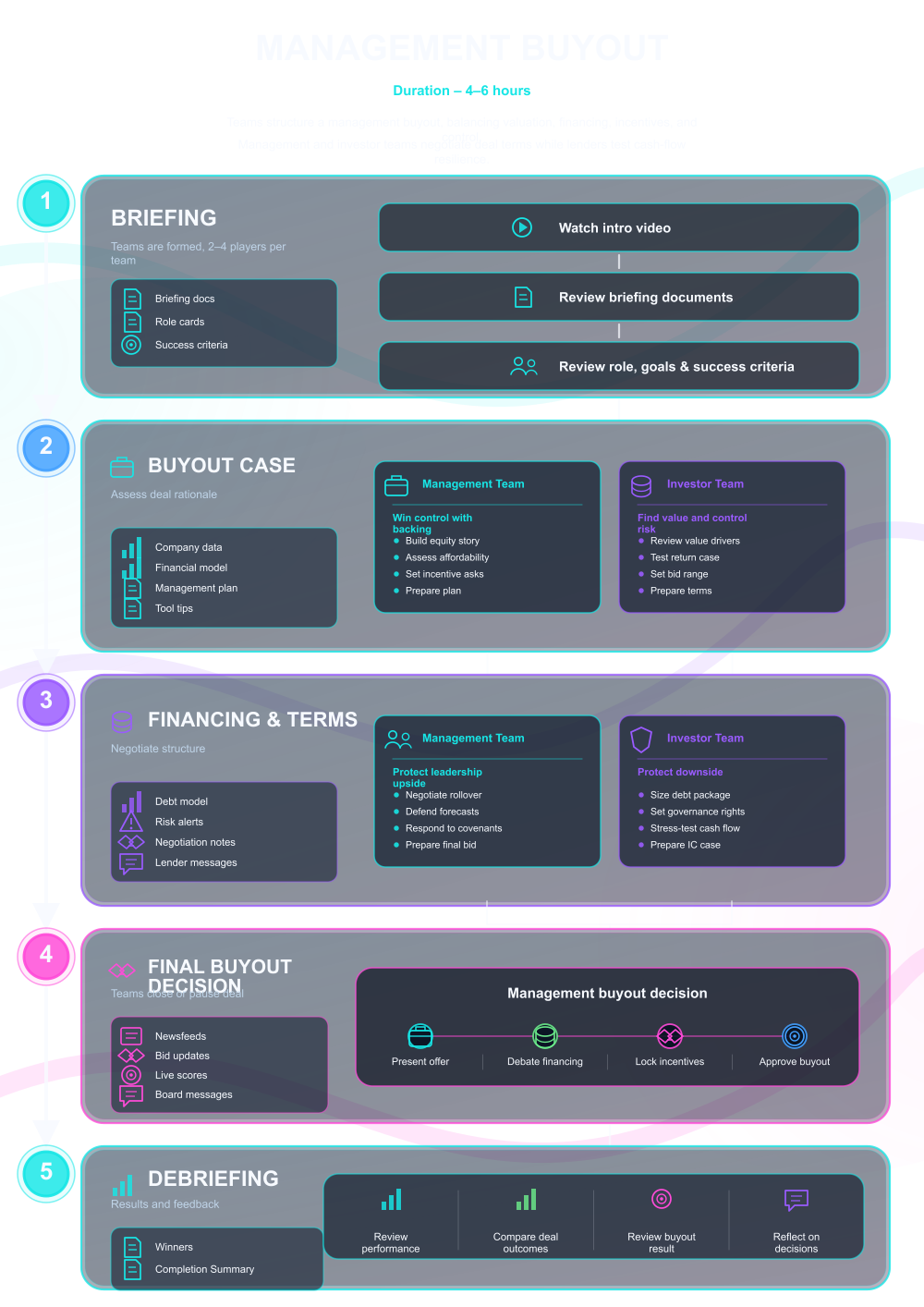
This simulation can be run individually or in teams in academic or corporate contexts. Each cycle represents a stage of getting through a pressing financial situation.
1. Introduction and Team Formation Participants are briefed on the target company's background and financials. They form management teams.
2. Financial Modeling Phase Teams work to value the company and build an initial LBO model to determine their bidding strategy.
3. Sponsor and Lender Negotiations Teams "shop the deal," presenting to simulated Private Equity Sponsors and Bank syndicates to secure financing commitments and term sheets.
4. Deal Structuring and Refinement Using feedback and term sheets, teams refine their model, optimizing the capital structure and preparing their final offer.
5. Final Presentation and Deal Defense Each team presents its final MBO proposal to a simulated "Board of Directors" (played by instructors), followed by a rigorous Q&A session.
6. Debrief and Awards Instructors lead a comprehensive debrief, comparing team strategies and outcomes, and announcing the team that structured the most compelling deal.
Frequently Asked Questions
Assessment
Assessment of participant performance can be tailored according to the host institution’s objectives (business school, corporate training, assessment centre). Typical assessment criteria include:
- Accuracy, completeness, and justification of the financial model and capital structure.
- Effectiveness in securing favorable financing terms and demonstrating deal credibility.
- Clarity, persuasiveness, and depth of knowledge displayed during the final presentation and defense.
Assessment may incorporate peer and self-review components, facilitator scoring, and debrief discussion. Results may feed into grades, executive feedback, certification or development plans.