A basic foundation is helpful, but the simulation can be adapted to both introductory and advanced levels with guided briefings.

Macroeconomics Simulation
Students take charge of national economic policy - setting interest rates, adjusting government spending, and responding to economic shocks - in our immersive Macroeconomics Simulation.

Macroeconomics Simulation Overview
The Macroeconomics Simulation places students at the helm of a national economy, where they must balance inflation, unemployment, and growth under pressure.
Developed by economists and policy advisors, this simulation replicates the complexities of macroeconomic decision-making in a dynamic, data-driven world. Students take on roles as central bankers, fiscal policymakers, or international trade advisors, tasked with stabilizing the economy amid global headwinds and domestic pressures.
From inflationary spirals to recessions, each round challenges students to apply core theory to fluid, often unpredictable scenarios—just like in real-world policy roles.

Macroeconomics Simulation Concepts
The simulation provides hands-on experience with the macroeconomic frameworks and tools taught in class, including:
- Fiscal Policy: Government spending, taxation, and budget balance
- Monetary Policy: Interest rate setting, inflation targeting, and money supply control
- Business Cycles: Responding to booms, recessions, and stagflation
- GDP Components: Consumption, investment, government spending, and net exports
- Inflation and Unemployment: Phillips curve dynamics and policy trade-offs
- International Trade: Exchange rates, trade balances, and global shocks
- Policy Lags and Expectations: Dealing with time delays and forward-looking behavior

Gameflow
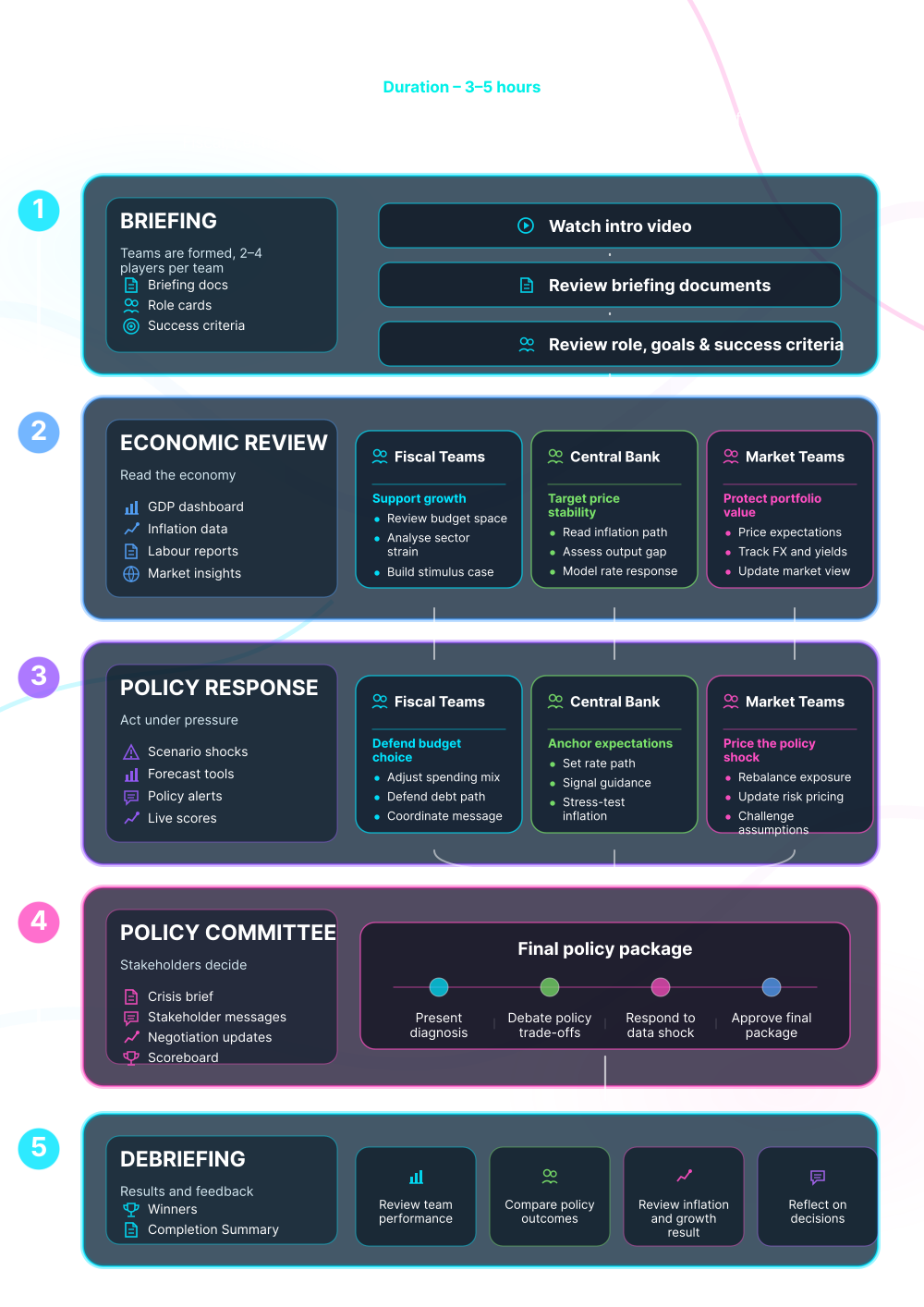

What Students Do
In this simulation, students act as economic policymakers overseeing a fictional country. Working individually or in teams, they will:
- Interpret macroeconomic indicators and forecasts (e.g., GDP, inflation, unemployment)
- Adjust interest rates or government spending to meet macro targets
- Simulate real-time policy announcements and observe public and market reactions
- Debate economic priorities in light of political or global constraints
- Manage economic outcomes over multiple quarters or years
- Justify their choices to peers, instructors, or simulated stakeholder panels

What Students Learn
This simulation helps students move from passive theory to active decision-making in macroeconomics. They will learn to:
- Apply macroeconomic models to real-world policy dilemmas
- Analyze and synthesize large sets of economic data
- Understand the trade-offs and unintended consequences of policy tools
- Communicate complex economic decisions clearly and persuasively
- Navigate the uncertainty, lags, and pressure that define public economic leadership
- Reflect on the ethical and social impact of macroeconomic choices

Why This Macroeconomics Simulation Works
Macroeconomics often feels theoretical and abstract - this simulation flips that by making students the decision-makers.
It creates a compelling feedback loop where students see how their actions drive real-time outcomes. Every decision affects multiple variables and stakeholders, prompting students to think systemically, adapt under pressure, and justify their decisions using sound economic reasoning.
Ideal for macroeconomics, public policy, or international business courses, this simulation embeds learning in a hands-on, policy-oriented experience students won’t forget.