This simulation is designed for undergraduate and graduate (MSc, MBA) finance students, as well as professionals in early-career banking, corporate treasury, or credit analyst training programs.

Loan Origination Simulation
In this hands-on simulation, participants navigate the complete lifecycle of a loan: from initial client pitch and risk assessment to final deal structuring and negotiation.

Loan Origination Simulation Overview
Participants are immersed in the dynamic, end-to-end process of originating a commercial loan, a core function of corporate and investment banking. Crafted by seasoned finance professionals, this simulation replicates the real-world pressure, analysis, and negotiation involved in securing debt financing.
Acting in competitive teams, participants assume the roles of lenders from a commercial bank and borrowers from a corporation seeking financing for growth or refinancing. Each round introduces new complexities: shifts in the company's financial health, changing market interest rates, competitive offers from rival banks, or new regulatory constraints. Teams must analyze financial statements, build credit models, assess covenant packages, and negotiate key terms like pricing, maturity, and collateral to structure a deal that meets their strategic objectives. The simulation emphasizes not just financial acumen but also critical soft skills like client relationship management, persuasive pitching, and collaborative deal-making.
This simulation is ideal for university finance programs, MBA courses, and corporate training within banks. It transforms abstract credit principles into a tangible, competitive experience, showing how risk, return, and relationships interact to close a real-world transaction.

Loan Origination Simulation Concepts
Participants work through realistic scenarios, which can be customized to emphasize or exclude specific topics depending on the learning goals. This modular structure allows the simulation to be tailored to any type of session. Key concepts include:
- Credit Analysis and Underwriting
- Debt Capacity and Structuring
- Risk Assessment and Pricing
- Loan Covenants
- Term Sheet Negotiation
- Collateral and Security Packages
- Client Relationship and Pitching
- Regulatory Capital and Basel Considerations
- Syndicated Lending
- Deal Execution and Closing

Gameflow

What Participants Do
In the simulation, participants will:
- Analyze a potential borrower's business model, industry position, and historical financial statements.
- Build a forward-looking credit model to forecast debt service coverage and leverage ratios.
- Prepare and deliver a compelling pitch to win the borrower's mandate or present a credit case to senior management.
- Structure a comprehensive loan proposal, including amount, term, interest rate, and covenant package.
- Negotiate key terms directly with the opposing borrower or lender team under time pressure.
- Respond dynamically to new information, such as a downturn in the borrower's sales or a change in central bank policy.
- Make strategic trade-offs between deal attractiveness, risk exposure, and profitability targets.
- Finalize a term sheet that balances the needs and constraints of both parties to the transaction.

Learning Objectives
By the end of the simulation, participants will be able to:
- Conduct fundamental credit analysis and assess a company's ability to service debt.
- Structure a commercial loan with appropriate pricing, maturity, and covenants.
- Articulate the rationale for a lending decision or borrowing request clearly and persuasively.
- Navigate and negotiate key elements of a loan term sheet.
- Understand how market conditions and competitive dynamics influence loan terms.
- Evaluate the risk-return profile of a loan from both the lender's and borrower's perspectives.
- Appreciate the importance of client relationships and effective communication in deal-making.
- Develop confidence in making and defending high-stakes financial decisions under uncertainty.
How the Loan Origination Simulation Works
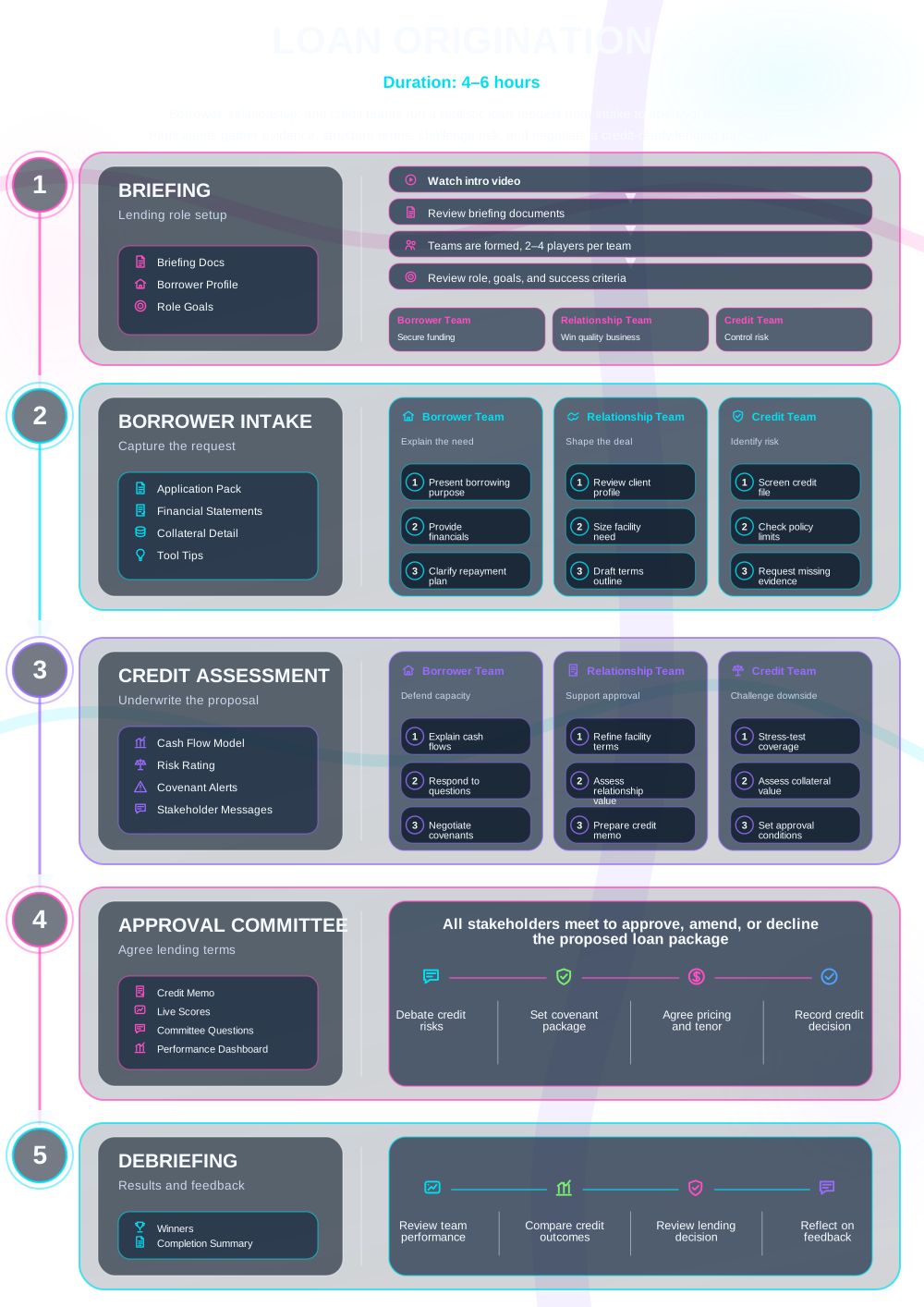
This simulation can be run individually or in teams in academic or corporate contexts. Each cycle represents a stage of getting through a pressing financial situation.
1.Team Formation and Role Assignment Participants are divided into teams representing Lending Banks and Borrowing Companies.
** 2. Initial Briefing and Analysis** Each team receives a confidential briefing pack. Lenders get market data and the borrower's financials. Borrowers receive their strategic goals and internal forecasts.
3. Preparation Phase Teams analyze their position, build financial models, and develop their initial strategy and term sheet.
4. Pitching and Mandate Award Lender teams pitch their proposed financing solution to the borrower team. The borrower selects a preferred lender to proceed with exclusive negotiations.
5. Negotiation and Structuring The matched lender and borrower teams negotiate the detailed terms of the loan, adjusting pricing, covenants, and structure based on new scenario information provided by the facilitator.
6. Final Approval and Closing Teams present their final, mutually agreed term sheet, justifying the structure and risk assessment to a simulated credit committee or board of directors.
7. Review and Debrief The facilitator leads a discussion, comparing outcomes across teams, reviewing key learning points, and providing feedback on financial analysis, strategy, and negotiation tactics.
Frequently Asked Questions
Assessment
Assessment of participant performance can be tailored according to the host institution’s objectives (business school, corporate training, assessment centre). Typical assessment criteria include:
- Quality and profitability of the final loan structure (interest margin, appropriate covenants).
- Depth and accuracy of the financial due diligence and risk assessment.
- Effectiveness in achieving favorable terms while maintaining a viable deal.
- Clarity and persuasiveness of pitches, negotiations, and final presentations.
- Ability to work effectively within a team under time pressure.