Absolutely. The simulation is designed for business students, finance professionals, and aspiring lawyers. It focuses on the application and commercial impact of legal concepts, not on passing the bar exam. All necessary legal principles are introduced in context.

Legal Services Simulation
Navigate the Nexus of Law and High Finance. Walk the legal court with the Legal Services Simulation, balancing the law, business and finance.

Legal Services Simulation Overview
In the high-stakes world of finance, every major transaction is underpinned by a complex web of legal agreements, regulatory requirements, and strategic counsel. The Legal Services in Finance Simulation places participants in the role of associates at a top-tier law firm, advising financial clients on critical deals. This immersive simulation moves beyond abstract legal theory, challenging you to apply practical legal judgment in dynamic, time-sensitive scenarios mirroring real-world financial operations.
You will be tasked with drafting key document clauses, conducting due diligence, navigating regulatory approvals, and managing client expectations. The simulation captures the intricate interplay between legal risk, deal economics, and client strategy, providing an unparalleled understanding of how legal expertise facilitates and protects financial transactions.
Although ideal for undergraduate and graduate finance courses, executive training, and corporate finance skill workshops, the simulation is modular and scalable, allowing instructors to vary complexity.

Legal Services Simulation Concepts
Participants work through realistic scenarios, which can be customized to emphasize or exclude specific topics depending on the learning goals. This modular structure allows the simulation to be tailored to any type of session. Key concepts include:
- Contract Law and Drafting
- Regulatory Compliance
- M&A Due Diligence
- Corporate Governance
- Securities Law
- Risk Mitigation
- Client Management
- Ethical Professional Conduct

Gameflow
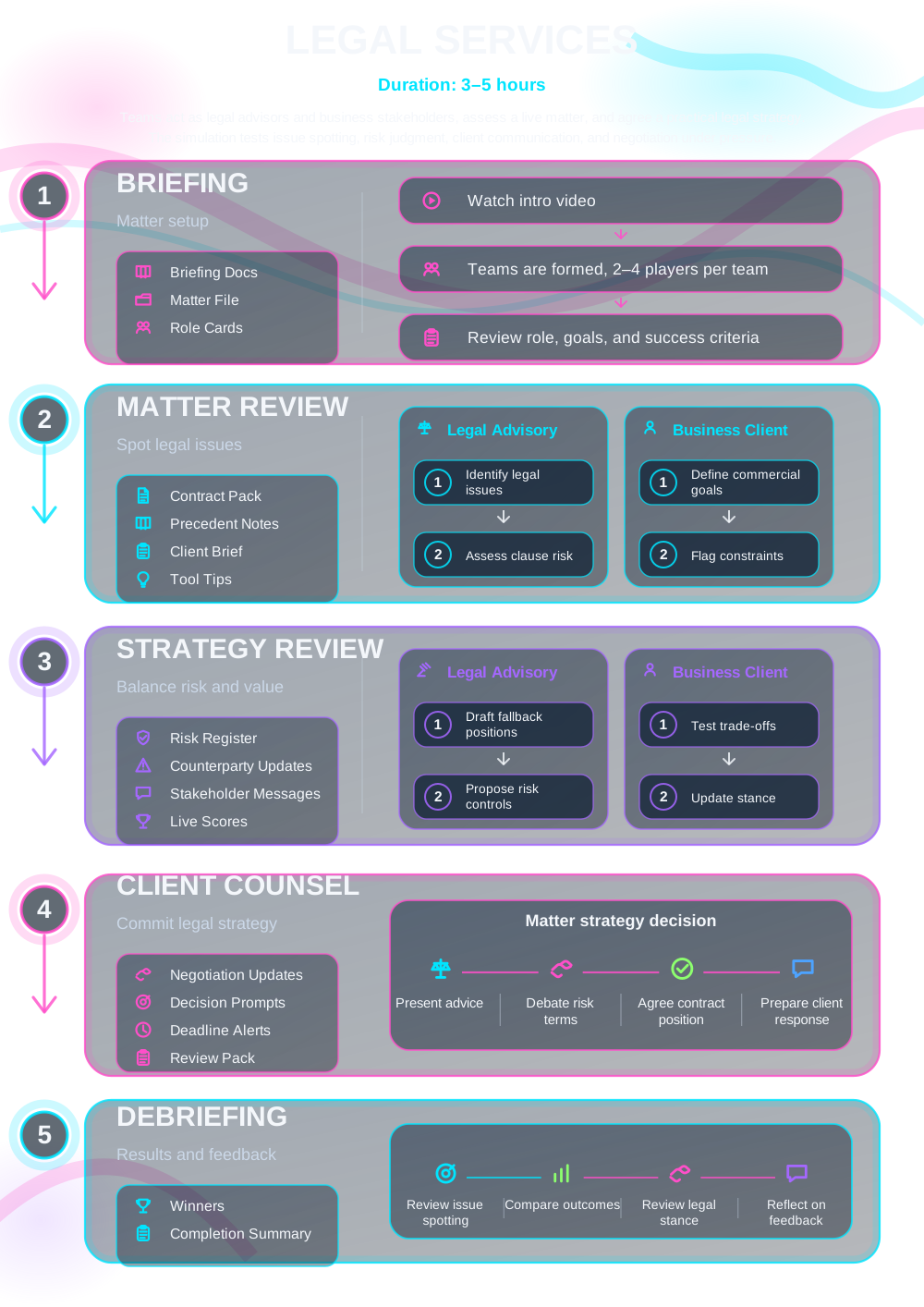

What Participants Do
In the simulation, participants will:
- Draft and Negotiate critical sections of financing and M&A agreements.
- Perform Due Diligence on a target company, analyzing its corporate records, material contracts, and litigation risks.
- Advise Client Teams on the legal ramifications of their strategic decisions in real-time.
- Navigate a Regulatory Scenario, preparing a mock filing and responding to regulatory feedback.
- Manage a Simulated Timeline where legal delays directly impact the deal's closing and cost.
- Compete or Collaborate in teams to achieve the most favorable legal outcome for their client.

Learning Objectives
By the end of the simulation, participants will be able to:
- Analyze the key legal documents that underpin major financial transactions.
- Evaluate a target company from a legal due diligence perspective and summarize key risks.
- Draft fundamental clauses for finance and M&A agreements.
- Explain the role of legal counsel in the deal-making process to a non-legal audience.
- Develop a structured approach to identifying and mitigating legal risk in fast-paced deal environments.
- Appreciate the commercial and strategic pressures that influence legal decision-making in finance.
How the Legal Services Simulation Works
This simulation can be run individually or in teams in academic or corporate contexts. Each cycle represents a stage of getting through a pressing financial situation.
1. Deal Assignment Your law firm team is assigned to represent either the acquirer, the target, or the financier in a simulated transaction (an M&A deal or a leveraged buyout).
2. Phased Modules The simulation unfolds through sequential modules: Confidentiality and Engagement, Due Diligence, Term Sheet Negotiation, Definitive Agreement Drafting, Regulatory Hurdles, and Closing.
3. Dynamic Input and Feedback At each stage, your team will review virtual data rooms, draft legal provisions, and make strategic choices. The AI-driven platform and instructor feedback provide consequences, pushing the deal forward or creating new obstacles based on your legal work.
4. Client Interaction You will receive emails and requests from your "client" (simulated by the platform), requiring you to prioritize tasks and provide clear, concise legal advice.
5. Debrief and Scoring The simulation concludes with a comprehensive debrief. Teams are scored based on the quality of their legal work, risk mitigation, adherence to timeline, and client satisfaction.
Frequently Asked Questions
Assessment
Assessment of participant performance can be tailored according to the host institution’s objectives (business school, corporate training, assessment centre). Typical assessment criteria include:
- Material legal risks in the target company, with a clear summary of findings and recommendations.
- Precision, clarity, and protective quality of key contractual provisions drafted and negotiated during the simulation.
- Quality of a memo outlining the necessary regulatory steps and potential hurdles for the transaction.
- Client Management and Strategic Decisions