No. Key financial terms are introduced during the simulation. The focus is on leadership, not technical accounting.

Leadership in Financial Crises Simulation
In this hands-on Leadership in Financial Crises Simulation, participants act as senior executives navigating high-stakes decisions, stakeholder pressure, and ethical dilemmas amid financial turmoil, strategic uncertainty, and public scrutiny.

Leadership in Financial Crises Simulation Overview
This simulation places participants at the helm of a company, bank, or public institution facing an unfolding financial crisis. They are challenged to stabilise operations, communicate with internal and external stakeholders, and rebuild credibility - all while safeguarding long-term value.
Each round simulates a new wave of crisis - market panic, liquidity crunches, reputational damage, or shareholder revolts. Participants must decide what to prioritize, how to communicate, and which trade-offs are most defensible in real time.
Designed for MBA, executive education, and corporate leadership development, this simulation builds composure, judgment, and adaptability under fire. It can be tailored to reflect private-sector banking, public policy settings, or corporate turnarounds depending on your teaching goals.

Leadership in Financial Crises Simulation Concepts
Participants work through realistic scenarios, which can be customized to emphasize or exclude specific topics depending on the learning goals. This modular structure allows the simulation to be tailored to any type of session. Key concepts include:
- Crisis leadership and decision-making under pressure
- Financial distress and turnaround strategies
- Internal and external communication in high-stakes settings
- Stakeholder prioritization: investors, regulators, employees
- Ethical and reputational risk management
- Liquidity management and cost-cutting
- Strategic agility in unpredictable environments
- Public confidence and media response
- Psychological safety and team morale
- Scenario planning and contingency frameworks

Gameflow
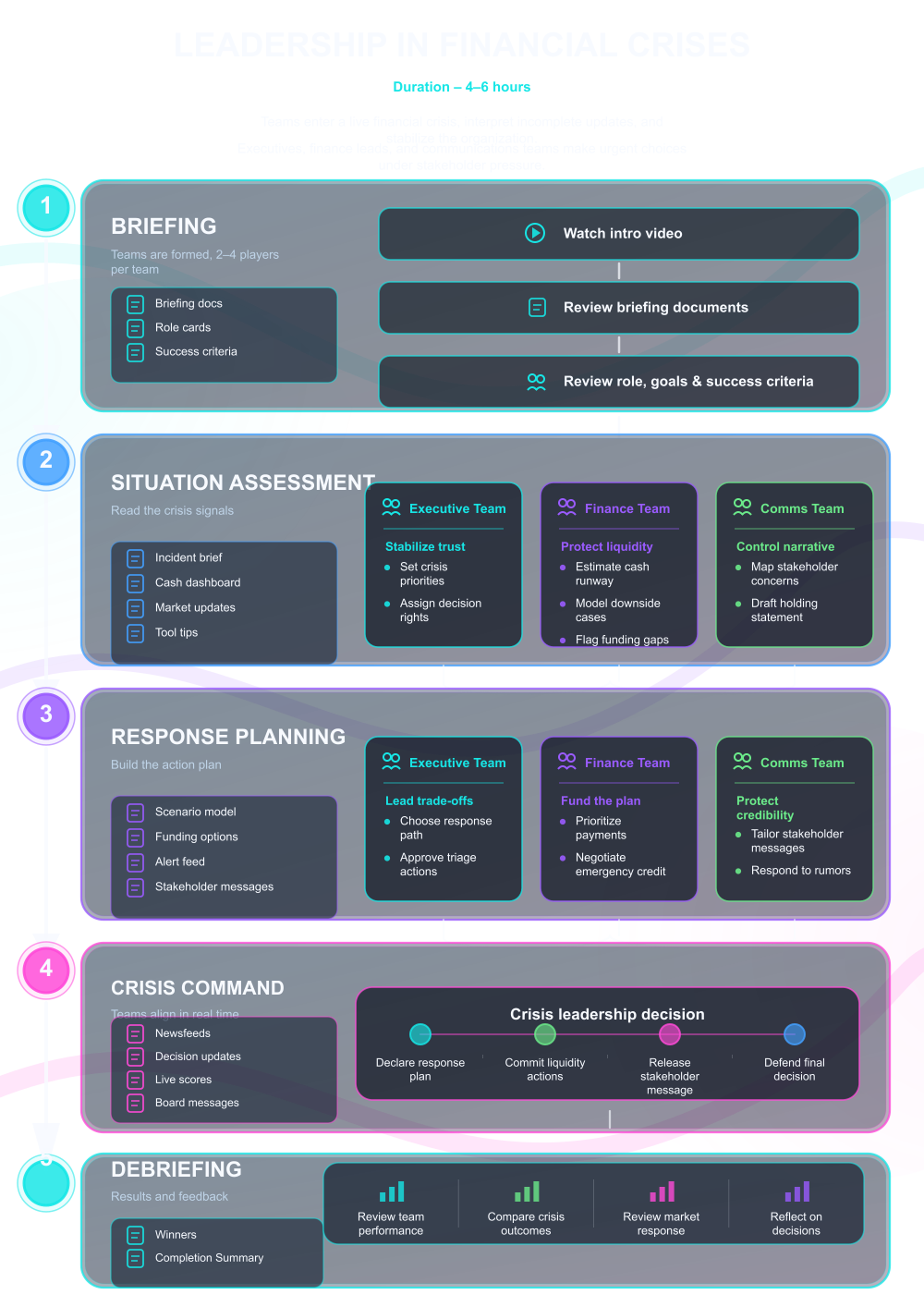

What Participants Do
In this simulation, participants act as senior leaders (e.g., CEO, CFO, CRO) tasked with making fast, high-impact decisions. They:
- Assess liquidity, solvency, and operational risks
- Decide which areas to cut, save, or double down on
- Negotiate with lenders, regulators, or activist investors
- Deliver bad news or reframe the narrative
- Manage internal tensions and board expectations
- Justify difficult trade-offs in front of critical audiences

Learning Objectives
By the end of the simulation, participants will be able to:
- Lead with clarity during ambiguous and volatile conditions
- Prioritize strategic goals while managing public perception
- Make defensible financial and operational decisions under pressure
- Communicate transparently while maintaining leadership presence
- Manage stakeholder relationships in crisis scenarios
- Balance ethical responsibility with business needs
- Structure decision-making frameworks under stress
- Respond to feedback and adapt with agility
- Collaborate under high stakes in cross-functional teams
- Reflect on the personal toll and leadership maturity required in crises
The simulation’s flexible structure ensures that these objectives can be calibrated to match the depth, duration, and focus areas of each program, whether in higher education or corporate learning.
How the Leadership in Financial Crises Simulation Works
This simulation is suitable for business schools, executive programs, crisis management workshops, and senior leadership training. Each round reflects an evolving phase of the crisis - from sudden onset to long-term recovery.
1. Receive a Brief: Each round begins with a new crisis development, key facts, stakeholder reactions, and urgent objectives. Participants quickly assess where things stand.
2. Analyse and Prioritise: Participants review financials, sentiment data, internal reports, and media snippets to define their approach - deciding what to act on and what to communicate.
3. Make Critical Leadership Decisions: They choose cost cuts, investor responses, media statements, and stakeholder strategies - often with no perfect option available.
4. Collaborate or Challenge (Optional Team Format): In group settings, participants debate decisions, role-play boardroom conversations, or divide tasks across CEO/CFO/Comms teams.
5. Communicate and Reflect: Each team shares a memo, press release, or board update explaining their response. Real-time feedback highlights trade-offs and stakeholder reactions.
6. Move to the Next Round: Each round reveals new consequences - positive or negative - and participants must adapt their leadership strategy accordingly.
Frequently Asked Questions
Assessment
Assessment can be tailored to focus on leadership, analytical decision-making, communication, or strategic agility. Participants may be evaluated on:
- Improvement in financial performance across rounds
- Strategic alignment of cost-cuts and investments
- Communication clarity in crisis contexts
- Ethical decision-making and stakeholder sensitivity
- Learning agility and responsiveness to feedback
- Peer and self-assessments to capture collaboration and iteration
You can also include memo writing and debrief presentations as part of the assessment structure. Additionally, you can also add a built-in peer and self-assessment tool to see how participants rate themselves. This flexibility allows the simulation to be easily integrated by professors as graded courses at universities and by HR at assessment centres at companies.