You only need a standard computer with a modern web browser, a webcam, and a microphone. No specialized software is required.

Leadership Communication and Presentation Simulation
The ability to communicate with clarity, confidence, and influence is what separates managers from true leaders. This simulation immerses participants in high-stakes scenarios where their leadership communication skills are tested and refined.

Leadership Communication and Presentation Simulation Overview
The Leadership Communication and Presentation Simulation replicates the pressure and ambiguity real leaders face daily. Participants are not just passive listeners; they are active leaders placed at the center of critical business situations.
They will navigate complex stakeholder landscapes, manage crises, present strategic recommendations, and motivate their teams within a risk-free environment. Each round participants will change teams, taking the lead of new people and trying to manage them the best way possible.
Co-developed with experts in the communication field, the simulation draws on real-world leaders' experiences and pushes learners to move fast, fail smart, and learn faster. Perfect for innovation courses, accelerator programs, and business school entrepreneurship tracks.

Leadership Communication and Presentation Simulation Concepts
Participants work through realistic scenarios, which can be customized to emphasize or exclude specific topics depending on the learning goals. This modular structure allows the simulation to be tailored to any type of session. Key concepts include:
- Stakeholder Mapping and Analysis
- The Rhetorical Triangle
- Storytelling for Business
- Managing Crucial Conversations
- Non-Verbal Communication
- The Minto Pyramid Principle
- Handling Q&A and Objections
- Crisis Communication

Gameflow

What Participants Do
In the simulation, participants will:
- Analyze complex business cases from the perspective of a leader.
- Develop and deliver persuasive presentations to virtual boards, investors, and internal teams.
- Record and submit video responses to unplanned crisis scenarios and stakeholder challenges.
- Receive AI-powered analysis on their speech clarity, use of filler words, pace, and eye contact.
- Craft and deliver difficult feedback to a simulated underperforming team member.
- Navigate multi-stakeholder negotiations, balancing competing interests to find a consensus.
- Review and critique their own performances and those of peers in a structured feedback loop.

Learning Objectives
By the end of the simulation, participants will be able to:
- Structure a clear, concise, and compelling argument for any executive audience.
- Deliver presentations with greater confidence, authority, and vocal presence.
- Adapt communication style to influence different stakeholders, from technical teams to the C-suite.
- Effectively manage challenging questions and dissent during Q&A sessions.
- Demonstrate enhanced emotional intelligence in high-pressure situations.
- Utilize non-verbal cues to reinforce their message and build rapport.
- Construct and deliver a powerful, motivating vision statement for their team or organization.
How the Leadership Communication and Presentation Simulation Works
This simulation can be run individually or in teams in academic or corporate contexts.
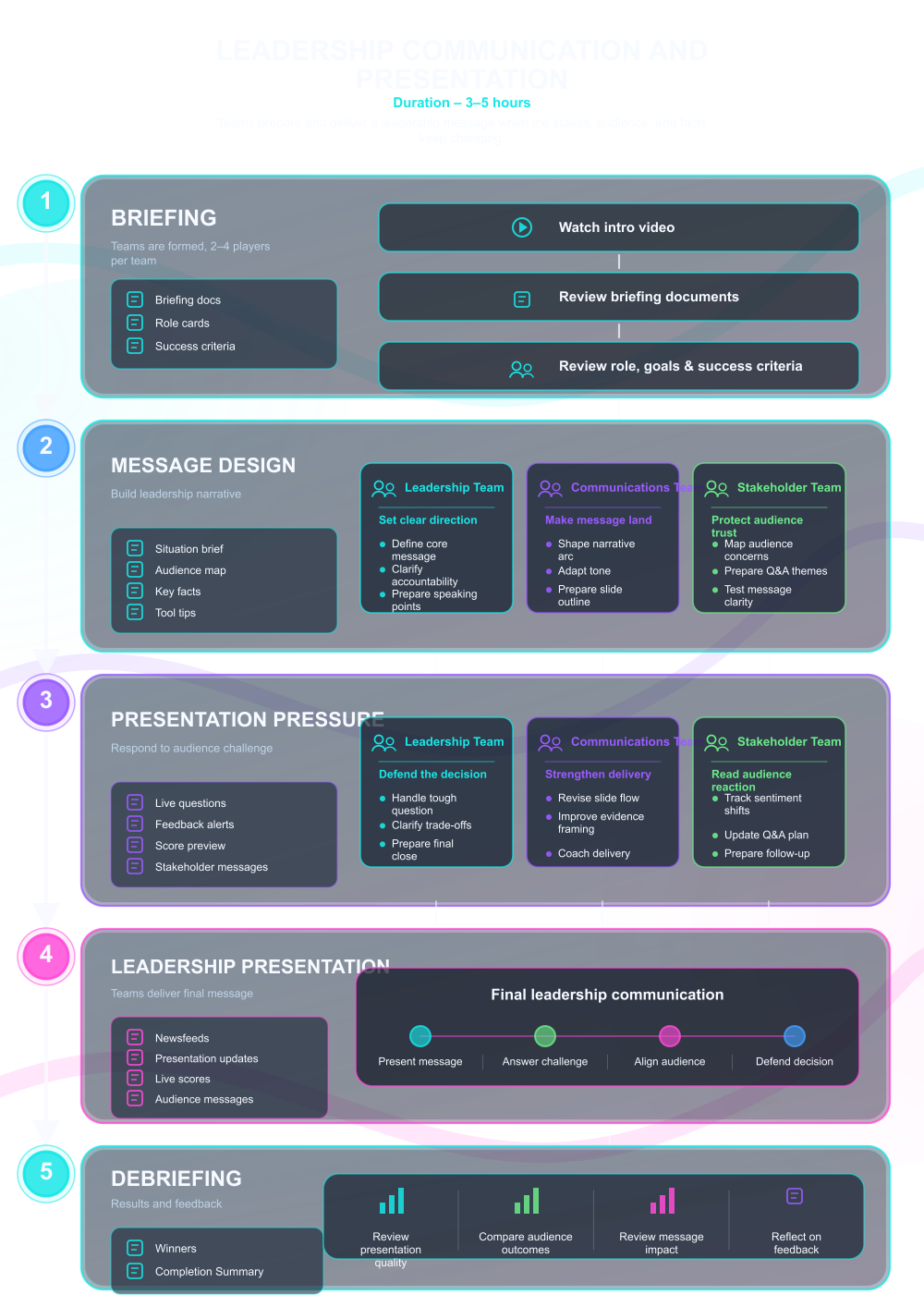
1. Introduction and Briefing Participants are introduced to their role (e.g., new Division Head, CEO of a subsidiary), core business challenge and their team for the round.
2. Scenario Modules Participants progress through a series of timed modules, all while trying to manage their team.
3. Action and Recording For each scenario, Team Leaders must prepare their key messages and record a video presentation or response using their webcam.
4. Peer Feedback Participants then are judged by a Mock Committee on the quality of their presentations.
Frequently Asked Questions
Assessment
Assessment of participant performance can be tailored according to the host institution’s objectives (business school, corporate training, assessment centre). Typical assessment criteria include:
- Effectiveness in motivating and guiding teams
- Clarity and persuasiveness in communication
- Conflict resolution skills and stakeholder alignment
- Adaptability in leading under uncertainty
- Reflection on personal leadership style
Assessment may incorporate peer and self-review components, facilitator scoring, and debrief discussion. Results may feed into grades, executive feedback, certification or development plans.