No. The simulation is designed for emerging and experienced leaders alike.

Leadership Simulation
In this Leadership Simulation, participants step into senior roles managing teams through challenges - balancing vision, communication, and decision-making while motivating people, resolving conflicts, and driving organizational performance.

Leadership Simulation Overview
Participants experience the realities of leadership by taking on executive or managerial roles in dynamic, high-pressure scenarios. Each round introduces new challenges such as crisis management, team alignment, cultural friction, or strategic pivots.
They must set direction, inspire their teams, make difficult trade-offs, and communicate with clarity while under scrutiny. The simulation emphasizes the human side of leadership - building trust, empathy, and credibility while maintaining business results.
This simulation is ideal for MBA courses, executive education, and corporate training. It makes leadership development experiential, helping participants move beyond theory and practice leadership skills in realistic workplace situations.

Leadership Simulation Concepts
Participants work through realistic scenarios, which can be customized to emphasize or exclude specific topics depending on the learning goals. This modular structure allows the simulation to be tailored to any type of session. Key concepts include:
- Vision and strategy communication
- Motivating teams and individuals
- Conflict resolution and negotiation
- Leading under uncertainty and crisis
- Building trust and credibility
- Inclusive leadership and team culture
- Stakeholder alignment and influence
- Decision-making under pressure
- Balancing short-term execution with long-term vision
- Self-awareness and adaptive leadership styles

Gameflow
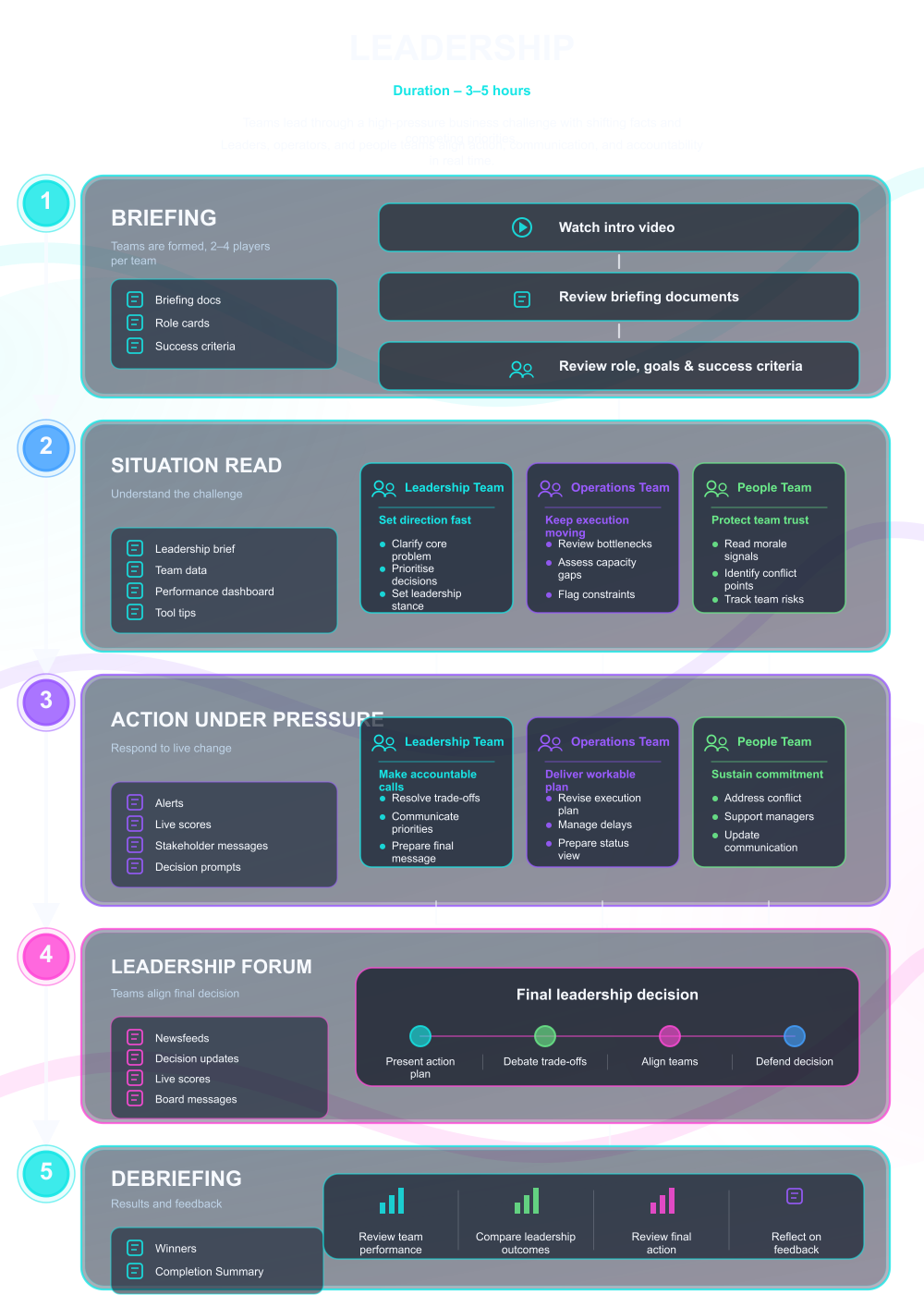

What Participants Do
In the simulation, participants act as leaders navigating complex challenges. They:
- Review scenarios with strategic, cultural, and human elements
- Make decisions impacting people, performance, and long-term direction
- Handle conflicts, crises, and communication under pressure
- Motivate and inspire teams through vision and clarity
- Engage with peers, boards, or external stakeholders
- Reflect on successes, missteps, and leadership style

Learning Objectives
By the end of the simulation, participants will be able to:
- Communicate vision and strategy effectively
- Motivate individuals and teams under pressure
- Resolve conflicts constructively and empathetically
- Lead through crisis with clarity and confidence
- Balance task execution with people management
- Build trust and credibility as a leader
- Adapt leadership style to context and culture
- Manage stakeholder relationships and influence outcomes
- Anticipate challenges in organizational change
- Develop self-awareness and resilience in leadership roles
The simulation’s flexible structure ensures that these objectives can be calibrated to match the depth, duration, and focus areas of each program, whether in higher education or corporate learning.
How the Leadership Simulation Works
The simulation can be run individually or in teams, in classrooms or professional programs. Each cycle represents a leadership challenge.
1. Receive a Scenario or Brief: Participants are introduced to a leadership challenge - such as motivating a struggling team, handling conflict, or steering strategy.
2. Analyse the Situation: They assess cultural, strategic, and human factors affecting their leadership approach.
3. Make Strategic Decisions: Participants decide how to act, balancing empathy with execution.
4. Collaborate Across Roles: Teams may role-play as leaders, employees, or stakeholders to surface different perspectives.
5. Communicate Outcomes: Participants present their choices through speeches, memos, or stakeholder updates.
6. Review and Reflect: Feedback highlights effectiveness of leadership choices and their impact on performance and morale.
Frequently Asked Questions
Assessment
Assessment can be tailored to focus on leadership style, communication, or impact. Participants may be evaluated on:
- Effectiveness in motivating and guiding teams
- Clarity and persuasiveness in communication
- Conflict resolution skills and stakeholder alignment
- Adaptability in leading under uncertainty
- Reflection on personal leadership style
You can also include memo writing and debrief presentations as part of the assessment structure. Additionally, you can also add a built-in peer and self-assessment tool to see how participants rate themselves. This flexibility allows the simulation to be easily integrated by professors as graded courses at universities and by HR at assessment centres at companies.