No. The simulation introduces all core concepts during gameplay.

Joint Ventures Simulation
In this Joint Ventures Simulation, participants act as corporate leaders negotiating, structuring, and managing partnerships - balancing strategic alignment, cultural fit, financial terms, and governance to achieve sustainable joint venture success.

Joint Ventures Simulation Overview
Participants step into executive roles at companies exploring strategic partnerships. Each round involves evaluating opportunities, negotiating terms, and managing ongoing joint venture challenges - such as governance disputes, cultural differences, shifting priorities, or regulatory pressures.
The simulation demonstrates how joint ventures combine collaboration with competition, requiring careful alignment of objectives, structures, and expectations. Participants experience both the excitement of deal-making and the difficulty of execution.
This simulation is ideal for university programs, executive training, and corporate strategy workshops. It bridges theory and practice, showing how strategy, negotiation, and organizational dynamics converge in joint venture decisions.

Joint Ventures Simulation Concepts
Participants work through realistic scenarios, which can be customized to emphasize or exclude specific topics depending on the learning goals. This modular structure allows the simulation to be tailored to any type of session. Key concepts include:
- Strategic rationale for joint ventures
- Partner selection and cultural alignment
- Negotiation of ownership and governance terms
- Risk-sharing and profit-sharing structures
- Legal, tax, and regulatory considerations
- Managing conflicts of interest
- Performance monitoring and KPIs
- Exit strategies and contingency planning
- Cross-border joint ventures and cultural challenges
- Building long-term trust between partners

Gameflow
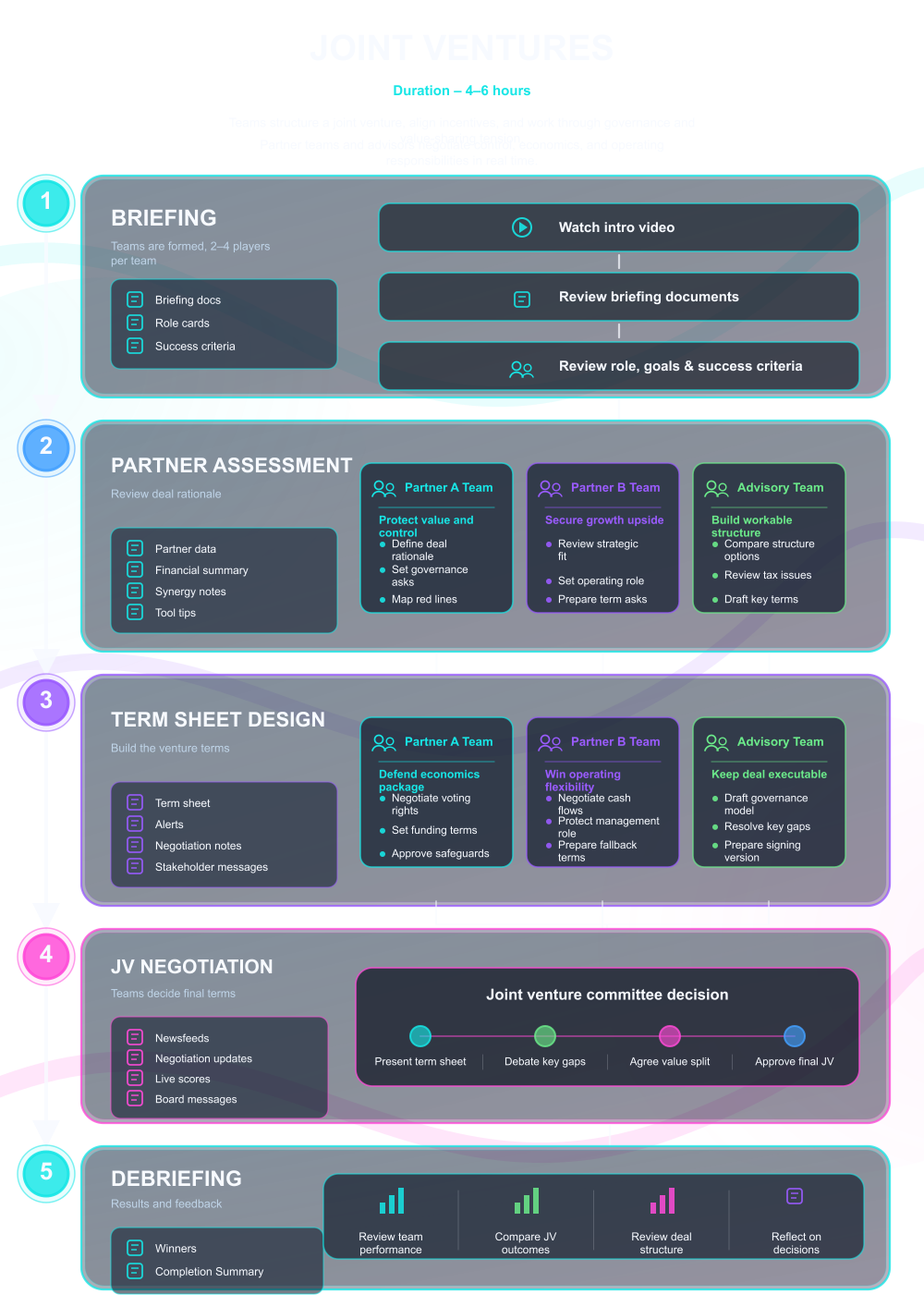

What Participants Do
In the simulation, participants act as company executives negotiating and managing joint ventures. They:
- Assess potential partners’ strengths, weaknesses, and alignment
- Negotiate governance, ownership, and profit-sharing terms
- Respond to conflicts or misaligned priorities between partners
- Manage cultural differences and operational integration
- Communicate with boards, employees, and external stakeholders
- Evaluate ongoing performance and adjust strategies or structures

Learning Objectives
By the end of the simulation, participants will be able to:
- Identify strategic drivers behind joint ventures
- Evaluate and select potential partners effectively
- Negotiate fair and sustainable terms under pressure
- Balance collaboration with self-interest in deal structures
- Understand governance and legal considerations in joint ventures
- Manage cultural and organizational integration challenges
- Communicate decisions and rationale to stakeholders
- Monitor performance and adjust strategies proactively
- Handle conflicts and realign partnership objectives
- Design exit strategies that protect value
The simulation’s flexible structure ensures that these objectives can be calibrated to match the depth, duration, and focus areas of each program, whether in higher education or corporate learning.
How the Joint Ventures Simulation Works
The simulation can be run individually or in teams, in classrooms or corporate training sessions. Each cycle mirrors the lifecycle of a joint venture.
1. Receive a Scenario or Brief: Participants are introduced to a potential joint venture opportunity with background on both firms.
2. Analyse the Situation: They review financials, strategic goals, cultural profiles, and risks to evaluate feasibility.
3. Negotiate Terms: Participants engage in negotiations around governance, equity splits, and performance metrics.
4. Collaborate Across Roles: Teams represent different companies, negotiating and aligning priorities while protecting their own interests.
5. Manage the Venture: Scenarios introduce post-deal challenges such as cultural clashes, shifting markets, or disputes.
6. Review and Reflect: Feedback highlights financial outcomes, partnership health, and stakeholder trust. Participants adapt strategies in later rounds.
Frequently Asked Questions
Assessment
Assessment can be tailored to focus on negotiation skill, collaboration, or strategic alignment. Participants may be evaluated on:
- Quality of joint venture strategy and rationale
- Effectiveness in negotiating sustainable terms
- Management of cultural and organizational challenges
- Clarity and persuasiveness in communication
- Responsiveness to conflicts and unexpected changes
You can also include memo writing and debrief presentations as part of the assessment structure. Additionally, you can also add a built-in peer and self-assessment tool to see how participants rate themselves. This flexibility allows the simulation to be easily integrated by professors as graded courses at universities and by HR at assessment centres at companies.