This simulation is ideal for finance students, aspiring investment analysts, corporate finance professionals, and anyone seeking to master capital budgeting decisions in a realistic environment.

IRR Simulation
The Internal Rate of Return Simulation immerses participants in the high-stakes world of investment decision-making.

IRR Simulation Overview
As analysts and portfolio managers, students evaluate competing projects, allocate capital, and balance risk against potential returns. Each round presents new market conditions, cash flow projections, and strategic constraints – forcing participants to apply IRR concepts beyond textbook theory.
This dynamic financial simulation replicates the pressure and analytical rigor of real-world capital budgeting. Participants navigate complex scenarios involving multiple projects with different risk profiles, timing of cash flows, and capital constraints. They learn to interpret IRR results in context, recognize its limitations, and complement it with other financial metrics to make optimal investment decisions.
Although ideal for undergraduate and graduate finance courses, executive training, and corporate finance skill workshops, the simulation is modular and scalable, allowing instructors to vary complexity.

IRR Simulation Concepts
Participants work through realistic scenarios, which can be customized to emphasize or exclude specific topics depending on the learning goals. This modular structure allows the simulation to be tailored to any type of session. Key concepts include:
- Time value of money and discounted cash flow analysis
- IRR calculation methodologies and interpretation
- NPV-IRR comparison and decision rules
- Capital rationing and project selection under constraints
- Risk-adjusted return analysis
- Reinvestment rate assumptions and Modified IRR
- Scenario and sensitivity analysis for cash flow projections
- Capital budgeting in corporate and investment contexts
- Opportunity cost and hurdle rate determination
- Multiple IRR scenarios and their resolution

Gameflow
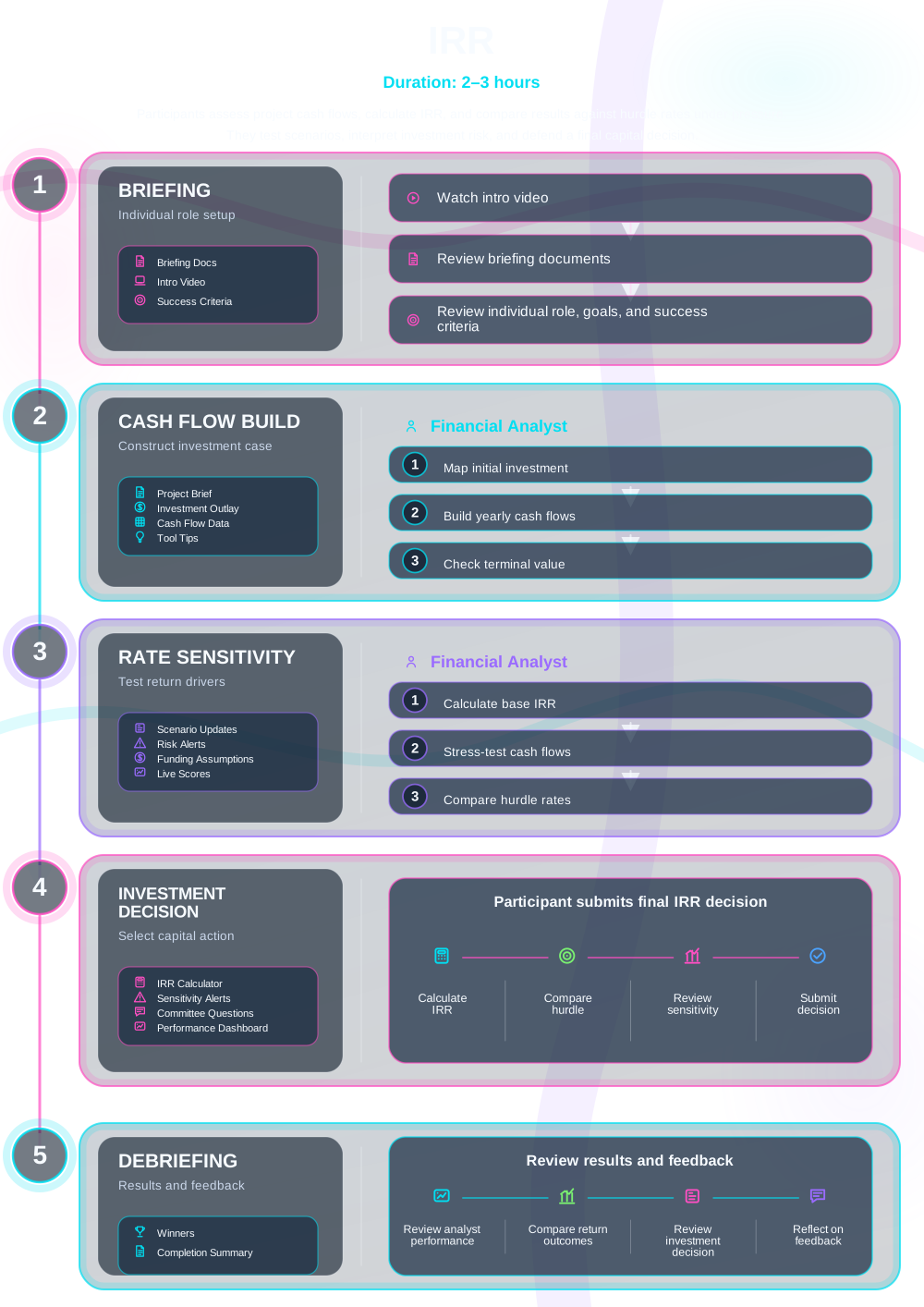

What Participants Do
In the simulation, participants will:
- Analyze cash flow projections for multiple investment opportunities
- Calculate and interpret IRR for competing projects
- Allocate limited capital across investment options
- Adjust hurdle rates based on changing risk assessments
- Perform scenario analysis on cash flow projections
- Present investment recommendations to stakeholders
- Re-evaluate decisions based on changing market conditions
- Balance short-term returns against long-term strategic goals

Learning Objectives
By the end of the simulation, participants will be able to:
- Calculate and interpret IRR for various investment scenarios
- Apply capital budgeting techniques to real-world decisions
- Recognize the strengths and limitations of IRR as a metric
- Integrate risk assessment into investment decision-making
- Allocate capital efficiently under constraints
- Communicate investment recommendations effectively
- Use sensitivity analysis to test decision robustness
- Understand how corporate strategy influences hurdle rates
- Compare IRR with NPV and other investment metrics
- Make informed investment decisions under time pressure
How the IRR Simulation Works
This simulation can be run individually or in teams in academic or corporate contexts. Each cycle represents a stage of getting through a pressing financial situation.
1. Receive Investment Brief Participants review project proposals, cash flow projections, and capital constraints
** 2. Analyze Opportunities** Calculate IRR, NPV, and other metrics for each potential investment
3. Make Allocation Decisions Select projects that maximize returns within capital limits
4. Collaborate Across Roles Teams may represent different stakeholders with competing priorities
5. Present Recommendations Defend investment choices through memos or presentations
6. Review Outcomes Receive feedback on returns achieved and strategic alignment
Frequently Asked Questions
Assessment
Assessment of participant performance can be tailored according to the host institution’s objectives (business school, corporate training, assessment centre). Typical assessment criteria include:
- Accuracy of IRR calculations and interpretations
- Quality of capital allocation decisions under constraints
- Application of risk-adjusted return methodologies
- Effectiveness of investment recommendations and justifications
- Adaptability to changing market conditions and new information