Basic familiarity helps, but the simulation introduces all key concepts as part of gameplay.

Investor Psychology Simulation
In this hands-on Investor Psychology Simulation, participants act as investors navigating biases, market sentiment, and behavioural traps - balancing rational analysis with emotional pressures to make sound investment decisions under uncertainty.

Investor Psychology Simulation Overview
Participants step into the role of individual and institutional investors making portfolio decisions in dynamic market environments. Each round presents new challenges, such as market booms, panics, rumours, or conflicting analyst opinions.
The simulation emphasizes how cognitive biases - like overconfidence, herd behavior, loss aversion, and anchoring - shape decision-making. Participants experience the gap between rational finance theory and real-world behavior, while learning how to recognize and mitigate psychological pitfalls.
This simulation is ideal for finance, behavioral economics, and investment courses, as well as executive education and corporate training. It helps participants understand how psychology drives markets beyond fundamentals.

Investor Psychology Simulation Concepts
Participants work through realistic scenarios, which can be customized to emphasize or exclude specific topics depending on the learning goals. This modular structure allows the simulation to be tailored to any type of session. Key concepts include:
- Behavioral finance and cognitive biases
- Herd behavior and market sentiment
- Overconfidence and excessive risk-taking
- Anchoring, framing, and decision shortcuts
- Loss aversion and the disposition effect
- Emotional responses to volatility and uncertainty
- Media influence and rumor-driven trading
- Investor memory and recency bias
- Long-term vs short-term thinking
- Debiasing techniques and rational frameworks

Gameflow
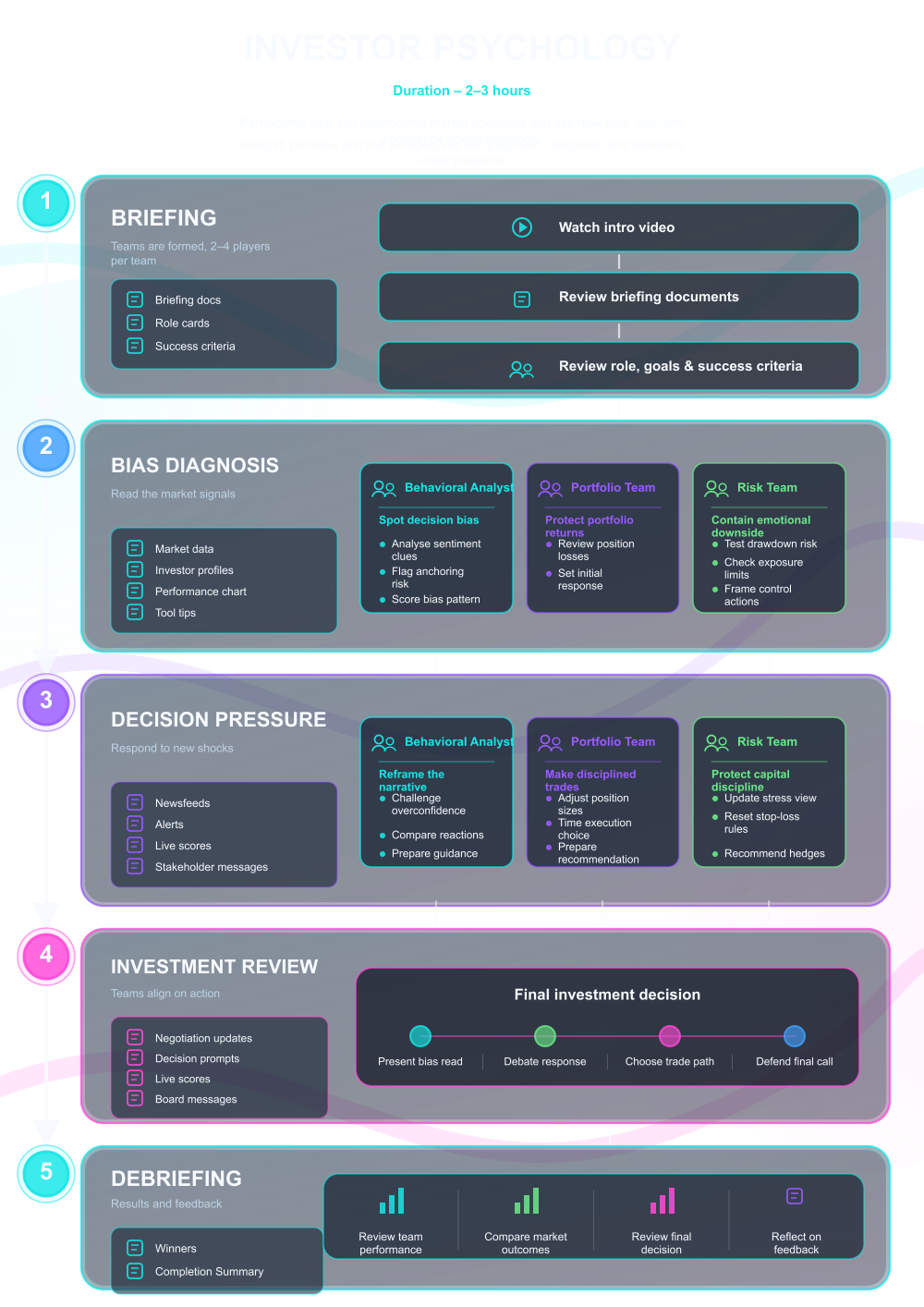

What Participants Do
In this simulation, participants act as investors navigating behavioral challenges. They:
- Allocate assets across equities, bonds, and alternatives
- Respond to market shocks, news, and analyst commentary
- Experience behavioural traps such as herd effects or anchoring
- Make buy, sell, or hold decisions under time pressure
- Debate decisions in teams to reveal bias in group dynamics
- Reflect on their own cognitive patterns and decision outcomes

Learning Objectives
By the end of the simulation, participants will be able to:
- Recognize common investor biases and their impact on markets
- Apply behavioral finance concepts to real-world decision-making
- Balance rational analysis with awareness of psychological influences
- Develop strategies to mitigate overconfidence and herd mentality
- Communicate investment reasoning under pressure
- Manage emotions during volatility and uncertainty
- Understand how media and sentiment shape investor behaviour
- Strengthen long-term investment discipline despite short-term noise
- Collaborate and debate investment ideas constructively
- Reflect on personal tendencies and improve decision-making frameworks
The simulation’s flexible structure ensures that these objectives can be calibrated to match the depth, duration, and focus areas of each program, whether in higher education or corporate learning.
How the Investor Psychology Simulation Works
This simulation can run in classrooms, workshops, or corporate programs, individually or in teams. Each cycle represents a decision-making round in a volatile market.
1. Receive a Scenario or Brief: Participants are given a market update with asset options, sentiment indicators, and analyst commentary.
2. Analyse the Situation: They review fundamentals, technicals, and sentiment while filtering out psychological distractions.
3. Make Investment Decisions: Participants buy, sell, or hold assets under time pressure, influenced by real-world behavioural triggers.
4. Collaborate and Debate: In teams, participants defend their investment logic and challenge biases in group settings.
5. Review Results and Reflect: Outcomes reveal performance, biases triggered, and lessons learned.
6. Iterate with New Rounds: New market shocks, rumours, and sentiment changes force participants to adapt strategies and confront recurring biases.
Frequently Asked Questions
Assessment
Assessment can be tailored to focus on decision-making, self-awareness, and collaboration. Participants may be evaluated on:
- Recognition and management of biases
- Consistency in investment rationale
- Responsiveness to volatility and sentiment
- Communication clarity under uncertainty
- Peer/self-assessments for collaboration and reflection
You can also include memo writing and debrief presentations as part of the assessment structure. This flexibility allows the simulation to be easily integrated by professors as graded courses at universities and by HR at assessment centres at companies.