It is an immersive learning tool that replicates the process of evaluating and selecting long-term investment projects within a corporation, allowing participants to apply financial theory in a risk-free, dynamic environment.

Investment Appraisal Simulation
Our Investment Appraisal Simulation plunges participants into the high-stakes world of corporate finance, where allocating capital effectively is the key to driving growth and creating shareholder value.

Investment Appraisal Simulation Overview
In today's competitive landscape, companies must constantly evaluate opportunities—from new product launches and R&D projects to plant expansions and acquisitions. Making the wrong investment decision can cripple an organization, while astute capital allocation fuels its future. Move beyond static spreadsheets and tackle dynamic, realistic investment scenarios that test your analytical rigor, strategic thinking, and risk management skills.
This simulation provides a realistic and immersive environment where individuals or teams act as a capital budgeting committee within a multinational corporation. Participants are presented with a pipeline of diverse investment projects, each with unique financial profiles, strategic implications, and inherent risks. They must employ sophisticated financial modeling and appraisal techniques to analyze these opportunities, debate their merits, and construct a portfolio that aligns with the company's strategic objectives and financial constraints.
The simulation dynamically incorporates real-world factors like changing economic conditions, competitor actions, and unexpected project outcomes, ensuring a rich and challenging learning experience.

Investment Appraisal Simulation Concepts
Participants work through realistic scenarios, which can be customized to emphasize or exclude specific topics depending on the learning goals. This modular structure allows the simulation to be tailored to any type of session. Key concepts include:
- Time Value of Money
- Discounted Cash Flow Analysis
- Net Present Value
- Internal Rate of Return
- Payback Period and Discounted Payback Period
- Profitability Index
- Risk Analysis and Sensitivity Analysis
- Scenario Planning
- Capital Rationing
- Cost of Capital
- Strategic vs. Financial Fit
- Project Portfolio Management

Gameflow
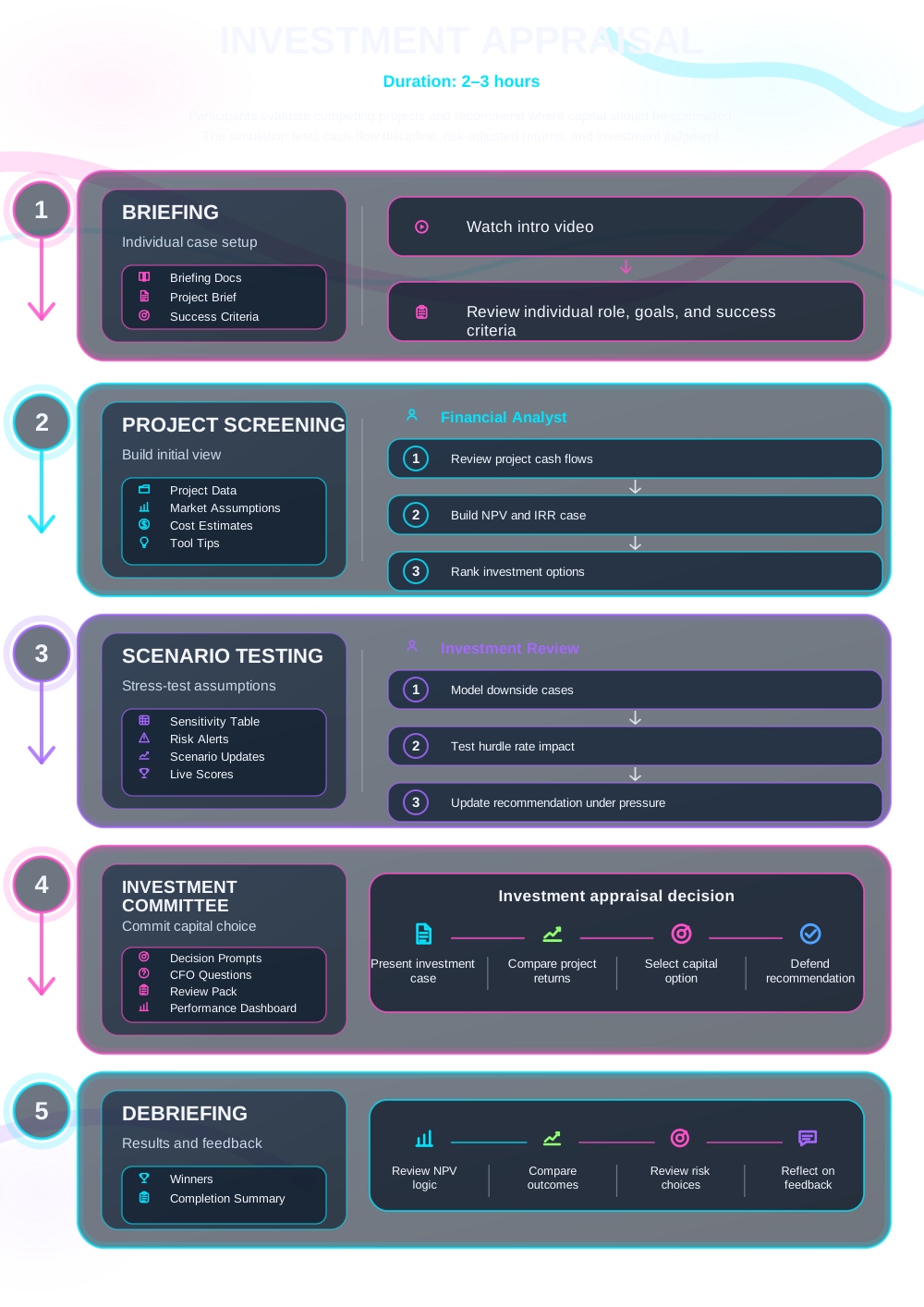

What Participants Do
In the simulation, participants will:
- Analyze detailed project proposals with forecasted cash flows and strategic data.
- Build dynamic financial models to calculate key investment metrics.
- Perform sensitivity and scenario analysis to assess project risk and viability.
- Debate the strategic merits and risks of each project in a team setting.
- Make "Build, Buy, or Partner" decisions under conditions of uncertainty.
- Manage a limited capital budget, making tough trade-offs between competing projects.
- Present and defend their final investment portfolio to the board (instructor/facilitator).
- Adapt their strategy based on in-simulation economic shifts and project performance updates.

Learning Objectives
By the end of the simulation, participants will be able to:
- Apply core investment appraisal techniques to evaluate potential projects.
- Interpret the results of DCF models to make informed go/no-go decisions.
- Quantify and manage project risk using sensitivity and scenario analysis.
- Construct a balanced investment portfolio that aligns with strategic goals under capital constraints.
- Articulate the financial and strategic rationale behind investment choices.
- Understand the impact of macro-economic and competitive factors on project outcomes.
How the Investment Appraisal Simulation Works
This simulation can be run individually or in teams in academic or corporate contexts. Each cycle represents a stage of getting through a pressing financial situation.
1. Introduction and Briefing Teams receive the company's strategic background, financial constraints, and a set of initial investment opportunities.
2. Analysis Phase Teams work collaboratively to model and appraise each project. They must calculate investment metrics and assess strategic alignment.
3. Decision Phase Teams must decide which projects to approve, reject, or defer, ensuring their total portfolio stays within the capital budget.
4. Round Debrief and New Inputs After submitting their decisions, the simulation engine generates results. Teams see the outcome of their choices and receive a new set of opportunities and challenges for the next round.
5. Final Presentation The simulation culminates with teams presenting their overall investment strategy and portfolio performance, justifying their decisions to a panel.
6. Instructor-led Debrief A comprehensive review connects the simulation experience to theoretical concepts, highlighting best practices and key learnings.
Frequently Asked Questions
Assessment
Assessment of participant performance can be tailored according to the host institution’s objectives (business school, corporate training, assessment centre). Typical assessment criteria include:
- The financial success of the team's investment portfolio, measured by metrics like overall NPV created and return on invested capital
- Evaluation of the team's strategic rationale, risk assessment, and ability to defend their choices during the final presentation.
- Collaboration, division of work, integration of roles, and final coherence
- Rating by peers and self-reflection on approach and decisions