The simulation focuses on key investment concepts like portfolio management, asset valuation, and risk-return optimization, giving students a hands-on learning experience.

Investment Analysis Simulation
Students act as investment analysts, evaluating asset opportunities, optimizing portfolios, and managing risk to maximize returns in dynamic market environments.

Simulation Overview
The Investment Analysis Simulation places students in the role of financial analysts tasked with evaluating investment opportunities, managing portfolios, and optimizing returns in dynamic market conditions.
This simulation offers an immersive experience, challenging students to make strategic decisions based on real-world data and scenarios. By balancing risk and return, students gain a comprehensive understanding of investment principles while honing their analytical and decision-making skills.

Investment Analysis Topics
- Portfolio Management
- Risk and Return Optimization
- Asset Valuation Techniques
- Diversification Strategies
- Market Trend Analysis
- Investment Strategy Development
- Fixed-Income Securities Analysis
- Equity Valuation
- Economic Indicator Interpretation
- Behavioral Finance Insights

Gameflow
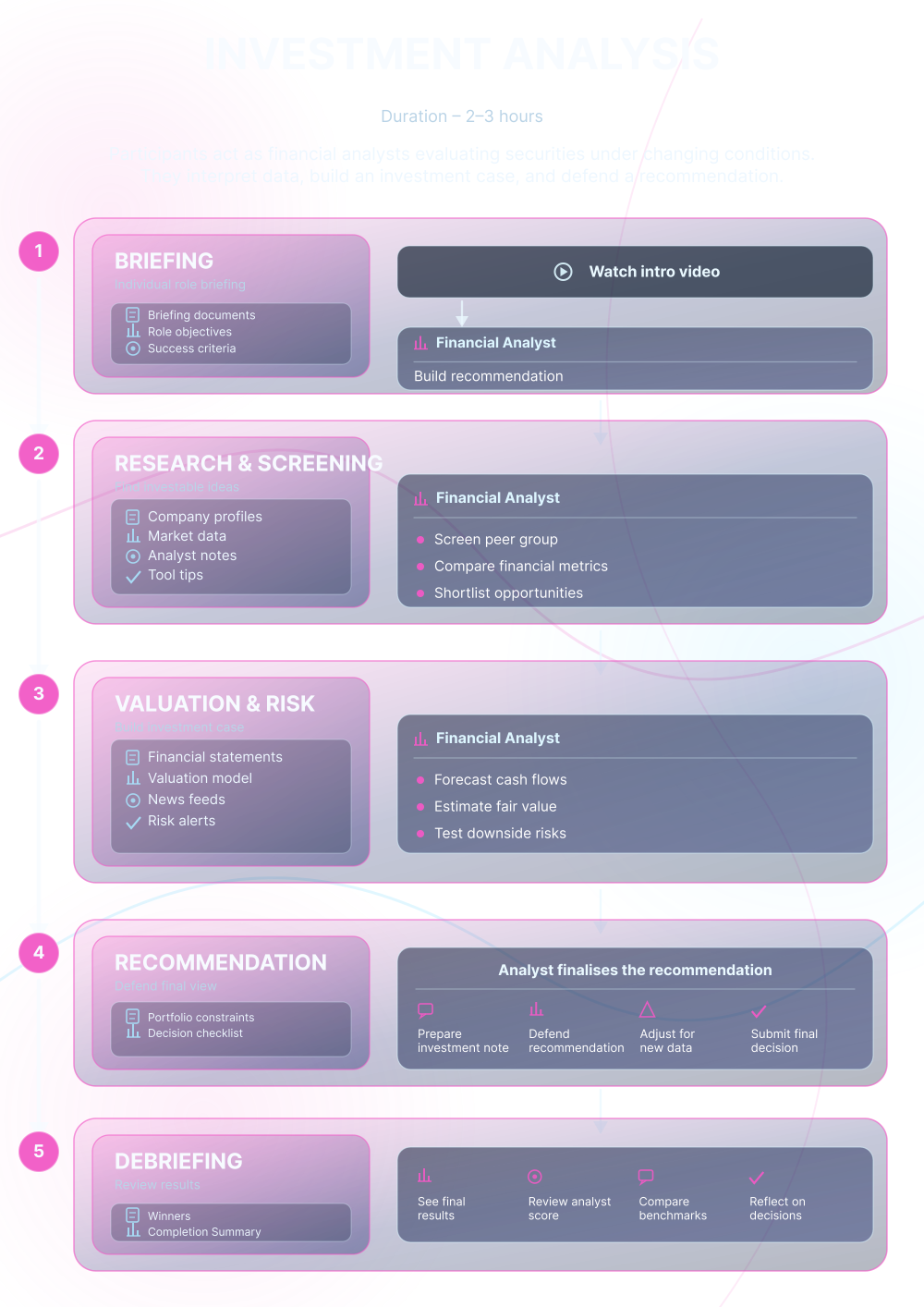

What Students Do
During the investment analysis simulation, students engage in the following tasks to develop and apply investment analysis skills:
- Construct Portfolios: Create diversified investment portfolios based on client profiles and market conditions.
- Evaluate Market Trends: Analyze market data to identify opportunities and threats.
- Perform Valuations: Use discounted cash flow, multiples, and other valuation methods to assess assets.
- Optimize Asset Allocation: Allocate resources across asset classes to balance risk and return.
- Assess Economic Indicators: Use macroeconomic data to guide investment strategies.
- Simulate Real-Time Trading: Make decisions under pressure to respond to market fluctuations.
- Analyze Fixed-Income Instruments: Evaluate bonds and other debt securities for portfolio inclusion.
- Integrate Behavioral Finance: Recognize and mitigate biases in decision-making.
- Present Recommendations: Communicate investment strategies effectively to stakeholders.
- Monitor Performance: Track portfolio performance and adjust strategies as needed.

What Students Learn
- Investment Principles: Gain a deep understanding of risk-return trade-offs and investment fundamentals.
- Asset Valuation Skills: Master techniques to evaluate equities, bonds, and other financial instruments.
- Portfolio Construction: Build well-diversified portfolios that align with objectives and constraints.
- Market Analysis: Identify and act on market trends using quantitative and qualitative methods.
- Risk Management: Develop strategies to mitigate portfolio risks in volatile environments.
- Strategic Decision-Making: Apply critical thinking to optimize investment outcomes.
- Economic Insight Application: Use macroeconomic indicators to inform investment strategies.
- Behavioral Awareness: Recognize and counter cognitive biases in investment decisions.
- Performance Tracking: Measure and evaluate portfolio success using key metrics.
- Effective Communication: Present clear and compelling investment cases to diverse stakeholders.

Where Investment Analysis Skills are Used
Investment analysis skills are highly versatile and are applied in various roles and industries:
- Asset Management: Develop and optimize investment portfolios to achieve client objectives.
- Private Wealth Management: Tailor strategies to individual client goals and risk tolerances.
- Investment Banking: Evaluate assets and prepare recommendations for large-scale investments.
- Equity Research: Analyze companies and sectors to provide actionable insights.
- Hedge Fund Management: Apply advanced strategies to generate alpha and manage risks.
- Corporate Treasury: Manage investments and ensure liquidity for corporate operations.
- Financial Advisory: Provide expert advice on asset allocation and market opportunities.
- Credit Analysis: Assess the viability of debt instruments for investment purposes.