Absolutely. The simulation is designed with an intuitive interface and guided learning path, making it ideal for students new to accounting principles. It serves as a powerful tool to cement their understanding of core concepts.

Inventory Valuation Simulation
Inventory is more than just products on a shelf; it's a critical asset that directly impacts a company's reported profitability and tax liability. Learn how your accounting choices ripple through and shape the financial health of your company.

Inventory Valuation Simulation Overview
The Inventory Valuation Simulation is an immersive, online-based learning platform that replicates the operational and financial pressures of managing a product-based business. Participants are divided into teams, each running a company that must navigate purchasing raw materials in a market with fluctuating prices, managing production, and selling finished goods to customers.
Over multiple simulated accounting periods, teams make key decisions on purchasing and production while the platform automatically calculates the cost of goods sold (COGS) and ending inventory value based on the chosen method (FIFO, LIFO, or Weighted Average).
The simulation vividly demonstrates how, in an inflationary or deflationary environment, the choice of inventory method can lead to significantly different financial outcomes—affecting gross profit, net income, tax expenses, and key performance indicators. It bridges the gap between theoretical accounting principles and their real-world strategic implications.

Inventory Valuation Simulation Concepts
Participants work through realistic scenarios, which can be customized to emphasize or exclude specific topics depending on the learning goals. This modular structure allows the simulation to be tailored to any type of session. Key concepts include:
- Inventory Valuation Methods
- Cost of Goods Sold and Gross Profit
- Impact on Financial Statements
- LIFO Reserve and LIFO Liquidation
- Tax Implications
- Inventory Management
- Financial Ratio Analysis

Gameflow
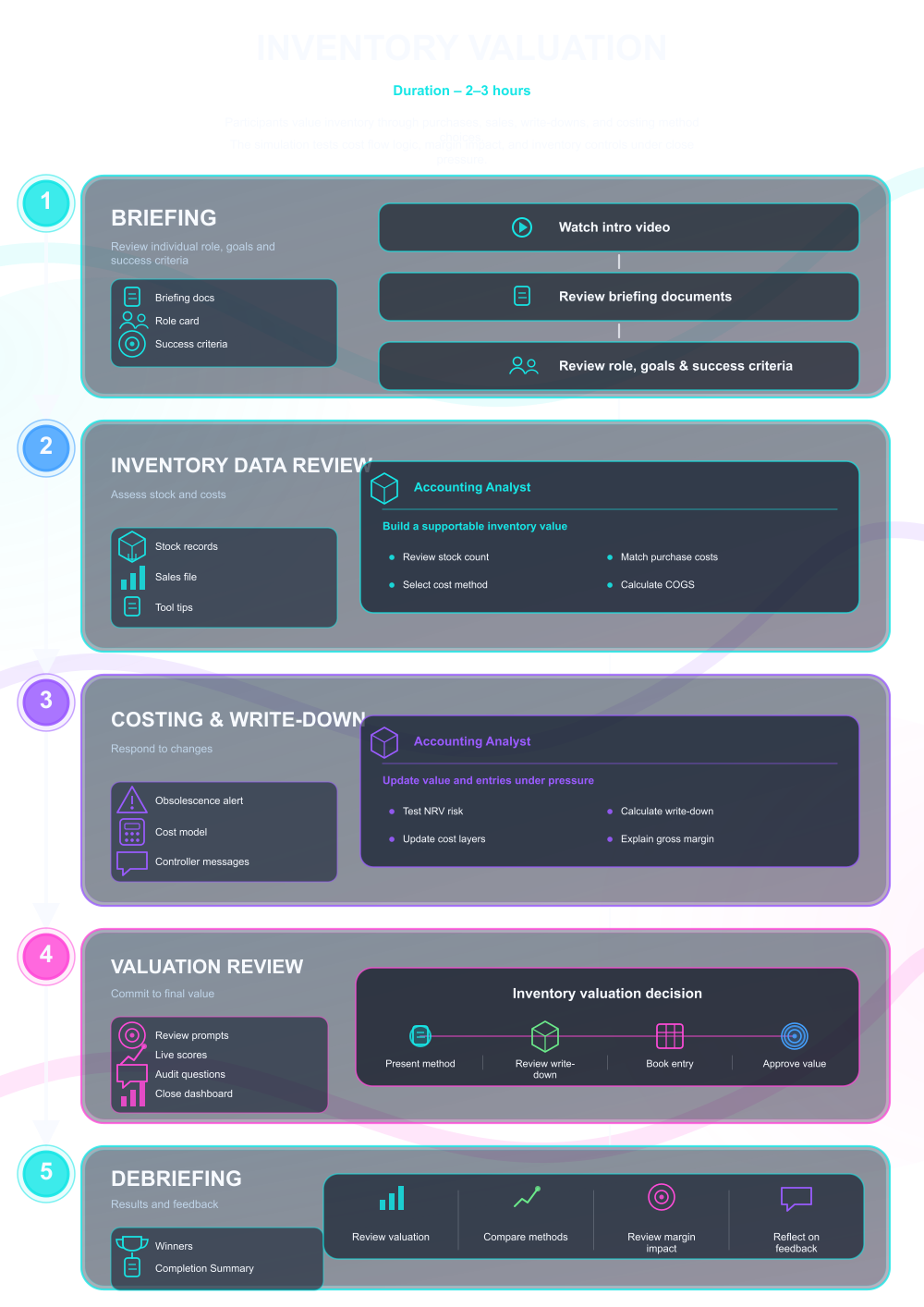

What Participants Do
In the simulation, participants will:
- Manage a company competing in a simulated market.
- Make strategic purchasing decisions for raw materials under changing price conditions.
- Set production levels based on demand forecasts and inventory targets.
- Choose and apply an inventory valuation method.
- Analyze generated financial statements each period.
- Benchmark performance against competitor companies using key financial ratios.
- Adjust strategies in response to market shocks, such as rapid inflation or a supply chain disruption.
- Justify financial performance to a simulated board of directors based on their accounting choices.

Learning Objectives
By the end of the simulation, participants will be able to:
- Apply the core mechanics of FIFO, LIFO, and Weighted Average inventory valuation methods.
- Analyze and explain how each method affects a company's reported profitability, asset valuation, and tax burden.
- Evaluate the strategic trade-offs between tax minimization, reported earnings, and cash flow.
- Interpret the impact of inventory valuation on key financial ratios used by investors and creditors.
- Synthesize financial data to make informed operational decisions (purchasing, production) that align with corporate financial goals.
- Critique a company's financial health with a deeper understanding of the accounting choices behind the numbers.
How the Inventory Valuation Simulation Works
This simulation can be run individually or in teams in academic or corporate contexts. Each cycle represents a stage of getting through a pressing financial situation.
1. Setup Participants are assigned to teams and introduced to their virtual company and the market environment.
2. Decision Rounds The simulation progresses through multiple rounds, each representing an accounting period. In each round, teams analyze market data and price trends, decide how much raw material to purchase and at what price points, set their production schedule.
3. Automated Calculation The platform processes all team decisions. It uses the team's chosen inventory method to calculate COGS, ending inventory value, and generates complete financial statements for the period.
4. Results and Analysis Teams review their Income Statement, Balance Sheet, and a dashboard of key metrics. They can see how they rank against competitors.
5. Debriefing An instructor-led debrief connects the simulation experience to accounting theory, highlighting the "why" behind the financial results and facilitating a discussion on strategic implications.
Frequently Asked Questions
Assessment
Assessment of participant performance can be tailored according to the host institution’s objectives (business school, corporate training, assessment centre). Typical assessment criteria include:
- Based on the cumulative financial health of the company (profitability, liquidity, and efficiency ratios) at the end of the simulation.
- Short quizzes on the theoretical concepts of inventory valuation, ensuring individual accountability.
- A final report where teams analyze their company's performance, explain the financial outcomes driven by their inventory method, and justify their strategic decisions.
- Assessment of individual contribution within the team to ensure collaborative engagement.