It is ideal for students and professionals seeking to understand global strategy, including university business students, corporate trainees in global roles, and executives managing international teams.

International Business Simulation
Navigate global markets, form strategies, and lead your company to international success. This immersive simulation transforms participants into global business leaders making critical decisions in a complex, competitive environment.

International Business Simulation Overview
In this International Business Simulation, participants step into the roles of senior executives at multinational corporations. Each decision round introduces new global market dynamics—fluctuating exchange rates, shifting regulatory environments, geopolitical events, or emerging competitive threats.
Teams must analyze cross-cultural consumer data, allocate resources across global regions, manage international supply chains, and craft market-entry strategies that balance risk with opportunity.The simulation emphasizes strategic agility and operational excellence in a volatile global marketplace, showing how financial performance, brand reputation, and stakeholder relationships are deeply interconnected in international business.
This simulation is ideal for university programs (BSc, MSc, and MBA), corporate training for global teams, and executive workshops. It brings the theory of international business to life, providing a sandbox to experiment with and understand the consequences of global strategic decisions.

International Business Simulation Concepts
Participants work through realistic scenarios, which can be customized to emphasize or exclude specific topics depending on the learning goals. This modular structure allows the simulation to be tailored to any type of session. Key concepts include:
- Global market analysis and entry strategies
- Cross-cultural management and negotiation
- International trade regulations and compliance
- Foreign exchange risk management and hedging
- Global supply chain and operations management
- International marketing and brand localization
- Strategic alliances and joint ventures
- Global corporate social responsibility and ethics
- Managing political and country risk
- Financial performance measurement across diverse markets

Gameflow
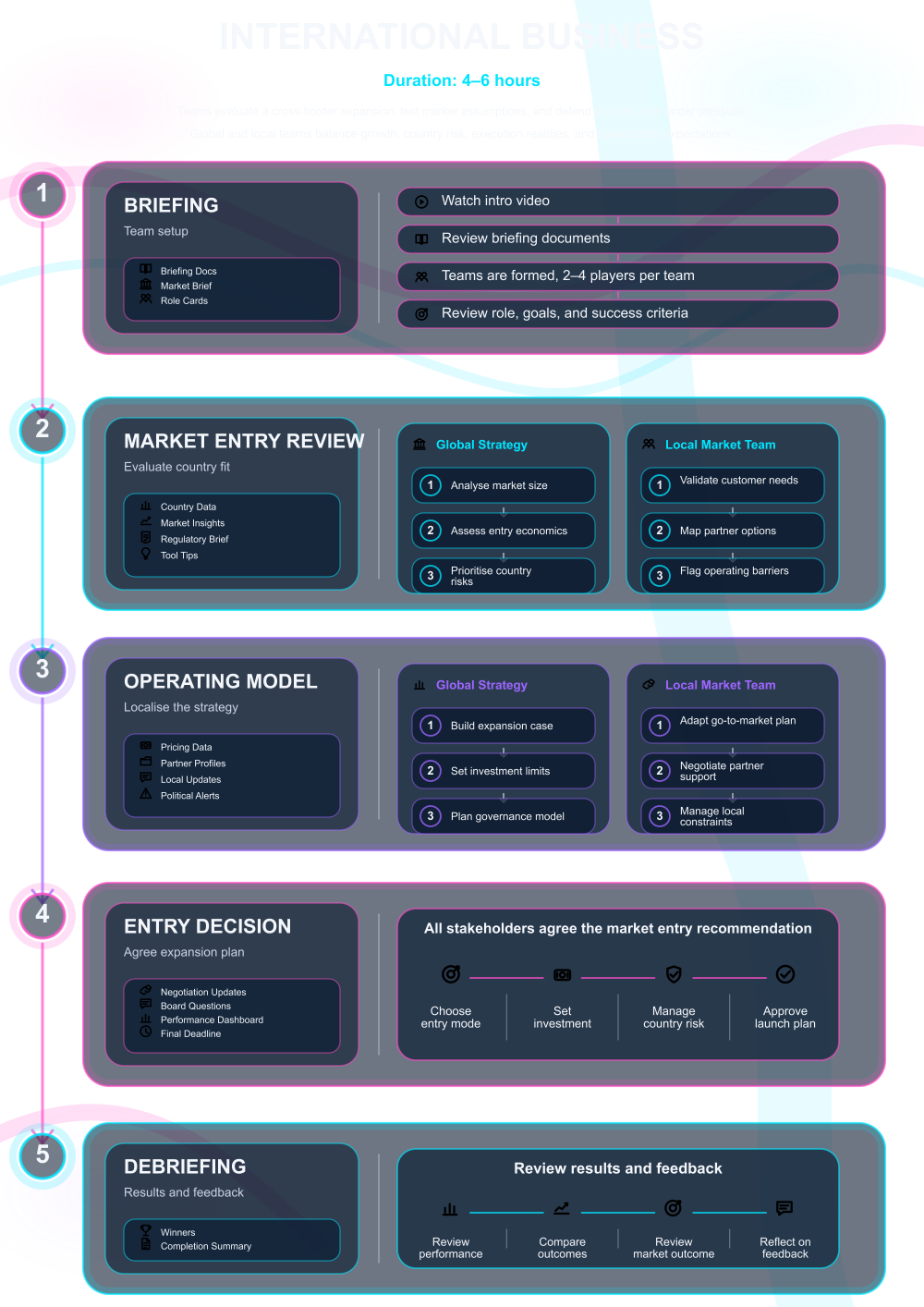

What Participants Do
In the simulation, participants will:
- Analyze market data to select and enter new international markets.
- Adapt products, marketing, and operations to local cultural and regulatory contexts.
- Manage global financial risks, including currency exposure and transfer pricing.
- Negotiate partnerships and resolve cross-cultural business conflicts.
- Optimize an international supply chain for cost, resilience, and speed.
- Allocate capital and resources across competing global divisions.
- Present strategic plans and performance results to a simulated board of directors.

Learning Objectives
By the end of the simulation, participants will be able to:
- Evaluate and select appropriate market entry modes for different international contexts.
- Develop strategies to manage the opportunities and risks of operating across borders.
- Make informed decisions to mitigate financial risks associated with foreign exchange and international trade.
- Navigate the complexities of cross-cultural communication and business practices.
- Formulate global supply chain strategies that balance efficiency with robustness.
- Create localized marketing and operational plans aligned with a global corporate strategy.
- Understand the impact of geopolitical and regulatory changes on international business operations.
- Build confidence in leading and making high-stakes decisions in an uncertain global environment.
How the International Business Simulation Works
This simulation can be run individually or in teams in academic or corporate contexts. Each cycle represents a stage of getting through a pressing financial situation.
1. Scenario Briefing Teams receive a company profile and initial global market data, defining their starting position and strategic mandate.
** 2. Market Analysis and Planning** Each round, teams analyze new economic, competitive, and consumer data from multiple regions to inform their strategy.
3. Strategic Decision-Making Participants make integrated decisions across all business functions: from marketing and operations to finance and HR.
4. Negotiation and Collaboration Teams may negotiate with other "firms" (teams) for partnerships, resolve internal role-based conflicts, or present to "investors."
5. Results and Feedback After each decision round, the simulator generates performance results (market share, profitability, brand equity) with real-time feedback.
6. Review and Adaptation Teams review their outcomes, receive competitive benchmarking, and must adapt their strategy for the next round of global challenges.
Frequently Asked Questions
Assessment
Assessment of participant performance can be tailored according to the host institution’s objectives (business school, corporate training, assessment centre). Typical assessment criteria include:
- Overall company performance and profitability across global markets.
- Effective market entry and localization strategies.
- Risk management and adaptability to global economic shifts.
- Quality of strategic planning and decision rationale.
- Collaboration and effectiveness in team-based negotiations.