No. The simulation explains relevant pricing and risk concepts in simple terms. It can be tailored for non-technical audiences or actuarial learners.

Insurance Product Pricing Simulation
In this hands-on Insurance Product Pricing Simulation, participants step into the role of insurance product managers. They set premiums, model risk, and balance profitability, competition, and customer retention under shifting market conditions.

Insurance Product Pricing Simulation Overview
Participants play the role of decision-makers at an insurance company designing and pricing policies across various product lines - life, health, auto, and commercial. They must analyze historical data, model risk probabilities, and adjust pricing strategies based on customer behaviour, market changes, and regulatory limits.
The simulation presents realistic challenges like underpricing, adverse selection, and lapse rates. Participants must make judgment calls while working toward growth and profitability targets.
The simulation adapts seamlessly to different learning needs - whether for students learning insurance fundamentals, actuarial trainees, or product teams developing pricing strategies. It can be tailored by sector, level (introductory to advanced), or function (finance, product, underwriting, marketing).

Insurance Product Pricing Simulation Concepts
Participants work through realistic scenarios, which can be customized to emphasize or exclude specific topics depending on the learning goals. This modular structure allows the simulation to be tailored to any type of session. Key concepts include:
- Risk pooling and segmentation strategies
- Premium pricing and reserve setting
- Loss ratios, claims trends, and underwriting margins
- Product design trade-offs: deductibles, limits, co-pays
- Adverse selection and moral hazard
- Lapse risk and customer lifetime value
- Regulatory constraints on pricing and solvency
- Competitor benchmarking and dynamic repricing
- Cross-sell and bundling strategies
- Profitability forecasting and actuarial modeling fundamentals

Gameflow
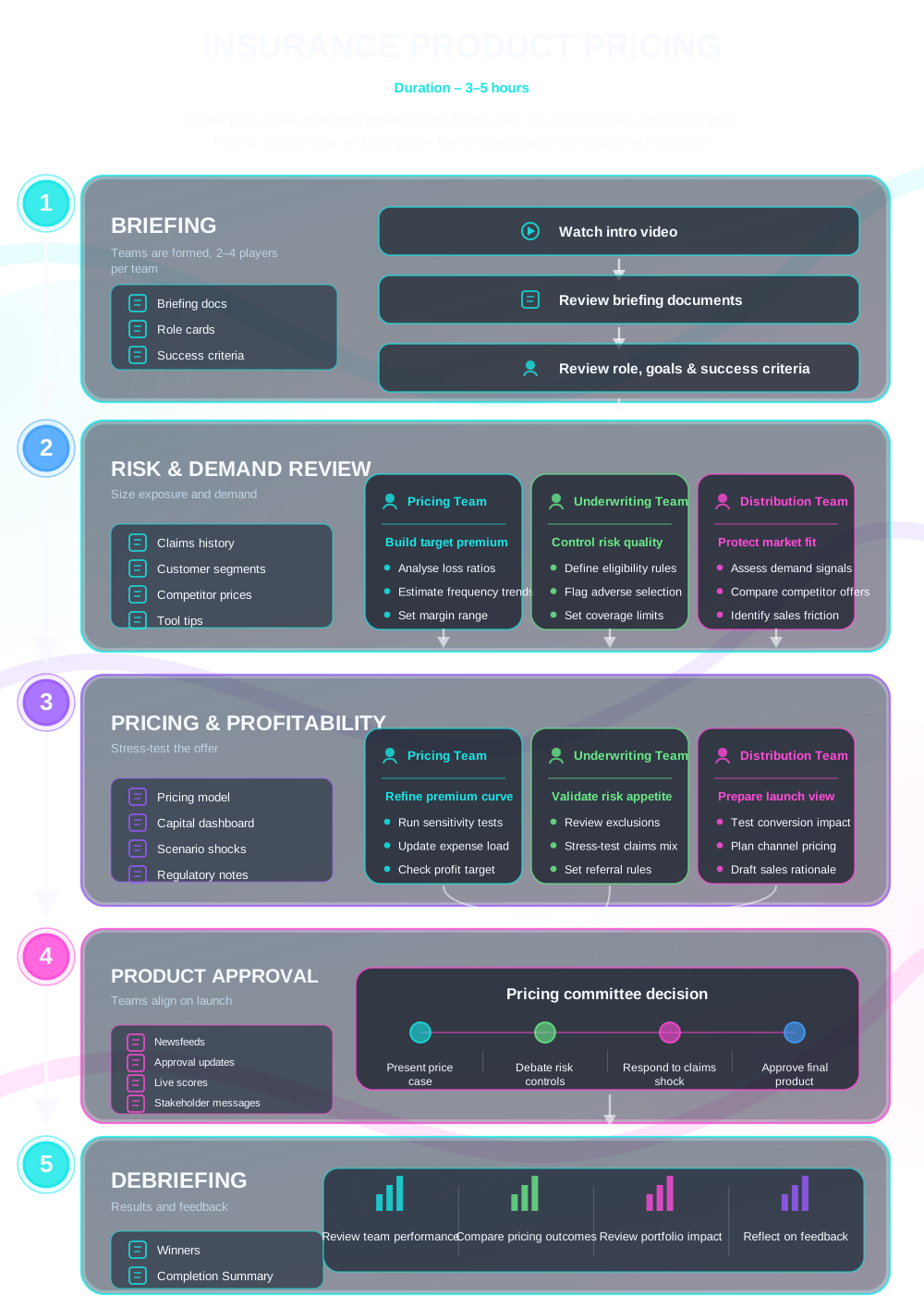

What Participants Do
In this simulation, participants act as product and pricing professionals in an insurance company. They:
- Review claims data, policyholder behavior, and historical performance
- Adjust pricing levers for various products and customer segments
- Decide on reserve levels, policy terms, and reinsurance needs
- Respond to external changes like new competitors, regulations, or climate risks
- Monitor how pricing decisions impact sales, profitability, and risk exposure
- Communicate pricing rationale to executives or board-level stakeholders

Learning Objectives
By the end of the simulation, participants will be able to:
- Apply actuarial and business principles to insurance product pricing
- Balance growth and profitability while managing long-term risk
- Understand how pricing strategies impact claims experience and customer behavior
- Analyze loss ratios, retention trends, and lapse risks
- React to market shifts with pricing agility
- Evaluate reinsurance as a risk mitigation strategy
- Integrate financial, regulatory, and marketing considerations
- Justify pricing decisions through clear communication
- Forecast the impact of pricing changes on reserves and solvency
- Manage trade-offs in product design across deductibles, limits, and coverage
The simulation’s flexible structure ensures that these objectives can be calibrated to match the depth, duration, and focus areas of each program, whether in higher education or corporate learning.
How the Insurance Product Pricing Simulation Works
This simulation can be used for individual learners or team-based sessions in academic, onboarding, or corporate training contexts. Each round simulates a product cycle or market year.
1. Receive a Brief: Each round begins with new market conditions, product performance data, and objectives. Participants review the insurance landscape, risks, and product line focus areas.
2. Analyze Portfolio Performance: Participants assess policy retention, claim ratios, and profitability metrics. They examine historical patterns and competitor benchmarks to inform pricing choices.
3. Make Pricing and Product Decisions: Participants adjust premiums, limits, deductibles, and reserve assumptions for each product segment. These choices impact risk exposure and profitability.
4. Respond to Market Shifts: Events like regulatory changes, climate trends, and competitor pricing shake up the market. Participants must adapt and iterate on strategy.
5. Communicate Internally: Participants may be tasked with drafting executive summaries or board memos to justify their pricing decisions or reserve strategy.
6. Repeat the Cycle: Each round introduces new variables, building strategic complexity. Teams refine their pricing strategy based on past results and stakeholder feedback.
Frequently Asked Questions
Assessment
Assessment can be tailored to focus on strategic pricing, risk management, communication, or iterative improvement. Participants may be evaluated on:
- Pricing accuracy and portfolio profitability
- Retention and product-mix optimization
- Responsiveness to external changes and competitor moves
- Strategic use of reserves and reinsurance
- Communication of rationale in pricing memos or debriefs
- Peer collaboration and iteration across cycles
You can also include memo writing and debrief presentations as part of the assessment structure. Additionally, you can also add a built-in peer and self-assessment tool to see how participants rate themselves. This flexibility allows the simulation to be easily integrated by professors as graded courses at universities and by HR at assessment centres at companies.