This simulation is perfect for undergraduate and graduate business students, as well as professionals in non-finance roles who need to understand how their work affects company profitability.

Income Statement Simulation
In this Income Statement Simulation, participants make critical operational decisions to shape revenue, control costs, and optimize the bottom line within a dynamic and competitive market.

Income Statement Simulation Overview
This dynamic simulation immerses participants in the core driver of business value: the income statement. Acting as management teams for competing companies, they must analyze market conditions, make strategic operational decisions, and directly observe the impact on profitability across multiple accounting periods.
Each round presents new challenges, shifts in consumer demand, rising input costs, competitive pricing moves, or unexpected economic events. Participants must decide on pricing strategies, marketing budgets, production levels, cost-cutting initiatives, and R&D investment.
The simulation emphasizes the tangible connection between daily managerial choices and financial outcomes, translating strategy directly into revenue, gross margin, operating income, and net profit. It is ideal for university finance and business courses, as well as corporate training programs, providing a visceral understanding of how to manage a P&L effectively.

Income Statement Simulation Concepts
Participants work through realistic scenarios, which can be customized to emphasize or exclude specific topics depending on the learning goals. This modular structure allows the simulation to be tailored to any type of session. Key concepts include:
- Income Statement Structure and Line Items
- Revenue Recognition and Drivers
- Cost Behavior Analysis
- Gross Margin and Operating Leverage
- Profitability Ratios and Analysis
- Strategic Decision-Making for Profit
- Budgeting and Forecasting
- Competitive Analysis and Market Dynamics
- Scenario and Sensitivity Analysis

Gameflow
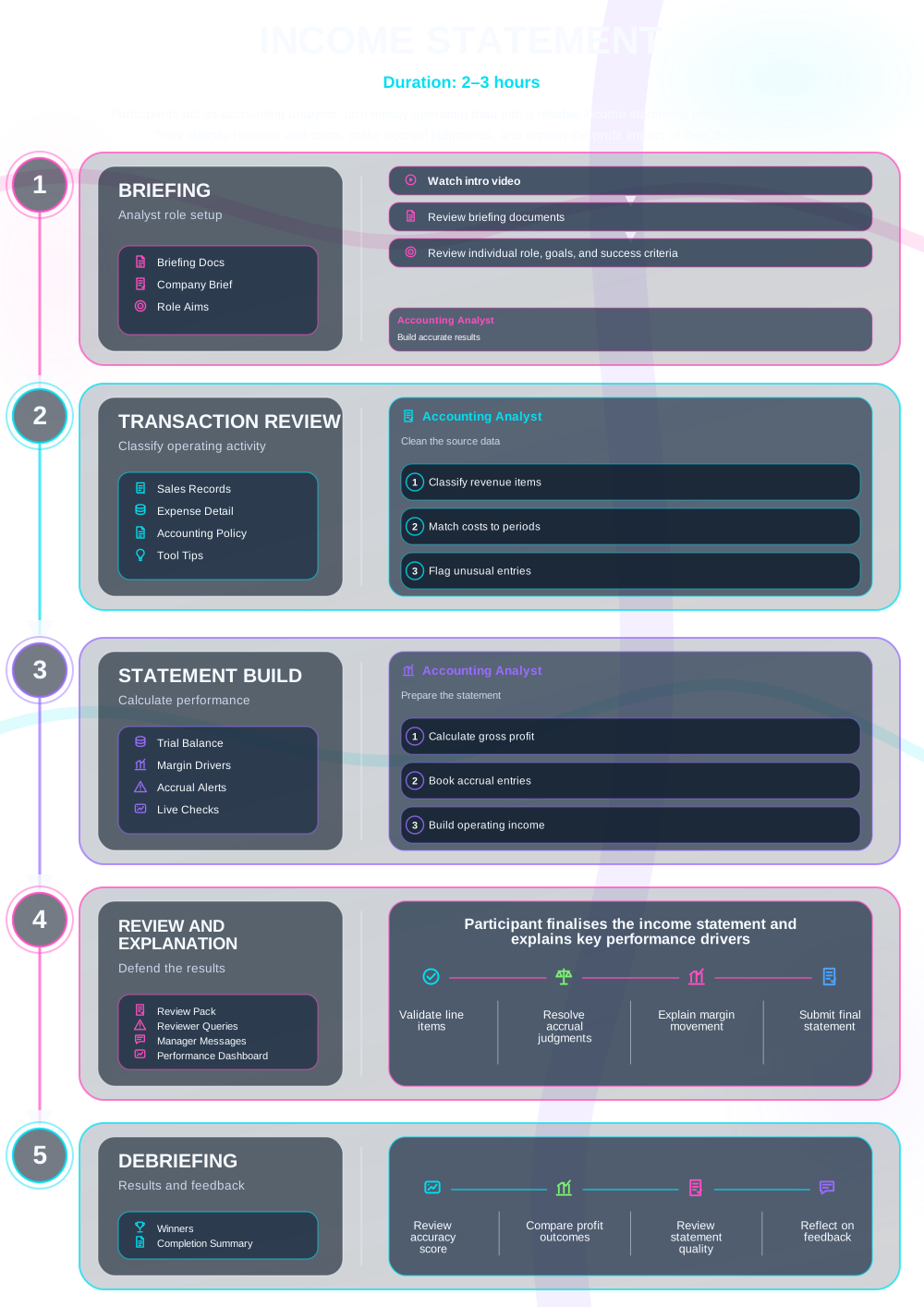

What Participants Do
In the simulation, participants will:
- Analyze market data and competitor financials to set strategic direction.
- Make quarterly decisions on pricing, marketing spend, production, and cost management.
- Interpret newly generated income statements to assess the financial impact of their choices.
- Adjust strategies in response to market feedback, cost inflation, and competitive threats.
- Present their financial performance and strategic rationale to stakeholders.
- Reflect on the causal links between their operational levers and financial outcomes.

Learning Objectives
By the end of the simulation, participants will be able to:
- Navigate and explain each component of a multi-step income statement.
- Make informed managerial decisions that directly improve profitability metrics.
- Analyze how changes in volume, price, and cost structure flow through to net income.
- Evaluate the financial health and strategy of competitors using their income statements.
- Build a simple forecast of future income based on strategic assumptions.
- Communicate financial results and business performance clearly to non-financial audiences.
- Develop confidence in using financial data for operational decision-making.
How the Income Statement Simulation Works
This simulation can be run individually or in teams in academic or corporate contexts. Each cycle represents a stage of getting through a pressing financial situation.
1. Receive the Business Scenario Teams are introduced to their company, its market position, and initial financial statements.
** 2. Analyze the Financial and Market Position** They review their last period's income statement, competitor data, and current market intelligence.
3. Make Strategic Decisions Teams decide on key operational variables (set price, allocate budget to marketing, manage production costs).
4. Collaborate and Negotiate Teams discuss trade-offs, similar to management meetings, to finalize their strategy.
5. Review Financial Outcomes The simulation generates new income statements for all companies, showing the results of decisions.
6. Communicate and Reflect Teams present their results and strategy. Facilitated debriefs connect their actions to financial outcomes, preparing them for the next round.
Frequently Asked Questions
Assessment
Assessment of participant performance can be tailored according to the host institution’s objectives (business school, corporate training, assessment centre). Typical assessment criteria include:
- Improvement in key profitability metrics (Net Income, EBITDA margin) over time.
- Alignment of decisions with stated goals and effective adaptation to market changes.
- Quality of insight when explaining the drivers behind financial results.
- Effectiveness in presenting financial outcomes and business rationale to stakeholders.
- Built-in peer and self-assessment tools can also be integrated. This allows the simulation to be seamlessly used for graded university courses or corporate training assessments.